Get Full Government Meeting Transcripts, Videos, & Alerts Forever!
Get email alerts on the Commissions And Bodies topic
No spam. Unsubscribe anytime.
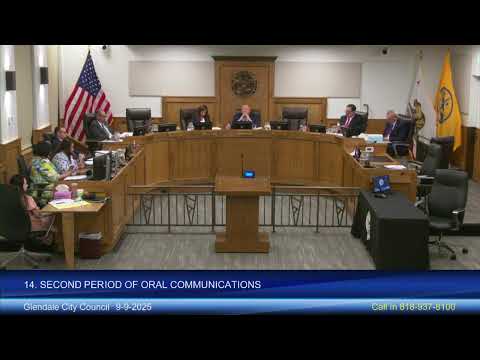
Council considers expanded role for Commission on the Status of Women, debate over dedicated staff
Summary
Council reviewed an amended ordinance to expand the Commission on the Status of Women’s duties and meeting frequency. Supporters asked the council to adopt the 'alternative 2' language and to provide one full-time staffer; council discussion highlighted differing views about council direction on staffing and oversight of commission funds.
The Glendale City Council discussed an ordinance to amend municipal-code provisions governing the Commission on the Status of Women, including changing meeting frequency from quarterly to monthly and expanding the commission’s powers to include programmatic work, policy recommendations and community partnerships.
Council member Asatrian presented a revised draft labeled “alternative 2” that adds the phrase “including but not limited to” to broaden the commission’s scope and mirrors the structure used by other city commissions. She asked the council to adopt that version and to reaffirm prior direction to allocate one full-time staff position to support the commission’s work.
Scores of speakers, and several community organizations, urged adoption of the alternative language and a full-time staffer. Among those who spoke were Deborah Sal, CEO of YWCA Glendale & Pasadena; Regina Williams of Door of Hope, which operates transitional housing for survivors of domestic violence; Jane Vier; Diane Lambelott, immediate past chair of the commission; and Nairi Nahabedian, a former commissioner. They described programmatic needs including domestic-violence prevention, workforce development, elder and caregiver support and outreach to underrepresented groups. Several speakers noted prior commission successes and argued that monthly meetings and dedicated staff are necessary to sustain programming and community engagement.
Other speakers questioned creating a dedicated staff position for the commission, asking whether council was overstepping charter limits on hiring authority and noting that grant-funded or fundraised commission monies had historically been appropriated in the city budget process. A vocal public commenter opposed paying a staffer for the commission, saying funds should go to direct services.
Council members debated the staffing request’s appropriateness. Some members supported directing the city manager to allocate a full-time resource, saying the commission could not function at a programmatic level without it. Other members cautioned that personnel and hiring decisions are within the city manager’s purview and that council should not micromanage position creation; they said the council can nonetheless appropriate funding through the budget process. Staff said the March 18 council direction authorized pursuing staff support; the precise job classification and funding level were to be worked out by the city manager.
What the council did - The council reviewed alternative 2 and the edits submitted by Council member Asatrian and discussed the staffing request. Council members did not adopt a new position at the meeting; several members signaled support for the ordinance language but differed over whether council should dictate a specific full-time position assignment or let the city manager determine classification and assignment.
Next steps Staff will return with the formal ordinance for introduction and with any budget implications for staffing during the next budget cycle; council and staff said the matter of staff classification and funding will be worked out with the city manager’s office.