Get Full Government Meeting Transcripts, Videos, & Alerts Forever!
Get email alerts on the Transportation Traffic topic
No spam. Unsubscribe anytime.
Neighbors and venue owners spar over roadside parking at 1917; board sends no‑parking ordinance back to committee
Summary
Public comment and supervisors' debate over parking along County Highway S near the 1917/Edge venue prompted the board to send Ordinance 8‑25 back to committee for further study; owners and neighbors urged common‑sense fixes, while county staff noted logged complaints and safety concerns.
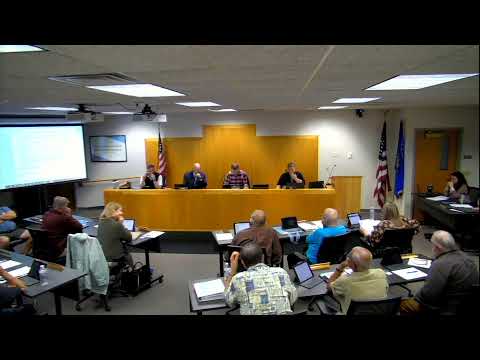
Public comment at the Chippewa County Board's meeting focused on parking and safety along a stretch of County Highway S in front of the 1917 ("The Edge") venue, and a board motion to send an ordinance addressing on‑street parking back to committee passed 20‑0.
Multiple residents and business owners spoke in support of preserving some roadside parking and seeking modest safety measures rather than a full prohibition. Leo Krakowski, a resident, said the community has "no problem" with neighbors parking there historically but that speed is the main concern. Mike Hannon, who said he lives a few doors from the venue and called the business an "ambassador for the Chippewa Valley," urged the board to "apply some common sense" and consider targeted speed reductions or parking alternatives that allow the venue to continue operating and serving tourists and locals.
Jason Darley, a partner at 1917, told the board the partners "have been asking for common sense" and described the facility's capacity and waterfront access. He said the venue seats about 425 and has slips and parking historically used by patrons. William ("Lupe") Klish, another partner, said taking away parking "will debilitate our business" and said law enforcement records showed four complaints related to the location, only some of which were substantively tied to the venue.
County highway staff and the highway committee described receiving complaints, performing traffic counts and following Department of Transportation (DOT) practice. Staff said they performed a due‑diligence traffic review and noted a recent count of roughly 4,835 vehicles per day with about 16% trucks. The highway commissioner said DOT typically will not lower rural posted speeds below statutory thresholds without additional traffic‑calming measures (lighting, urbanization) and that any drop below 45 mph would require DOT approval.
After extended discussion among supervisors and staff about alternatives — lowering posted speeds, adding flashing caution lights, improved signage, and time‑limited no‑parking for snow removal — Supervisor Flater moved to return Ordinance 8‑25 (the no‑parking proposal) to committee for reconsideration. The motion passed 20‑0.
Board members and speakers emphasized seeking safety improvements while avoiding measures that would unnecessarily harm a longstanding local business. The committee will reexamine traffic engineering options, DOT requirements and possible mitigations before bringing a revised proposal back to the board.