Get Full Government Meeting Transcripts, Videos, & Alerts Forever!
Get email alerts on the Public Safety Exclusion Zone topic
No spam. Unsubscribe anytime.
Oregon City leaders weigh downtown exclusion zone to limit repeat dangerous behavior
Summary
Police presented legal research and a draft boundary for a downtown exclusion zone; commissioners asked staff to return with a draft ordinance and map after discussing limits, appeals and protections for services.
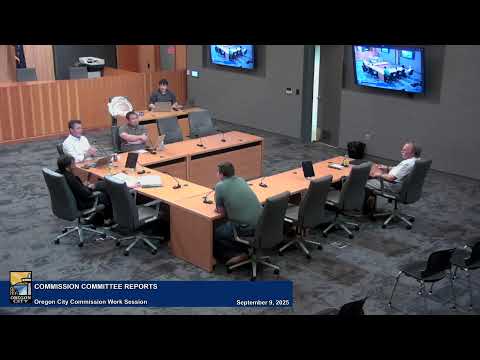
At a Sept. 9 Oregon City Commission work session, Police Chief Davis asked the commission for direction on creating a downtown exclusion zone that would let police bar people from a narrowly defined area after arrests or citations for specified offenses.
Davis told commissioners that an exclusion zone is “designated to protect the public from those who illegally conduct, or their conduct, and they pose a threat to the public health, safety, and welfare,” and described model language used in other cities. He said staff consulted City Attorney Carrie Richter and reviewed Oregon and out‑of‑state ordinances, including Medford and Milwaukee.
City officials said the zones are intended to be limited in area and behavior‑based rather than targeted at a group. Davis and staff singled out examples of features a local ordinance should include: a written definition and map of the zone; a list of offenses that can trigger exclusion; procedures for notice and service; an appeal process and interim protections (for example, permitting travel through the zone for work, court, or social services); and a variance process for essential needs.
Davis cited Medford’s ordinance and court history as a model, noting Medford’s 2017 revision that excludes people for 90 days after certain arrests or citations and preserves limited entry rights for four purposes including seeking social services, employment and attending public meetings. He told the commission Medford has had six appeals in five years and that federal and circuit courts have upheld that city’s approach where safeguards are in place.
Staff sketched a preliminary downtown boundary that follows the railroad tracks and river from roughly Fifth Street down to Eighteenth Street, with an extension along Washington Street to include certain businesses and the McLaughlin Promenade. Commissioners discussed whether to fold existing park and public‑building exclusions into the new zone, noting the city’s current park exclusion code and exclusion from public buildings (referenced in the packet as park exclusion and code section 09.28). Staff said park exclusions are already limited by code and that the new downtown zone would address sidewalks and other public areas not covered by existing rules.
Commissioners raised constitutional and practical concerns: ensuring access to social services (several commissioners emphasized that exclusions should not block people from getting services), avoiding coverage of most of the city (staff said Medford’s downtown zone covers about 0.56% of that city), and providing clear on‑the‑ground rules for officers about when an excluded person is merely passing through versus present for prohibited conduct. Commissioners also asked staff to check whether any Medford or Milwaukee rulings remain under appeal.
No ordinance was adopted at the meeting. Commissioners expressed support for returning with a draft ordinance and an upgraded map and asked staff and the city attorney to prepare specific draft language that includes the procedural safeguards Davis described. Staff said they would bring a proposed ordinance and a more detailed boundary back to a future work session for further discussion and possible action.
The commission did not take a formal vote at the Sept. 9 session; the discussion ended with direction to draft ordinance language and a map for further review.