Get Full Government Meeting Transcripts, Videos, & Alerts Forever!
Get email alerts on the Public Health Tobacco Control topic
No spam. Unsubscribe anytime.
Community Health Alliance urges Pico Rivera to consider smoke‑free multi‑unit housing policy
Summary
A public health coalition presented data on secondhand smoke exposure and urged the city to consider smoke‑free policies for multi‑unit housing, citing local survey results and the 2014 U.S. Surgeon General report.
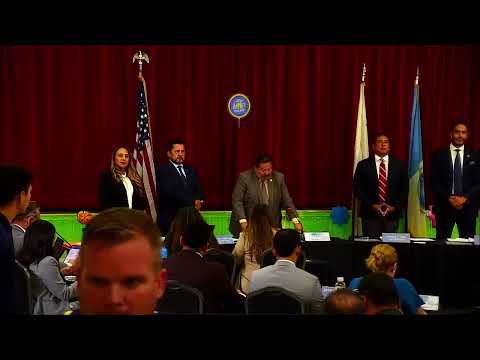
A community coalition urged the Pico Rivera City Council on Sept. 9 to consider adopting smoke‑free policies for multi‑unit housing, saying secondhand smoke exposure remains common and harms residents with respiratory and other health conditions.
Bridal (first name not provided), representing the Community Health Alliance, told the council “Secondhand smoke causes adverse health effects both for adults and children including stroke, lung cancer, sudden infant death syndrome, and respiratory illness to name a few,” and summarized a local survey and a recent American Lung Association report grading Pico Rivera an F for smoke‑free multi‑unit housing.
The presenter said local survey data show two in five Pico Rivera residents reported exposure to secondhand smoke in their home in the past year and that 70% of residents surveyed live with someone whose medical condition could be worsened by smoke. The coalition also reported that 94% of surveyed residents would prefer to live in a completely smoke‑free multi‑unit property.
The coalition argued that multi‑unit buildings can distribute smoke through shared HVAC systems and that household rules do not always prevent involuntary exposure. Bridal referenced the U.S. Surgeon General’s 2014 finding that there is no risk‑free level of exposure to secondhand smoke and noted that 20 jurisdictions in Los Angeles County have enacted smoke‑free multi‑unit housing ordinances, naming Norwalk, Compton and Bell Gardens as examples.
The coalition asked the city to study model ordinances and consider protections that would reduce health risks for children, the elderly and people with chronic conditions; no formal ordinance was introduced at the meeting.
Councilmembers present did not vote on the matter during the session; Dr. Sanchez later requested the council formally pursue further conversation and said she would like to participate in a staff‑level process to review best practices and model policies.
The council did not set a timeline for staff work if it proceeds; the coalition and Dr. Sanchez suggested the Institute for Public Strategies as a resource for model policies and outreach.