Get Full Government Meeting Transcripts, Videos, & Alerts Forever!
Get email alerts on the Water Supply And Rates topic
No spam. Unsubscribe anytime.
Residents report steep increases after smart meters; council hears water‑neutrality and rate study concerns
Summary
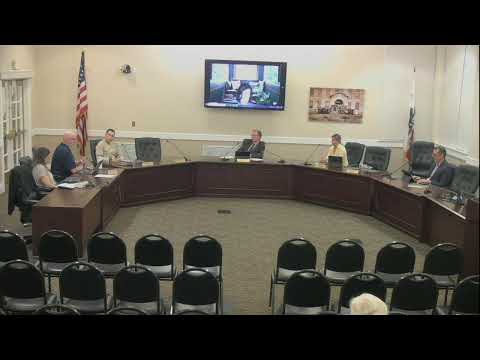
Residents told the Saint Helena City Council on Sept. 9 that household water bills have risen sharply since the city began monthly billing and installing new smart meters, prompting demands for technical reviews and pushing council members to seek more data before deciding whether to accelerate the utility rate study.
Residents told the Saint Helena City Council on Sept. 9 that their household water bills have risen sharply since the city began monthly billing and installing new smart meters, prompting public commenters to demand technical reviews and pushing council members to ask staff for more data before deciding whether to accelerate a new water and wastewater rate study.
At the meeting, resident William Wagner told the council his bill rose to about $500 a month after the city moved to monthly billing and new meters, and he said the meter app reported implausible daily use. "There is no way my water bill should be $500 a month," Wagner said. "I have no pool. I have very small drip irrigation. I live in a 1,300‑square‑foot house with three people." He said neighbors and online posts show similar complaints.
Another resident who identified himself in the meeting as Mr. Belt urged council to revisit the city's water neutrality policy, using the proposed Spring Grove development as an example. Belt said the project's mitigation proposal assumes the development would use about 11,462 gallons per day (he said the project's annual figure was "about 4,000,183,496 gallons per year" in his remarks) while the three existing homes on the site use far less. He questioned whether a one‑time in‑lieu payment of roughly $119,392 would offset the projected increased annual demand and said the LEED‑derived usage table in the policy underestimates real use patterns. "I don't believe that a one‑time payment of $100,000 is going to create a water neutrality situation," Belt said.
Why it matters: Council members and staff said water billing, system revenues and several aging pieces of water infrastructure are linked. Staff reported a revenue shortfall from water and wastewater enterprises compared with the last rate study's projections and recommended considering advancing a planned rate study so the city can adjust rates and prioritize capital work in time for the next fiscal cycle.
Interim manager Leach told the council preliminary accounting shows a combined revenue shortfall of roughly $1.5 million for fiscal 2024 and about $900,000 for fiscal 2025 compared with the adopted projections. He said the city has added projects to the capital improvement program (CIP) since the last study and suggested starting a new rate study now with a target implementation date of July 1, 2026, rather than waiting until the current schedule ends in 2027–28.
Council members and advisory‑committee members urged caution. Gary Rose, a member of the Water and Wastewater Advisory Committee, told council the committee has asked staff for more financial detail and prefers the advisory group review the requested documents before the council directs a consultant to begin a new study. "The general feeling of the committee is that we really know what they want, and it would be nice to ... prepare much better for the contractor," Rose said.
Mayor Paul Jamieson Doering and several council members said they hear strong public concern about high bills and that the council must balance affordability with the need to fund critical projects. "Folks are struggling," Mayor Doering said. "If you delay, you don't have enough money to fund your system, and we obviously have a moral and legal obligation to provide water and sewer services. Yet the costs are becoming so prohibitive."
Staff outlined high‑priority CIP projects that staff and the advisory committee say are time‑sensitive, including: rehabilitation of Tank 2; design for the Bell Canyon intake tower; SCADA (remote monitoring and controls) improvements at key sites; and a high‑priority sewer pipeline replacement program tied to a settlement agreement with RiverWatch. Leach said the SCADA upgrades could improve operational responsiveness and help staff detect and address water‑quality problems more quickly.
Council discussion and direction: Council members and the Water and Wastewater Advisory Committee favored collecting and delivering the additional financial information the committee requested before directing a consultant to begin the full rate study. The council expressed support for advancing planning and prioritization work and for pursuing staff augmentation or an "owner's representative" to help manage multiple concurrent CIP projects while recruitment for a departed public‑works manager proceeds. But several members warned that hiring a consultant to manage consultants requires tight oversight. "Having consultants manage consultants ... can burn you," said one council member during the discussion; Leach said any owner's‑rep agreement would be time‑and‑materials with a not‑to‑exceed limit and that staff would return to council for authorization of specific professional‑services agreements.
Water quality complaints: Staff also reported 53 complaints submitted through the Grapevine app since Aug. 1 related to odor, color and taste. Leach said water‑quality staff are flushing lines and adjusting treatment processes while coordinating with the Division of Drinking Water and the city's water‑quality expert.
Public comment and technical follow up: Commenters asked that the city verify meter accuracy and provide transparent audits of smart‑meter and billing performance. Leach and staff said the Ion Water app (the city's customer interface) can generate reports comparing usage to the same period last year and that the city will return with more information. Staff also said leak alarms and continuous‑flow alerts can be used to detect leaks; the city plans to continue educating customers about the app and is transitioning away from sending leak letters during the next three months.
Ending: The council did not take a formal vote to start a new rate study at the Sept. 9 meeting. Instead, council members directed staff to provide the financial documents the Water and Wastewater Advisory Committee requested and to return with a prioritization and scheduling proposal for the CIP and for any owner's‑rep engagement. The water‑quality outreach and meter accuracy issues remain active items staff said they will pursue and report back on publicly.