Get Full Government Meeting Transcripts, Videos, & Alerts Forever!
Utah Supreme Court weighs whether Labor Commission may dismiss workers' compensation claims for obstructive behavior
Summary
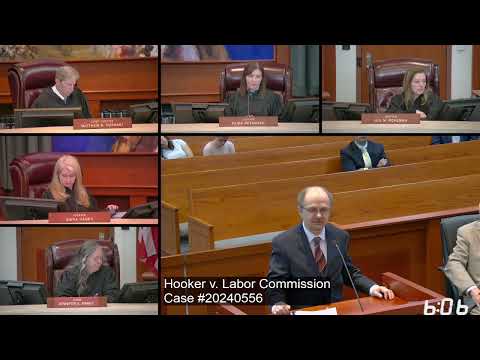
The Utah Supreme court heard argument on whether the Utah Labor Commission may dismiss workers' compensation claims as a sanction for "obstreperous" or obstructive conduct during discovery and defense medical examinations.
The Utah Supreme court heard argument on whether the Utah Labor Commission may dismiss workers'compensation claims as a sanction for "obstreperous" or obstructive conduct during discovery and defense medical examinations.
The issue was framed by petitioner's counsel as a question of statutory and constitutional limits on the commission's authority: counsel argued that the workers' compensation statute requires adjudication of the merits before dismissal with prejudice and that the statutory scheme and precedent make suspension of benefits the exclusive remedy when a claimant refuses or obstructs a medical examination.
Why it matters: The court's decision could change what administrative sanctions a state agency may impose in workers' compensation proceedings. If dismissal with prejudice is allowed as a discovery sanction in these cases, claimants could lose the substantive hearing on entitlement; if it is unlawful, the Labor Commission's ability to use procedural sanctions under Rule 37 may be constrained.
Argument overview
Stoney Olson, who identified himself as counsel for the petitioner, told the court the certified question presented was whether the Labor Commission "has the authority to dismiss cases as a sanction for obstreperous behavior." Olson argued no, offering three principal points: (1) the commission has no constitutional or statutory authority to dismiss a claim with prejudice as a sanction for obstructive behavior; (2) Utah's workers' compensation statute requires adjudication of the employee's entitlement before a dismissal with prejudice; and (3) the statutory provision addressing refusal to attend medical examinations (discussed at argument as "section 602") prescribes suspension of benefits during the refusal period, and other states' courts have treated similar suspension language as foreclosing dismissal as a sanction. Olson summarized the statutory backdrop as requiring either adjudication on the merits before dismissal with prejudice or application of the statute of repose (12 years) to bar…
Already have an account? Log in
Subscribe to keep reading
Unlock the rest of this article — and every article on Citizen Portal.
- Unlimited articles
- AI-powered breakdowns of topics, speakers, decisions, and budgets
- Instant alerts when your location has a new meeting
- Follow topics and more locations
- 1,000 AI Insights / month, plus AI Chat