
Transportation director recommends AT&T FirstNet cellular radios to replace aging bus radios
Get AI-powered insights, summaries, and transcripts
Subscribe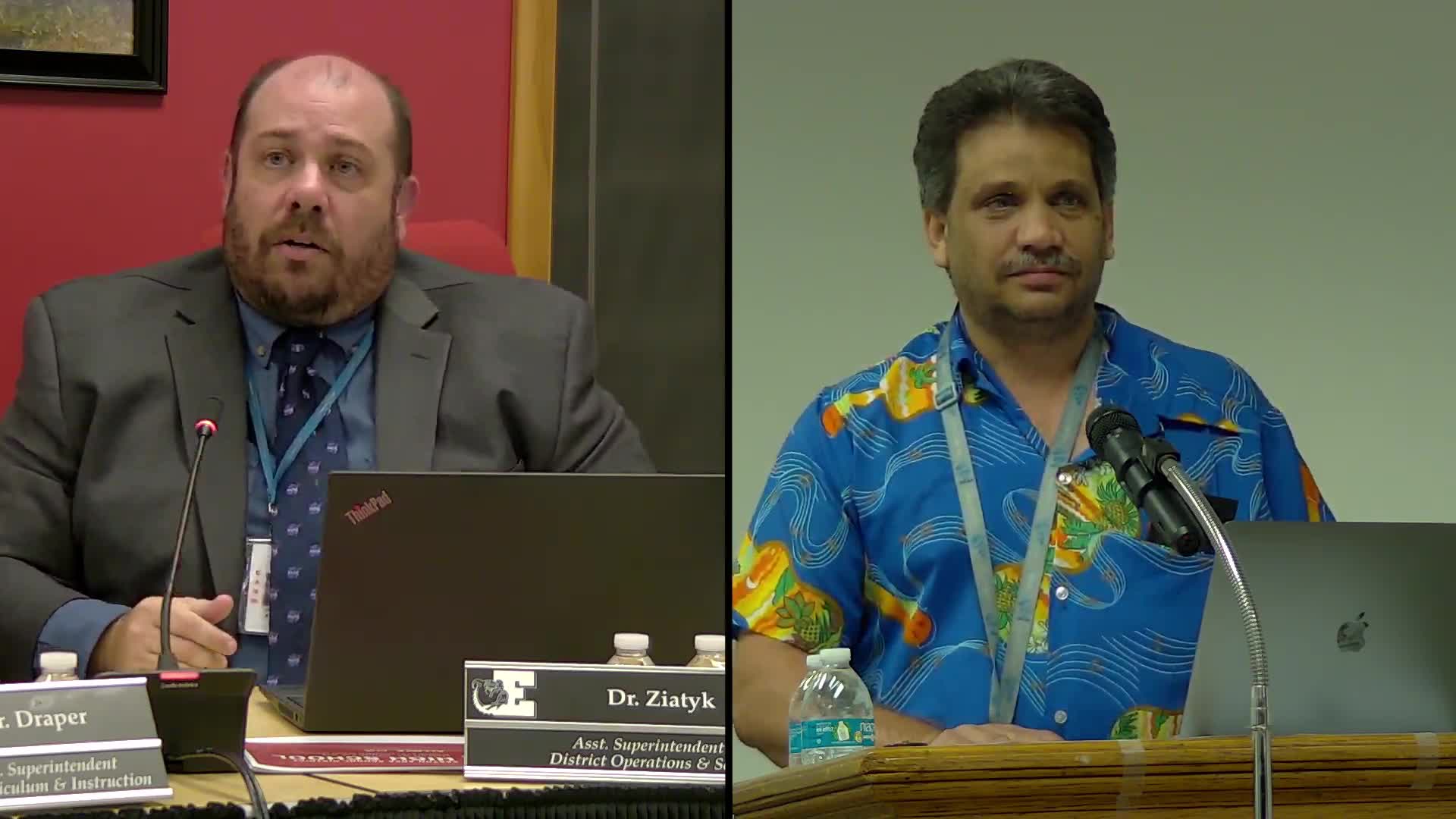
Summary
District transportation staff recommended an AT&T FirstNet cellular radio and dispatch system to replace an aging analog bus radio network, citing wider coverage, GPS and panic/dispatch features; administration plans a Sept. 30 action item and provided a five-year cost estimate.
Easton Area SD transportation staff recommended the board approve purchase of an AT&T FirstNet cellular radio system to replace the district’s aging analog school-bus radios, citing improved coverage, GPS, dispatch software and safety features. The administration plans to bring a formal recommendation for board action at the Sept. 30 meeting.
Ben (transportation director) told the board his team tested cellular radios and digital options and that the district’s 17‑year‑old analog equipment produces frequent static, has limited geographic coverage and lacks software dispatch, GPS tracking and emergency (panic) functions. "We have a deficiency in the 3 s's, safety, security, and service with our current radio system," Ben said.
Ben recommended the AT&T FirstNet cellular solution. He said FirstNet provides priority access on the AT&T network (public-safety priority), broader coverage where AT&T has cellular service, GPS tied into dispatch software, and a portable radio option that can be removed from a bus for on-site field-trip communications. Ben provided a five‑year cost estimate of $175,478.80 for the FirstNet solution and said the total was significantly lower than comparable digital LMR upgrades.
Brian McKenna, public-sector consultant for AT&T, attended and answered technical questions. He said the recommended hardware was 4G LTE and that AT&T has committed to supporting 4G LTE devices for at least a decade while 5G evolution continues. He described deployable network assets — temporary cell sites that can be placed to restore coverage during localized outages — and said FirstNet is built to prioritize first responders during congestion.
A bus driver who addressed the board during public comment, Quentin Mayfield, described recent instances when buses lost communication on trips and during an on-bus medical incident. Mayfield said the present radio quality had interfered with emergency communications and asked the board to approve the upgrade: "As a driver, my priority is to deliver yours and my kids to and from school in a safe manner. Right now, we are not capable of doing that to the best of our ability because our lines of communication are lacking the quality we deserve when transporting our kids."
Board members asked for the vendor proposals and a cost comparison; administration agreed to provide all submitted proposals and supporting detail ahead of the Sept. 30 agenda. Counsel and administration also confirmed the district may use capital-project (bond) funds for the purchase, and commissioners discussed tradeoffs between an LMR (digital radio) upgrade and the cellular/FirstNet approach. Administration said the FirstNet cellular system’s GPS and dispatch features were decisive factors in its recommendation.
What’s next: administration will provide the board with the full RFP/proposal packet and a line-item cost comparison and will place a recommendation for board action on Sept. 30.