Get Full Government Meeting Transcripts, Videos, & Alerts Forever!
Get email alerts on the Transit Feasibility Study topic
No spam. Unsubscribe anytime.
Transit study recommends on‑demand contracted system as lowest‑cost option; fixed‑route carries higher cost and higher ridership potential
Summary
A consultant study presented to the Housing Planning Development Committee found no self‑sustaining (fare‑covered) option for a Lakewood circulator. Iteris modeled fixed‑route and on‑demand alternatives, forecasted ridership, and concluded an on‑demand contracted model would be the lowest‑cost, lowest‑risk way to restore local service; councilors
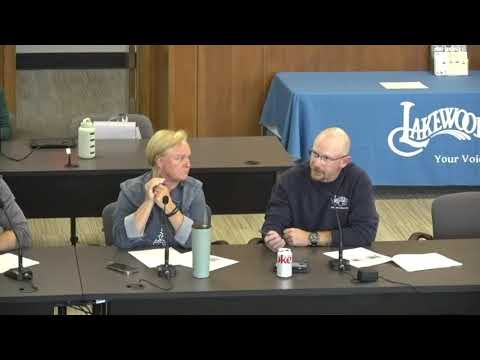
The Housing Planning Development Committee heard a presentation Sept. 8 on a completed transit feasibility study conducted by Iteris that evaluated multiple ways to restore a local circulator or another local transit service in Lakewood. Assistant director Boss told the committee the consultant modeled fixed‑route, contractor‑operated and on‑demand alternatives and concluded that "none of these systems are profitable, unfortunately," recommending an on‑demand contracted approach as the lowest‑cost, lowest‑risk option for the city.
The study surveyed residents, modeled likely boardings and tested six alternatives. It found demand for improved frequency and coverage but showed significant cost gaps between operating and fare revenue for fixed‑route options.
Survey and demand findings Iteris received more than 500 survey responses asking how residents travel within Lakewood and where they would like to go. Walking was the top current mode; 44% of respondents ranked riding the bus among their top three preferred modes. Top desired destinations included Lakewood Park, the public library and several grocery and retail centers.
The consultant reported the primary reasons residents do not use existing transit were that buses do not come frequently enough and buses do not go where riders want to go. Iteris applied Federal Transit Administration (FTA) stop‑based forecasting and trip generation data to estimate potential ridership for route alternatives.
Alternatives and costs Iteris modeled two fixed‑route loop options and multiple on‑demand permutations. The presentation showed fixed‑route forecasts ranging from roughly 43,000 to about 68,000 boardings per year in modeled scenarios; fare revenues were projected at roughly $100,000–$190,000 annually in the modeled fixed‑route cases. Capital costs in the fixed‑route scenarios were estimated at about $1.3–$2.5 million per 10‑year vehicle lifecycle, and annual operating costs ranged approximately $1.1–$3.7 million per year, depending on service hours and frequency.
Assistant director Boss summarized the consultant's recommendation: the city should consider an on‑demand contracted system (similar to the existing Senior Transportation Connection arrangement) as the most efficient, lowest‑risk path because it requires lower capital and operating outlays than a city‑owned fixed‑route operation.
Council discussion and next steps Council members and the chair pushed the discussion toward funding and partnerships. Several council members suggested exploring external sponsors, partnerships with the school district or targeted pilots using existing vehicles to test demand and operational assumptions before committing to a large capital or operating program. One councilmember noted past experience: the Lakewood Circulator historically had high ridership relative to similar pilots but still required external subsidies and was discontinued for financial reasons.
Assistant director Boss said the study did not include direct negotiations with the Regional Transit Authority (RTA) or school district; Iteris used publicly available RTA and local data for modeling. He and members suggested staff could pursue follow‑up work such as: requesting any historical ridership data for the earlier Lakewood Circulator, seeking more detailed RTA cost information, and scoping a limited pilot or targeted service to test conversion from ride‑share trips and measure real demand.
What the study does not resolve The consultant report did not identify a funding partner or an immediately implementable fixed‑route solution that would cover capital and operating costs through fares. Council members observed that the broader funding environment — including state and federal transit funding levels — will strongly affect the feasibility of restoring a circulator. The committee asked staff to make the Iteris report publicly available and to return with follow‑up options if council is interested in pursuing pilots or partnership discussions.