Get Full Government Meeting Transcripts, Videos, & Alerts Forever!
Get email alerts on the Public Safety topic
No spam. Unsubscribe anytime.
Budget committee presses police staffing, vehicle and retention issues during FY25-26 review
Summary
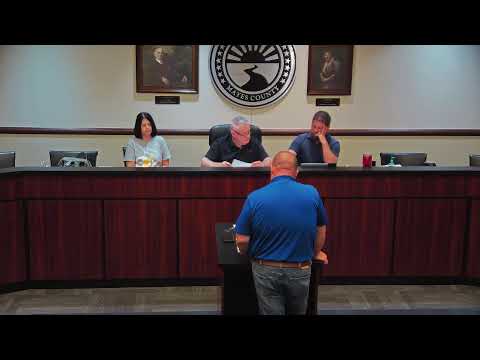
During a Pryor City Council budget committee meeting, members approved the police department budget for FY25-26 but directed amendments and asked staff to pursue retention measures, vehicle-lease options and operational fixes to address short staffing and response-time concerns.
The Pryor City Council budget committee approved the police department’s FY2025–26 budget while pressing department leaders to address staffing shortages, vehicle costs and officer retention.
Committee members voted to adopt the police fund (Fund 215) with adjustments discussed during the meeting, including an increase to the personnel/uniform line (line 50‑34) to $21,000 and other technical adjustments to reflect expected year-round costs. The motion carried on a recorded roll call; council members present voted to approve the amended budget.
Committee members said understaffing has reduced on‑street coverage and increased response times for critical incidents. Police administration described using overtime and mutual assistance when short and said officers sometimes must return to the police department to pick up vehicles before responding. Committee members asked the department to pursue fleet leasing options with Enterprise to reduce maintenance costs and to consider retention incentives and a merit/reward structure that would come separately before the full council.
The committee also discussed operational details such as fuel-card and fueling-system changes over the last year, which officials said reduced some costs; however, members questioned whether fuel savings have been offset by lower staffing and by needing more overtime and slower response times. The committee asked staff to return with clearer comparisons of past-year expenditures and with an implementation plan for the proposed retention/merit policy and for any vehicle-lease arrangements.
On school safety budgeting, the committee approved the School Resource Officer (SRO) budget (Fund 214), which covers five officers. Committee members noted that the city pays 100% of those five officers’ expenses for the budgeted period, and that the school district reimburses a portion at certain times of the year; the committee recorded that reimbursements and overtime returns will be tracked separately.
The committee’s action on the police budget was procedural (formal approval of the FY25–26 budget package) and not an authorization of new policy; council members said any specific retention pay, vehicle-lease contracts or new policies would be brought later to the full council for formal approval.
The meeting also included wider budget discussion (streets, facilities, parks, cemetery and others) but the most substantive debate centered on police staffing levels, vehicle strategy and ways to minimize response-time impacts while containing costs.
Committee members present and speakers who contributed to the police discussion included Mayor (unnamed), Council Member Bradshaw, Council Member Brashears, Council Member Shropshire, Council Member Sears and members of police administration. Staff agreed to supply the committee with more detailed line-item comparisons and a draft policy for retention incentives before the item goes to the full council.