Get Full Government Meeting Transcripts, Videos, & Alerts Forever!
Get email alerts on the Seaplane Base topic
No spam. Unsubscribe anytime.
FAA-led seaplane base project remains on schedule; public open house set, preservation commission urges fuller review
Summary
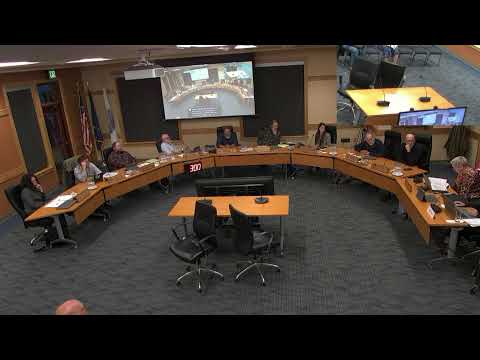
The Federal Aviation Administration-led seaplane base project for Sitka remains on schedule and under budget as the project team prepares public comment opportunities, project representatives said during the Sitka City and Borough Assembly meeting.
The Federal Aviation Administration-led seaplane base project for Sitka remains on schedule and under budget as the project team prepares public comment opportunities, project representatives said during the Sitka City and Borough Assembly meeting.
Project presenter Joseph (no last name given), speaking for the FAA/consultant team, said the supplemental environmental assessment (SEA) package includes a memorandum of agreement (MOA), species consultations, Section 106 historical‑property review, Section 4(f) considerations, noise analysis, a climate‑change review and records of government‑to‑government communications. He said the MOA is an agreement that includes the FAA, the Sitka City and Borough and the U.S. Army Corps of Engineers.
Joseph told the assembly the public can submit comments by email to sickaspb,sierrapapabravo@dot.gov or attend an FAA-hosted public open house on the ninth of next month at Centennial Hall, Room 3 at 5 p.m. He also said the project team will hold a floatplane pilot stakeholder meeting next week in Room 5 at 6 p.m. to review the 65% design and the “fly-friendly” program and to gather pilot input before moving from 65% to 100% design.
Why it matters: the SEA, MOA and design choices will shape whether, and how, work proceeds on the Sitka seaplane base. The MOA and historic‑property reviews are intended to identify and, where possible, eliminate or mitigate adverse effects on historic properties.
During public comment, Karen Lucas, who identified herself as an individual appointed to the Historic Preservation Commission, said the commission had received “almost no information” about the seaplane base process and only recently learned the MOA on the table includes demolition and removal of some historic structures on the seaplane base property. Lucas asked the assembly to postpone further decisions so the Historic Preservation Commission can perform its review; she said the commission will not be able to address the matter until October and asked the assembly to preserve the paper trail and share MOA materials with the commission.
Project financing and schedule: Joseph said the project currently is operating under a 100% eligible FAA design grant (described in the meeting as a COVID grant), so the Sitka City and Borough does not have a local match requirement for that design grant. He distinguished the FAA design grant for the project from future discussions about ongoing maintenance or operations, which he said would be addressed separately through the enterprise fund that will be distinct from the Sitka Rocky Gutierrez Airport Enterprise Fund and is expected to be resolved closer to project completion (the presenter mentioned 2028 as an anticipated timeframe for finalizing those details).
Participants and next steps: the FAA team (Joseph referenced FAA staff Christie and Kendall) and the city said they will continue drafting and finalizing the SEA and MOA, host the public open house and the pilot stakeholder meeting, and accept written comments by the advertised email address. The Historic Preservation Commission member requested additional time and documentation before decisions are finalized.
Assembly action: no formal assembly vote on the seaplane base project or the MOA was recorded in the meeting minutes; public comment and staff presentations were informational and the assembly did not take a decision to approve or reject the MOA during this meeting.
Looking ahead: the SEA, MOA and related materials will remain available for public review as the project team incorporates public and pilot feedback into the final design package and mitigation plans.