Get Full Government Meeting Transcripts, Videos, & Alerts Forever!
Get email alerts on the Maritime Portfolio topic
No spam. Unsubscribe anytime.
Maritime division reports FY2025 performance: cruise near-records, cargo shifts and shipyard challenges
Summary
The Port’s Maritime Division reported FY2025 activity Sept. 9: 90 cruise calls and about 368,000 passengers (second-highest on record), shifting RoRo cargo volumes, ongoing Pier 80 operations and unresolved shipyard dry-dock disposition.
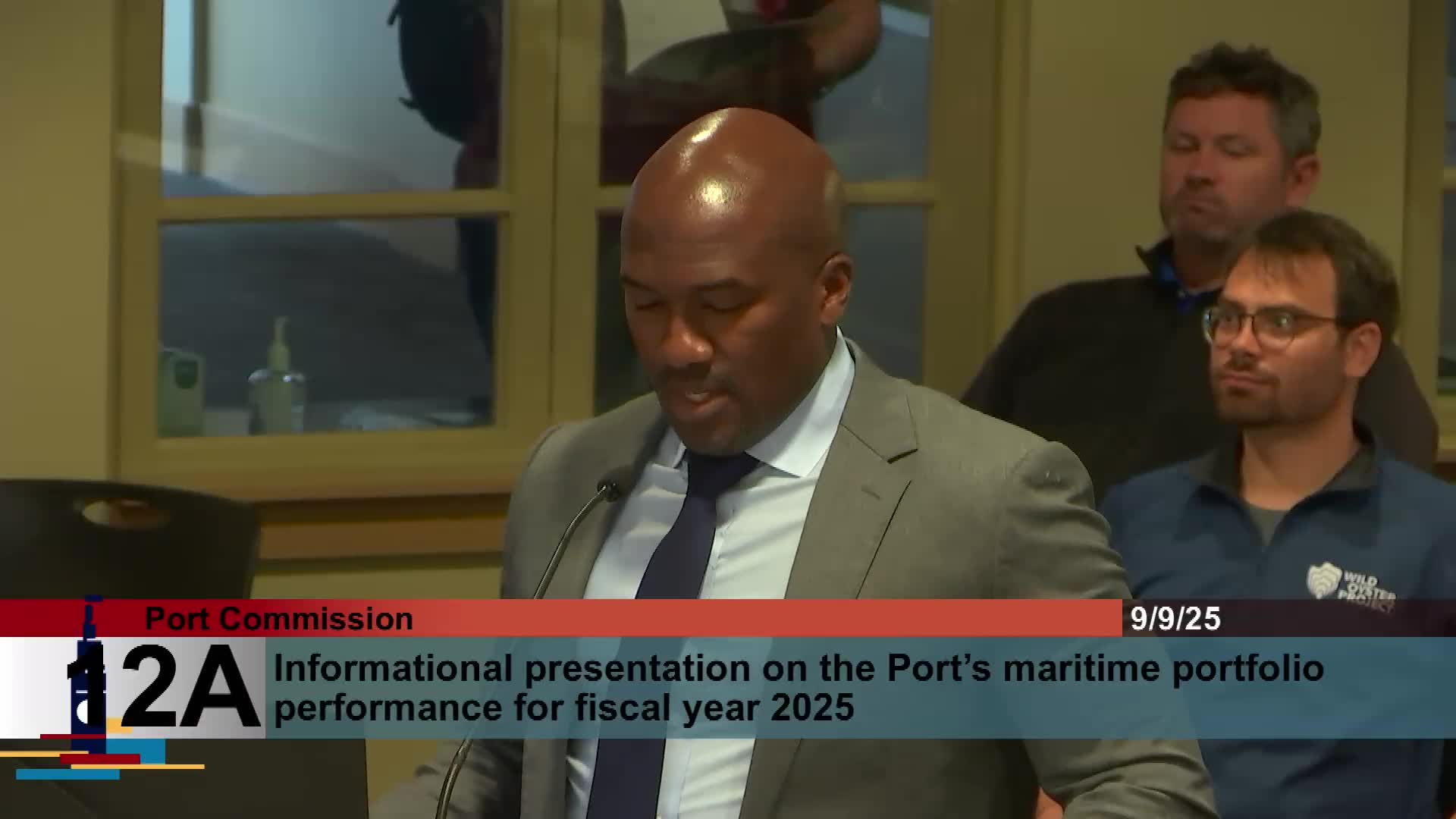
Andre Coleman, deputy director of the Maritime Division, delivered an informational overview of the port’s maritime portfolio for fiscal year 2025 on Sept. 9, covering cruise, cargo, shipyard, Fisherman’s Wharf, dredging, and harbor operations.
Cruise: Staff reported 90 cruise calls and approximately 368,000 passengers for FY2025 — the division described that passenger revenues totaled just under $7 million and characterized the passenger count as the second-highest on record. Staff said port facilities handled cruise operations at multiple locations during the year after an operational issue briefly took Pier 35 offline; Pier 27 remains the primary cruise terminal and Metro Cruise Terminals (operator) is making improvements tied to a contract extension. The division said it will study the feasibility of additional electrified cruise capacity and a market analysis for cruise facilities.
Cargo and Pier 80: Pier 80 (the port’s primary cargo facility) handled roll-on/roll-off (RoRo) vehicle traffic, with just over 21,000 units moved during the fiscal year. Staff said exports declined — attributed in part to evolving EV manufacturing and global markets — while imports rose (about 73% of RoRo business was import activity cited by staff). The port is negotiating amendments to terminal management agreements at Pier 80 to better reflect current conditions and to allow other maritime activities at the site. Fender improvement and other capital projects at Pier 80 were described as upcoming.
Shipyard: The port said it has been unable to secure a buyer under recent requests for offers for the shipyard’s dry docks. As a result, staff has pivoted to a disposal strategy and is preparing a stabilization plan with consultants; the division described the dry docks as a current liability and said disposal would be needed before more long-term maritime leasing options could be pursued.
Fisherman’s Wharf and harbor operations: The division noted the port is procuring a new ice machine for Fisherman’s Wharf (in contracting phase for demolition and construction), working on fuel dock remediation and reactivation plans, and noted that the harbor completed dredging for the first time in over 20 years during the fiscal year. South Beach Harbor dredging and tie repairs were also discussed; the division said seasonal programs and activations (Fleet Week, Portola Music Festival, SailGP, youth programs) remain a focus.
Equity and workforce programs: Coleman highlighted the Rising Tides mentorship program and youth sailing scholarships sponsored by private tenants, and noted the Port’s partnership on workforce development and youth engagement initiatives during the year.
Public comment on the presentation included remarks from Ellen Jonk (Maritime Commerce Advisory Committee co-chair) praising the division and staff, and a caller, Jesse Bastiani, who urged the port to preserve fuel docks and to consider shipyard reuse for manufacturing and repair. Commissioners asked about cruise scheduling lead times and operational pivots that have used Pier 80 for cruise calls; Coleman said homeport scheduling often comes 18–24 months in advance while transitory calls can be shorter but the port coordinates logistics with terminal operators.