Get Full Government Meeting Transcripts, Videos, & Alerts Forever!
Get email alerts on the Gas House Cove Fuel Dock topic
No spam. Unsubscribe anytime.
Mariner raises concerns about Gas House Cove fuel dock, water quality and economic impacts
Summary
During public comment, Captain Maggie Hallahan urged the port to consider economic impacts of losing a fuel dock at Gas House Cove and flagged pollution sources, submerged-land jurisdiction questions and the need for coordinated action with state agencies.
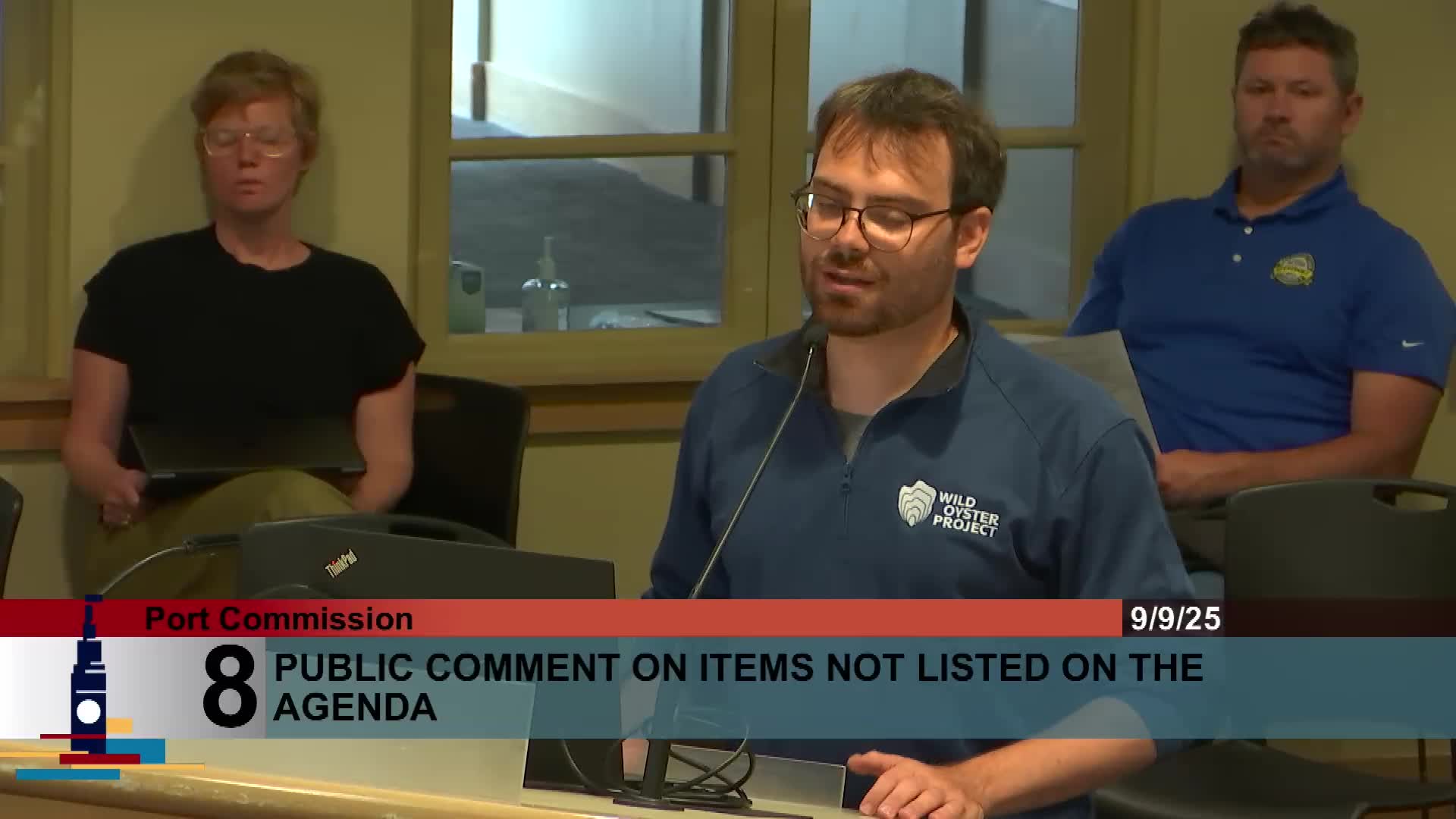
Captain Maggie Hallahan, a mariner and Sea Scout leader, urged the Port Commission during public comment to consider broader operational and public-safety consequences if a fuel dock at Gas House Cove remains out of service.
Hallahan said the San Francisco Marina is city property and that the area is governed by a 1937 public trust that interacts with California’s Burton Act and the State Lands Commission. She thanked port staff (Brad Benson was named) for communications with the State Lands Commission and said a court letter and staff correspondence have been exchanged concerning submerged land jurisdiction and repair timing for the Hyde Street (Fish Alley) fuel dock.
Hallahan described multiple sources of pollution entering Gas House Cove, including four major outfalls and an estimated “460 gallons” of sewer water running into the cove (as stated in her remarks). She told commissioners that crews, youth programs and hundreds of Sea Scouts use the area and said the loss of nearby fueling options could force boaters to travel 9 miles to other docks, with economic consequences for slips and businesses. She urged the commission to consider commissioning an economic impact report to study the consequences of losing fuel service near Aquatic Park.
Hallahan also expressed concern about creosote contamination on the site and water-quality conditions that, in her view, would make the area unsuitable for swimming and certain recreational uses without remediation. The comments were made during the meeting’s public comment period; commissioners directed staff to note the concern and earlier staff communications with the State Lands Commission were referenced in the presentation and public record.