Get Full Government Meeting Transcripts, Videos, & Alerts Forever!
Get email alerts on the Water And Sewer Rates topic
No spam. Unsubscribe anytime.
Oak Park finance panel backs staff to draft 2026 water, sewer ordinance after rate study discussion
Summary
The Village of Oak Park Finance Committee voted to send forward a resolution directing staff to prepare a 2026 water-rate ordinance after reviewing NewGen Strategies' rate study and hearing public concerns about fixed charges, conservation impacts and capital needs, including lead service line replacement.
The Village of Oak Park Finance Committee voted Sept. 9 to recommend that staff prepare a 2026 water-rate ordinance after receiving a presentation of NewGen Strategies' water and sewer rate study and public comment critical of the proposed changes.
The recommendation, which passed by voice vote with trustees present concurring, directs staff to bring an ordinance to the Village Board for consideration. The committee's action is advisory; the Village Board will take any final vote.
The study presented by Eric Colocchio, partner at NewGen Strategies, recommends a cash-flow neutral overall rate change for fiscal 2026 of roughly 9.4–9.6 percent while shifting revenue collection toward higher fixed charges. Colocchio said the firm proposes doubling the fixed service charge (a 100 percent increase in fixed revenue recovery from about 5 percent to just under 9 percent of total revenue) while increasing volumetric usage rates to cover rising core costs such as wholesale water purchases and distribution labor. "That overall rate increase in terms of dollars is about $2,000,000 — it's about 9.6 percent, consistent with the cash-flow neutral scenario. We're just rebalancing where you're getting that revenue between fixed and variable," Colocchio said.
Deputy Public Works Director Erin Duffy summarized the study's scope and financing assumptions, saying the village purchases 100 percent of its water from the City of Chicago and sends wastewater to a regional reclamation district. Duffy said the 2026 capital program in the consultant's model assumes roughly $10 million per year in capital spending for pipes and other distribution and collection improvements and that the model includes no new debt service for those projects; the study therefore treats much capital as pay-as-you-go.
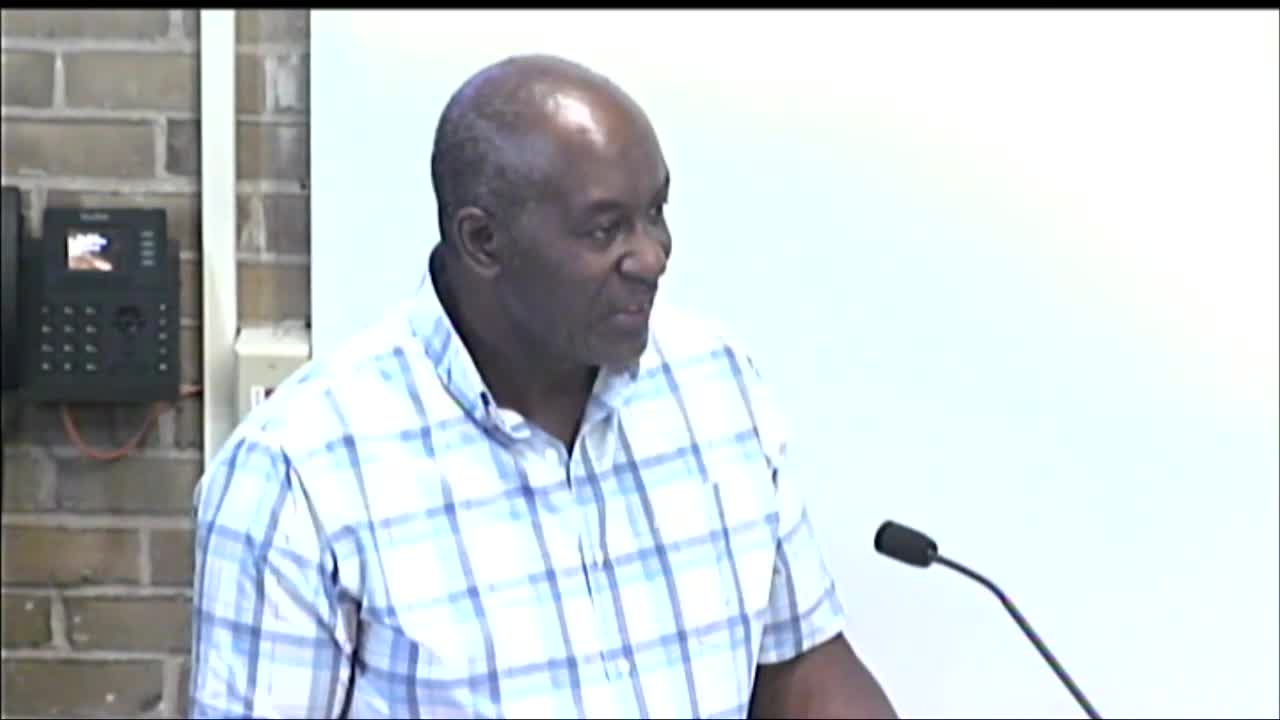
Public comment underscored resident concerns about the proposed shift. Curtis Todd, who signed up for non-agenda public comment, said he agreed the study's methodology was sound but urged the committee to reject both the proposed rate increase and the shift toward higher fixed charges, arguing the village's reserves already exceed the consultant's minimum target. "The current water and sewer rates are already more than sufficient. They generate a reserve of 31.7 percent, well above the 25 percent minimum target," Todd said, adding that higher fixed costs would penalize residents who conserve water and disproportionately affect low-income households.
Committee members pressed staff and the consultant on several topics: alternatives to the recommended uniform increase, the feasibility of an inclining-block or lifeline rate to protect essential household use, the village's 21 percent nonrevenue water (water purchased but not billed), and preparations for lead service line replacement. Trustee Straw and others expressed interest in exploring progressive pricing in future phases, while several trustees said the 2026 recommendation made sense as an interim, cash-flow-neutral step to avoid a larger, more abrupt increase later.
Colocchio identified trade-offs among rate structures: a uniform (per-unit) rate, an inclining-block structure that raises unit prices as usage increases to encourage conservation, and volume discounts that lower unit price as usage grows. He said inclining blocks or a lifeline rate are feasible policy choices but can require legal review if they create cross-class subsidies. "It is a policy choice in their rate structure that they are charging a certain class of users less than what it costs to serve them. In some places, you cannot do that," Colocchio said.
On system condition and capital needs, the presentation assumed continued wholesale water cost increases (the model uses a 5 percent City of Chicago escalation assumption), roughly $10 million per year in near-term capital needs for distribution and collection work, and no new debt service in the 2026 recommendation. The consultant warned that lead service line replacement — which some statewide surveys estimate at $10,000–$15,000 per service when both public and private sides are replaced — is not funded in the 2026 budget and could drive multi‑million-dollar capital needs in future years. "That is going to be the key driver," Colocchio said.
Staff also told the committee that Oak Park has been expanding its acoustic leak-detection network and upgrading meters and advanced metering infrastructure (AMI). Duffy said the village is nearing completion of AMI antenna installation and plans a customer portal and a transition from quarterly to monthly billing, which could affect working-capital needs and how reserves are sized. "Once we have that data and that data is coming in on a regular basis ... we are planning to work with finance to transition to monthly billing," Duffy said.
Trustees and staff agreed the committee should continue work in phases: implement the near-term, cash-flow-neutral rates for 2026 while advancing a phase 2 analysis to model alternative rate structures, affordability options, lead service line costs and financing strategies (including potential bond financing or a mix of debt and PAYGO).
The committee's motion directed staff to prepare a water-rate ordinance for 2026 for Village Board consideration and to consider the feedback provided at the meeting. The motion was moved and seconded and approved by voice vote; the committee chair said staff should reflect comments received at the meeting when preparing ordinance language.
Next steps listed by the consultant and staff include completing phase 2 and 3 of the study — a 10‑year model, a water-loss analysis tied to capital planning, detailed lead service line replacement scenarios, and evaluating alternative rate structures and affordability measures — with subsequent recommendations on financing options and ordinance drafting for the Village Board.
Votes at a glance
- Motion to concur with the initial recommendations of the 2025 water and sewer rate study and direct staff to prepare a 2026 water-rate ordinance for consideration by the Village Board of Trustees — Moved by Trustee Straw; second not specified in record; approved by voice vote (all in favor). The committee's action is advisory to the Village Board.
Ending
The Finance Committee's recommendation advances the consultant's 2026 cash‑flow neutral rate plan to the Village Board while directing staff to further analyze rate design alternatives, the village's AMI/monthly-billing transition, nonrevenue water reduction, and lead service line replacement financing before any final ordinance is adopted.