Get Full Government Meeting Transcripts, Videos, & Alerts Forever!
Get email alerts on the Parks Recreation topic
No spam. Unsubscribe anytime.
San Antonio proposes $111 million parks budget; plans service adjustments, aquifer protection and expanded hours
Summary
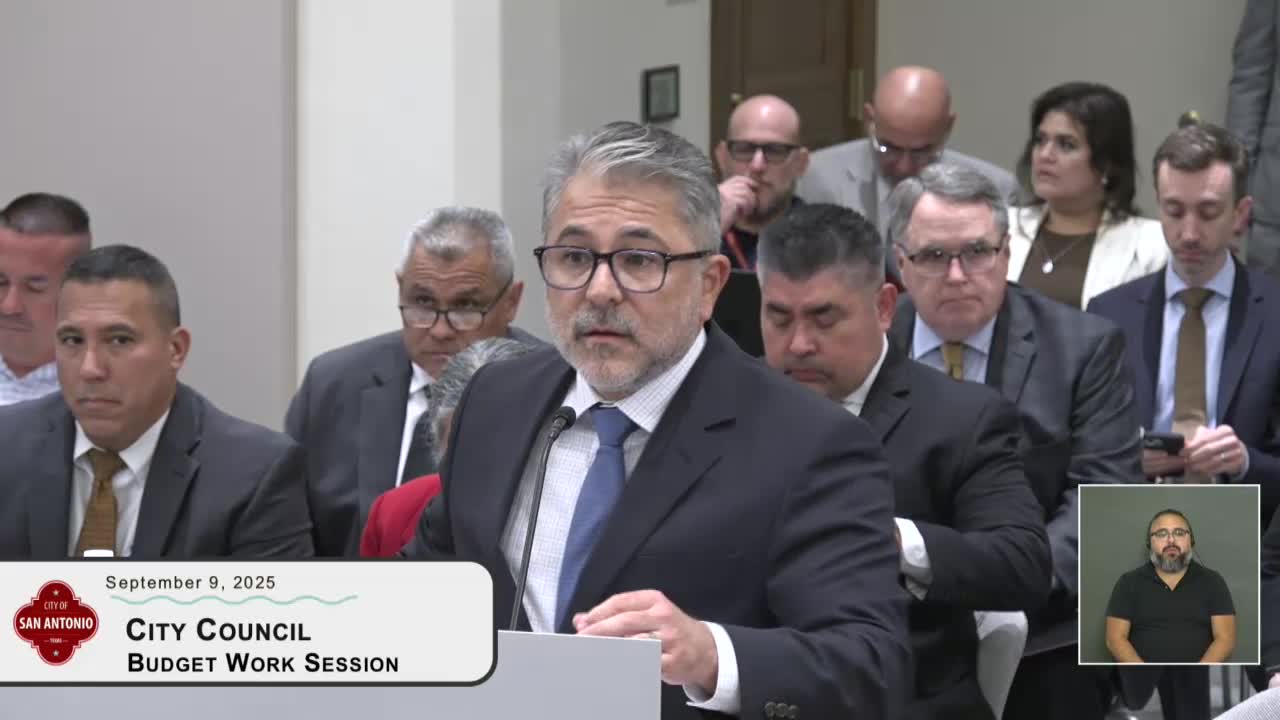
Parks Director Homer Garcia presented the Parks and Recreation DepartmentFY26 proposed budget at a Sept. 9 City of San Antonio work session, outlining a $111 million all-funds spend plan, $74 million in the general fund, service-driven reductions, expanded community center hours and continued funding for the Edwards Aquifer protection program.
Homer Garcia III, director of the Parks and Recreation Department, told the City of San Antonio budget work session on Sept. 9 that the departmentis proposing an all-funds budget of about $111 million for fiscal year 2026, with roughly $74 million in the general fund and just under $20 million scheduled for capital projects.
The budget matters because it funds operations and programming across more than 270 parks, roughly 260 miles of trails and 28 recreation centers that serve San Antonio neighborhoods. Garcia said the proposal includes targeted reductions identified through a comprehensive budget review and continued investment in aquifer protection and urban forestry.
Garcia said the departmentis accredited and employs more than 500 people. He said the cityparks system has grown since 2019 and that the proposed increases largely reflect the cost of managing new facilities and trails. "We are one of four comprehensive budget review departments," Garcia said, describing a process that identified $1,270,000 in reductions across mowing, temporary staffing and maintenance positions.
Key figures and programs in the presentation included:
- Budget totals: roughly $111 million across all funds; about $74 million in the general fund; restricted funds (including a parks environmental fee) just under $18 million. Garcia said capital spending is just under $20 million, with about $10 million earmarked for continued Edwards Aquifer protection work.
- Comprehensive budget review: Garcia said the review produced $1.27 million in recommended reductions. Savings areas he cited included lower-than-expected mowing contract costs, reduced temporary staff hours ($623,000 adjustment noted) and elimination of two vacant maintenance positions (about $116,000). He also described repurposing an underused administrative building at Wheatley Heights and removing six vacant positions totaling about $400,000; duties were absorbed by existing staff.
- Operations and hours: The department will change community center schedules at 19 full-service centers, moving weekday hours from 2 p.m.–9 p.m. to 10 a.m.–8 p.m., Garcia said. He described the change as a staffing-schedule adjustment intended to increase daytime access while "preserving current service levels." Garcia framed the shift as moving from a heritage model of programming "every room, every hour" to a more data-driven, demand-led approach.
- Capital and projects: The FY26 capital plan includes $8.7 million in additional capital projects outside the bond program, with the largest share supporting year three of a five-year shade-over-playground program (Garcia said 24 shade installations are complete and 11 more are planned). The budget also includes roughly $3.2 million for boiler and air-handling equipment at the Davis Scott YMCA at Pittman Sullivan Park (work to be led by Building Equipment Services).
- Edwards Aquifer Protection Program: Garcia described the program as voluntary and continuing, reporting that the city has protected properties and acreage toward a larger goal. He said partnerships have leveraged about $32 million in outside funds to date and that the cityis targeting seven properties totaling nearly 2,400 acres from willing landowners in the coming cycle.
- Urban forestry and trees: The proposed budget will support planting and adopting more than 11,000 trees citywide, including nearly 1,200 residential trees and about 8,800 trees distributed through events and adoptions. Garcia noted coordination with sustainability and resiliency staff and outside partners; he highlighted a Gold Leaf award from the Texas A&M Forest Service for the cityprogram.
Council members and staff pressed for additional data during the session. Kate Kinison of the Office of Innovation, who reviewed participation trends with the department, said program slots with zero participants ranged between 31% and 33% across four years of data, information Garcia said was used to right-size programming. Mayor Jones and several council members asked for follow-up on program demand, equity of service across districts and measures the department will use to track the effect of changes.
Garcia said the department will monitor outcomes after implementing the new schedule and other changes, using resident feedback through 311 and other channels to recalibrate service delivery. "We're not losing sight: we are an accredited park agency," he said, adding the department seeks reaccreditation in 2027.
The presentation concluded with Garcia noting ongoing partnerships, including with the San Antonio River Authority and county funding for trail projects. He said staff will return to answer council questions as the budget process continues.