Get Full Government Meeting Transcripts, Videos, & Alerts Forever!
Get email alerts on the Parks And Recreation topic
No spam. Unsubscribe anytime.
San Antonio parks department proposes $111 million budget with emphasis on trails, trees and operations
Summary
Parks and Recreation Director Homero García presented a FY2026 proposal that would direct about $111 million to parks operations and capital projects, including trail expansions, tree planting and aquifer protection; councilmembers questioned program participation rates and staffing changes.
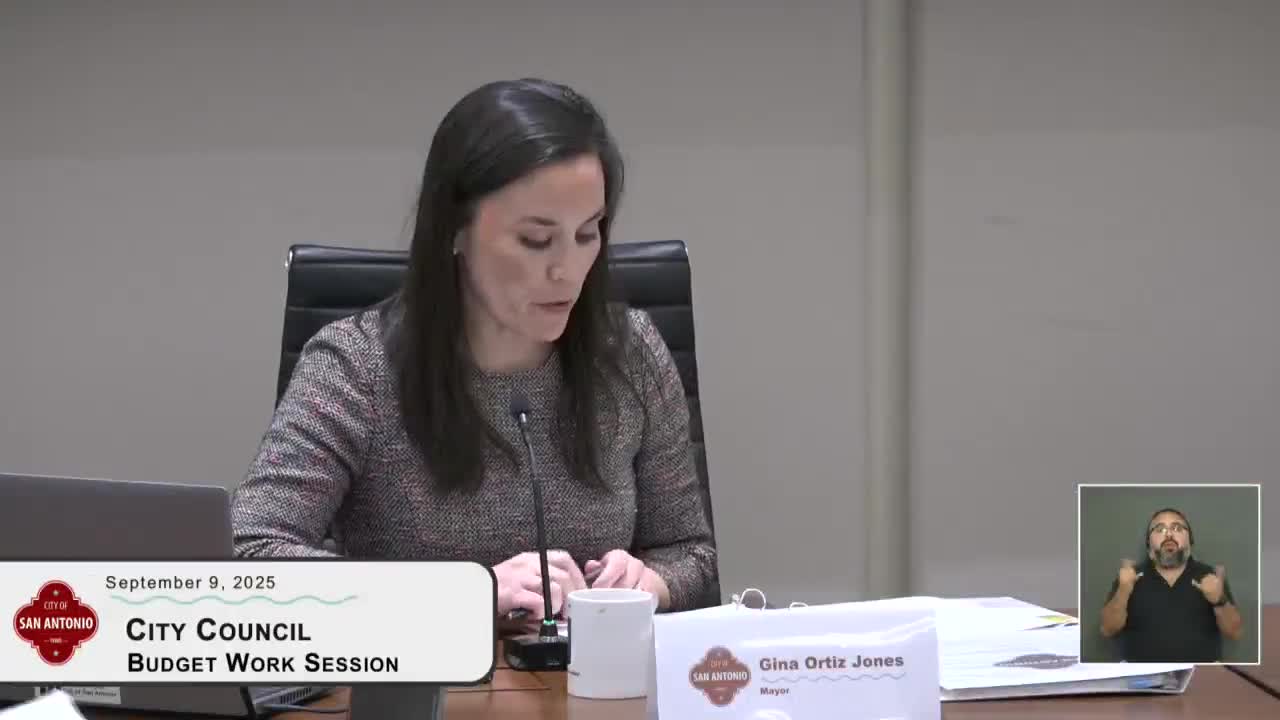
Homero García, director of the San Antonio Parks and Recreation Department, presented the departmentoperations and proposed fiscal 2026 budget to the San Antonio City Council on Sept. 9. The proposed parks budget totals about $111,000,000 and includes funding for capital projects, maintenance and restricted funds for tree programs and other environmental work.
The budget reflects funding for more than 270 parks and an extensive trail network, García said, and allocates money for projects that include additional trails in Districts 5 and 9, pool and roof maintenance at several centers, and continued investment in the city—s tree-planting programs. He told council the department is reorganizing some operations to improve response time, including reopening an administrative/reporting location on the east side near Wheatley Heights so crews can reach parks faster.
Why it matters: The plan would fund both core maintenance and multi-year capital work that councilmembers said affects public safety, heat-mitigation and recreational access across multiple districts. Councilmembers pressed department leaders on program participation, staffing changes and how the department measures outcomes.
Key points from the presentation and council discussion
- Budget totals and restricted funds: García said the parks proposal totals about $111 million; restricted funds for specific uses (including tree-planting and environmental programs) total under $18 million. The presentation described roughly $32 million in additional city contributions toward aquifer protection and related land-protection partnerships. (Department figures presented by García.)
- Capital projects and trails: The department highlighted trail investments in Districts 5 and 9 and additional trail projects in Districts 6 and 10. Councilmembers and García noted a county contribution and a 10-year county plan that will invest tens of millions in contiguous trail connections.
- Tree program and planting targets: The department described 8,000 trees planted over the last five years and said the FY2026 budget would support continuing tree planting, residential tree programs and partnerships with UTSA and other agencies to prioritize canopy in heat-vulnerable neighborhoods. The presentation included a target of 1,100 trees to be planted this year.
- Program delivery and participation: García said a review found many legacy program slots with zero enrollment and proposed shifting away from hourly, fixed programming toward a model that matches programming to demonstrated community demand. The department plans to keep 19 community centers open with adjusted hours (generally afternoon-evening hours) and to focus on quality and targeted, structured programming rather than maintaining every historic class slot.
- Operations and staffing adjustments: García outlined a comprehensive budget review that identified roughly $1.2 million in reductions and reassignments across mowing frequencies, temporary hours and vacant positions. He said the reductions include elimination of some vacant positions (financial impact described on screen as around $480,000 in reductions and nearly $400,000 tied to three specific vacant positions) and contract adjustments.
- Aquifer protection and land purchases: The presentation described an ongoing voluntary land-protection program for the Edwards Aquifer, including participation by private landowners and partnerships with USDA, Texas Parks and Wildlife and the Department of Defense. García said the program aims to protect large acreages through voluntary acquisitions and easements and cited past city contributions and partner funding.
Council questions and concerns
Councilmembers pressed for details on how program demand is measured and how the department decides which classes or centers to downsize. Councilmembers also asked for district-level participation data for events and programs, data on tree survivability and follow-up sampling of planted trees, and more detail on where restricted and bond funds will be spent. García and other Parks staff said they track program enrollment and 3-1-1 reports and will supply additional data and follow-up to council offices.
What the presentation did not include
There were no formal votes recorded on the parks budget during the presentation. Several councilmembers asked for additional, district-specific metrics and timelines for projects and asked staff to return with follow-up reports.
García closed by thanking staff and partners and said department staff were available to answer further questions.