Get Full Government Meeting Transcripts, Videos, & Alerts Forever!
Get email alerts on the Roads And Infrastructure topic
No spam. Unsubscribe anytime.
Orange County reviews 10 years of roadway projects; staff point to lower volumes, higher costs on some corridors
Summary
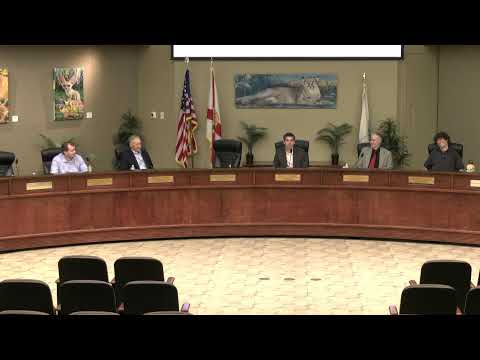
Orange County TransMAC members heard a review of the county's roadway projects completed over the past 10 years during their Sept. 11 meeting, with public‑works staff laying out project costs, modeled forecasts and how corridors are operating today.
Orange County TransMAC members heard a review of the county's roadway projects completed over the past 10 years during their Sept. 11 meeting, with public‑works staff laying out project costs, modeled forecasts and how corridors are operating today.
County staff said about 45% of the projects reviewed were developer‑funded and that many road segments are operating at better levels of service (LOS) than early traffic models projected, but several projects also carried construction costs that exceeded original engineer estimates.
During the presentation, public‑works staff summarized how LOS is calculated using Florida Department of Transportation functional classifications and the county's concurrency system, and noted the county is working to add multimodal and context‑sensitive LOS measures that include pedestrians and bicyclists. Staff cautioned that travel models rely on assumptions about growth, land use and travel behavior and can be altered by recessions, pandemics, new toll facilities or shifts in remote work.
Staff cited individual projects as examples. Alafaya Trail (completed 2015) had an engineer's estimate of roughly $30.7 million and a county cost of about $23.4 million; the corridor was projected to operate at LOS F in 2025 but is operating at LOS C. Boggy Creek Road South (completed 2024) is a four‑lane divided section with sidewalks and bike lanes; it opened at an actual cost higher than the engineer's estimate and is already projected to be LOS F by 2030 under current projections. International Drive (expanded to six lanes, completed 2019) and John Young Parkway (expanded to eight lanes, completed 2015) were cited as projects with significant cost growth compared with early estimates; staff attributed the differences to material and labor price increases, utility complications uncovered during construction and the multi‑year lag between design estimates and the construction phase.
Public commenters raised local roadway concerns. David Shepherd, identifying himself as a District 5 resident, urged the county to consider repairs to a service road and an access point used by East River Falcons Boulevard near Fire Station 82 that he said is in disrepair and is constraining school access. Eugene Siccardo asked the committee to study whether a short rail connection could link SunRail to the airport concourse and requested a small‑scale cost and revenue study of that option.
Commission members asked for more detailed, itemized cost data and for staff to show how developer reimbursement and transportation impact fees were applied on developer‑funded projects. Staff offered to provide a later breakdown showing how developers were reimbursed through impact fees and proportionate‑share credits and said TransMAC could identify corridors with excess capacity for innovative treatments such as lane repurposing, protected bike facilities or traffic‑calming measures.
No formal action was taken on project funding or on individual corridors during the meeting; staff said the report was informational and that commissioners or TransMAC members could request follow‑up analyses.
The county staff presentation materials included a list of CIP and developer projects, engineers' estimates and actual costs, and a recommendation that TransMAC consider corridors such as Boggy Creek and Horizon West for further study of nontraditional or technological interventions to manage congestion and safety.
Staff said the county's population is projected to surpass 2,000,000 by 2050 and noted that projected growth underscores the need to integrate multimodal measures and safety improvements when planning future roadway work.
The county offered to provide commissioners with a detailed reconciliation of engineer estimates, year‑of‑expenditure adjustments and the developer reimbursement ledger on request.