Get Full Government Meeting Transcripts, Videos, & Alerts Forever!
Get email alerts on the Combined Sewer Overflows topic
No spam. Unsubscribe anytime.
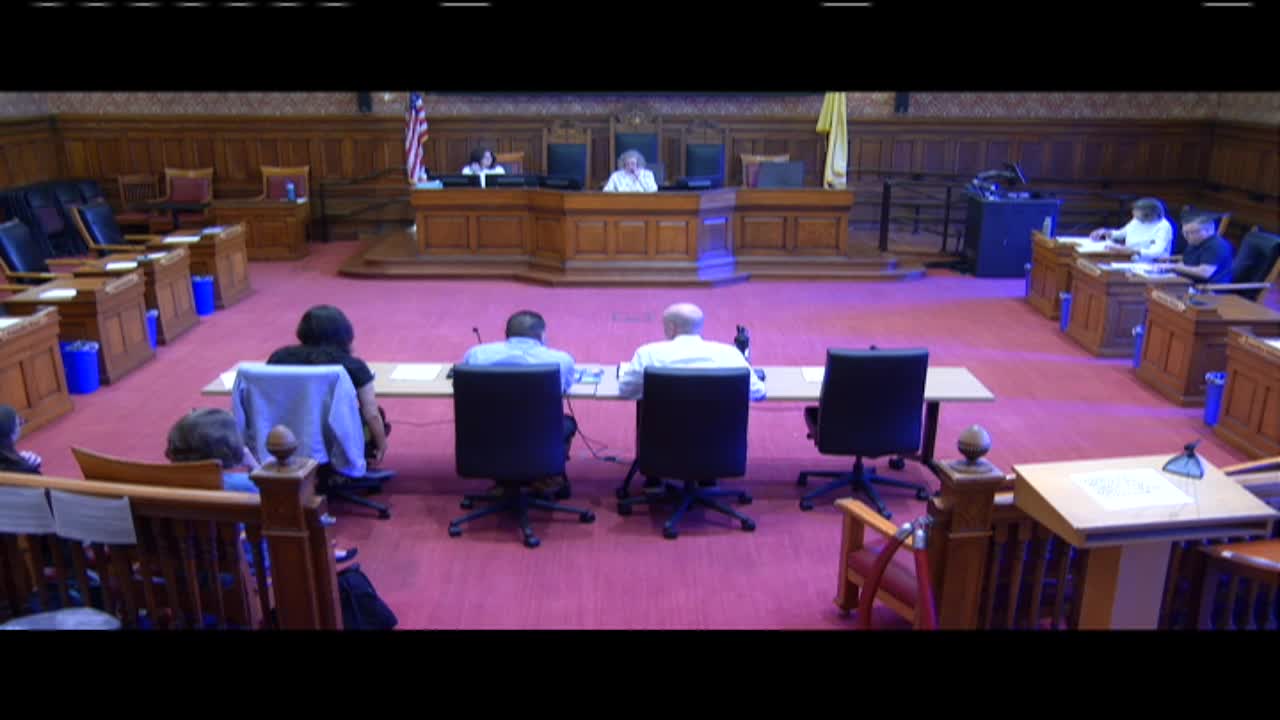
Cambridge committee hears wide-ranging plans to reduce sewage overflows; votes to direct manager to work with coalition
Summary
The Cambridge Health and Environment Committee held a public hearing on combined sewer overflows (CSOs) and unanimously voted to ask the city manager to work with city departments and a newly formed watershed coalition to evaluate accelerated CSO control options, cost‑benefit analyses and expanded public outreach.
The Cambridge City Council Health and Environment Committee on a municipal public hearing examined updates to the long‑term control plan for combined sewer overflows (CSOs), heard technical briefings from Cambridge Department of Public Works staff and three watershed organizations, and unanimously approved a committee request that the city manager work with city departments and a recently formed watershed coalition to evaluate options to reduce CSOs, including cost‑benefit analysis and expanded public outreach.
The committee chair, Councilor Nolan, opened the meeting calling it a public hearing to “review and discuss ongoing work to mitigate and reduce combined sewer overflows within Cambridge and the surrounding area and other mitigation efforts to address extreme weather events” and set the agenda to include a DPW presentation, watershed‑group briefs, public comment and council discussion.
Why it matters: CSOs are untreated discharges of sewage and stormwater that occur when the combined sewer system exceeds capacity during rainfall. City staff and advocates told the committee that climate change is increasing rainfall intensity and that the region must plan for future conditions; advocates urged a level of control that would prevent CSOs except during very large storms or to pursue full sewer separation where feasible.
City presentation and technical details
John Nardone, acting commissioner of public works, introduced DPW presenters and described the multi‑agency effort. City Engineer Jim Wilcox and Lucica Hiller, senior project manager for the CSO control plan, detailed the work already completed and the draft Long Term Control Plan (LTCP) update the city is preparing jointly with the City of Somerville and the Massachusetts Water Resources Authority (MWRA). DPW said a draft recommended plan will be submitted on Dec. 31 and a final plan is due to DEP and EPA in January 2027.
DPW recapped past and ongoing measures: extensive sewer separation (for example, West Cambridge/CAM 004 and Whittemore Avenue projects), correction of more than 400 common manholes (2001–2018), construction of bio‑retention basins and infiltration systems, stormwater outfalls at Talbot and Western avenues, the Parking Lot 6 stormwater holding tank in the Port neighborhood, and a recently‑commissioned stormwater holding tank at the Tobin School. DPW said past investments have reduced regional CSO volumes significantly since the original LTCP era, noting MWRA statistics of a roughly 2,800,000,000‑gallon annual reduction since 1988.
Hiller described the LTCP update’s technical approach: the plan uses a “future typical year” (planning horizon roughly 2040–2069) and design storms (5‑year and 25‑year, 24‑hour events) to account for climate change. She summarized engineering tools under consideration: sewer separation, green stormwater infrastructure (GSI), removal of inflow/infiltration, additional storage (tanks or tunnels), and enlarged conveyance. Hiller presented one proposed project for the Alewife Brook watershed: a Sherman Street underground storage tank in a city‑owned lot sized conceptually at 1.5–2 million gallons, paired with regulator/weir and interceptor conveyance upgrades (48‑inch to 60‑inch pipe) to enable future sewer separation. DPW said the Sherman Street tank, as scoped, would provide relief for up to a 2‑inch (typical‑year) storm under the future climate scenario; conceptual design, geotechnical and environmental surveys are underway and neighborhood outreach is planned.
Cost and finance
DPW said much of Cambridge’s sewer work has been funded by sewer rates paid by residents; the LTCP update includes a standard EPA financial capability analysis. DPW reported the city is trying to hold annual water and sewer rate increases to roughly 5–8 percent and warned that other communities that did not plan saw single‑year rate spikes of up to 20 percent. DPW noted that many projects will be large capital undertakings requiring multi‑year funding and coordination with MWRA and other agencies.
Advocate and watershed perspectives
Emily Norton, executive director of the Charles River Watershed Association (CRWA), and Julie Wood, CRWA climate resilience director, emphasized regional history and the public’s unmet expectations for a swimmable Charles. Norton recounted the long Clean Water Act timeline and said progress so far has not yet delivered the promised water quality outcomes. Wood urged the LTCP to plan for future storms and to adopt a level of control that would prevent CSOs except in very rare extreme events (for example, a 20‑ to 50‑year storm) or to pursue full sewer separation.
Patrick Herron, executive director of the Mystic River Watershed Association, described the public‑health consequences of untreated discharges in Alewife Brook and the Mystic River and urged aggressive action and regional collaboration. Members of Save the Alewife Brook described repeated flooding, documented volumes of untreated discharge (the group cited 29 million gallons to Alewife Brook in 2023 and larger annual totals in other recent years), and health impacts for residents and people experiencing homelessness.
Public comment and concerns
During public comment, multiple residents and advocates described flooding into basements and the Alewife Greenway, illnesses after contact with floodwater, and neighborhood exposure to raw sewage. Kristen Anderson of Save the Alewife Brook said, “The floodwater came in through the back door of my house. It left behind toilet paper, used condoms, and tampons in my yard,” and pressed for faster action. Speakers repeatedly requested clearer, more frequent public engagement and a cost‑benefit analysis that includes health and community co‑benefits.
Committee action and next steps
After the presentations and public comments, the committee voted unanimously on a motion to ask the city manager to work with relevant city departments and the recently formed watershed coalition to evaluate CSO control options, including cost‑benefit analysis, consideration of a 20‑ to 50‑year/25‑year storm level of control or full sewer separation, updates to local stormwater requirements that would bring private development into the solution, greater use of green stormwater infrastructure, improved public outreach, and consideration of a CSO commission or similar public body. Councilor Nolan moved the request; Councilors Azim and Wilson indicated co‑sponsorship and the five committee members recorded “yes.” The committee noted the motion would be forwarded to the full city council for formal consideration.
DPW reiterated that many projects are already underway (for example, the Tobin tank and Port neighborhood projects), that the LTCP draft will be submitted Dec. 31, and that a public meeting on project alternatives is scheduled as the next major public engagement step. DPW also emphasized that many CSO control tools are available (sewer separation, storage tanks, conveyance upgrades and GSI) but are capital‑intensive and take time to design and build. DPW said Sherman Street conceptual design is underway and that detailed schedules and funding requests will follow as designs advance.
What the committee said and what comes next
Committee members and the advocate presenters repeatedly urged faster progress and stronger public outreach. Several councilors asked DPW for clearer option matrices (cost/time/impact) and for more public‑facing comparisons of what different funding and phasing choices would mean for neighborhoods and rates. DPW staff said they will present project alternatives and ranking criteria at the next public meeting and that the draft LTCP will be followed by further community outreach before finalizing the plan in 2027.
Ending: The committee’s unanimous vote to ask the city manager to coordinate with departments and the new watershed coalition moves the issue to the full council level; DPW and the partnering watershed groups will continue project design and public engagement in the months ahead. The next major public meeting on alternatives is scheduled as part of the LTCP process and DPW confirmed the draft plan submission to regulators is planned for Dec. 31, followed by outreach and a final submission to DEP/EPA in January 2027.