Get Full Government Meeting Transcripts, Videos, & Alerts Forever!
Get email alerts on the Ranked Choice Voting topic
No spam. Unsubscribe anytime.
Residents and advocacy groups urge Rockville to implement ranked-choice voting by 2027
Summary
At the Sept. 8 public forum, multiple residents and national and local advocates urged the Rockville City Council to adopt ranked-choice voting (RCV) for municipal elections by 2027, citing reduced negativity in campaigns and better representation; a consultant-convened timeline and implementation supports were discussed.
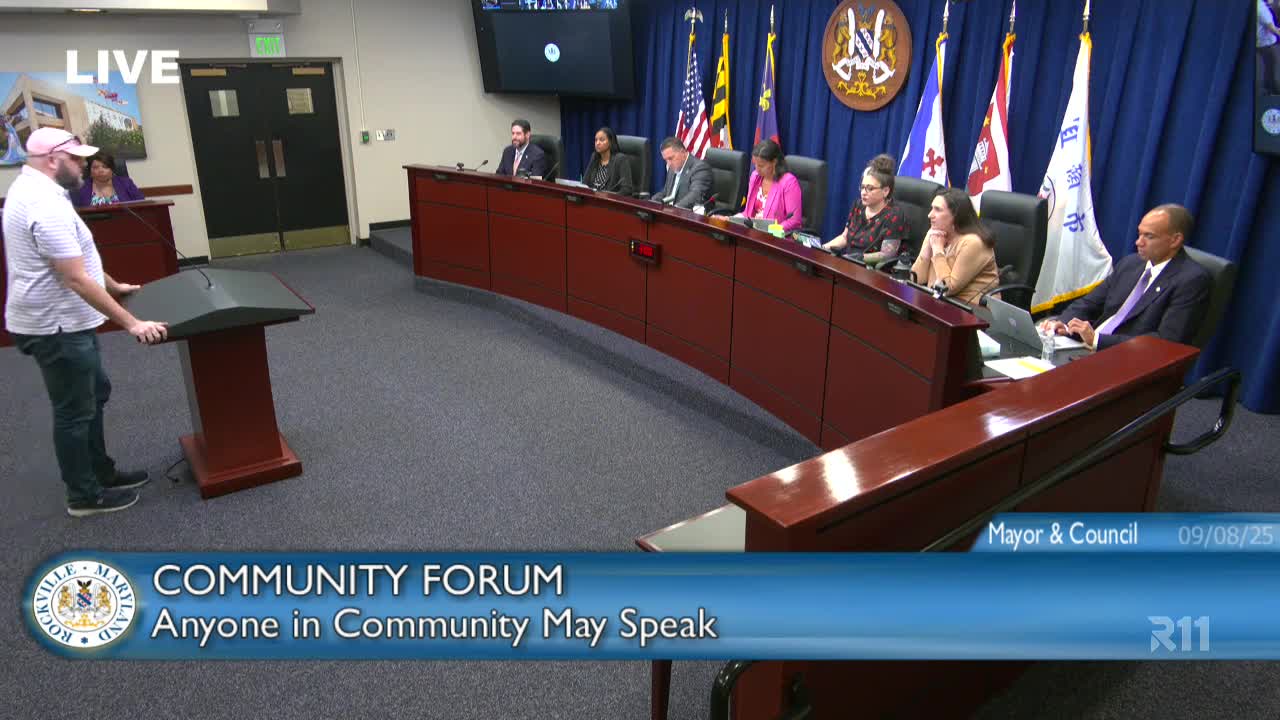
Dozens of residents and several nonprofit voting-reform organizations urged the Rockville City Council on Sept. 8 to adopt ranked-choice voting and to aim for implementation by the 2027 municipal elections.
Speakers included local residents, state and national advocates and a technical expert from the Ranked Choice Voting Resource Center, who advised that the two-year implementation window many jurisdictions use is feasible and helps sustain community education.
Chris Hughes, Senior Director of Policy at the Ranked Choice Voting Resource Center, testified by phone and advised the council about implementation timelines: "In most jurisdictions that have implemented ranked choice voting in the last 10 or 15 years, they've done so within two years of the adoption... that two-year timeline means the energy stays up, means people stay more engaged with the implementation of ranked choice voting than if you have a longer implementation timeline," Hughes said.
Local advocates emphasized RCV's potential to change campaign incentives and improve representation. Ashley Houghton, chief program officer at FairVote, said RCV encourages problem-solving campaigns and can broaden representation in cities like Rockville; several residents also argued RCV could help ensure diverse community voices win office.
Other speakers asked the council to pursue implementation without a referendum, or to use a council resolution to start the process. Councilmembers acknowledged the testimony and noted the consultant's report on the broader election-code update offers multiple implementation options. City staff and advocates said further legal drafting, voting-equipment work and a voter-education campaign would be required before a switch could take effect.
There was no formal council vote on RCV at the Sept. 8 meeting. Councilmembers asked staff for timelines, legal analysis and public-engagement plans as next steps in the overall election-code process.