Get Full Government Meeting Transcripts, Videos, & Alerts Forever!
Get email alerts on the Restitution Payment topic
No spam. Unsubscribe anytime.
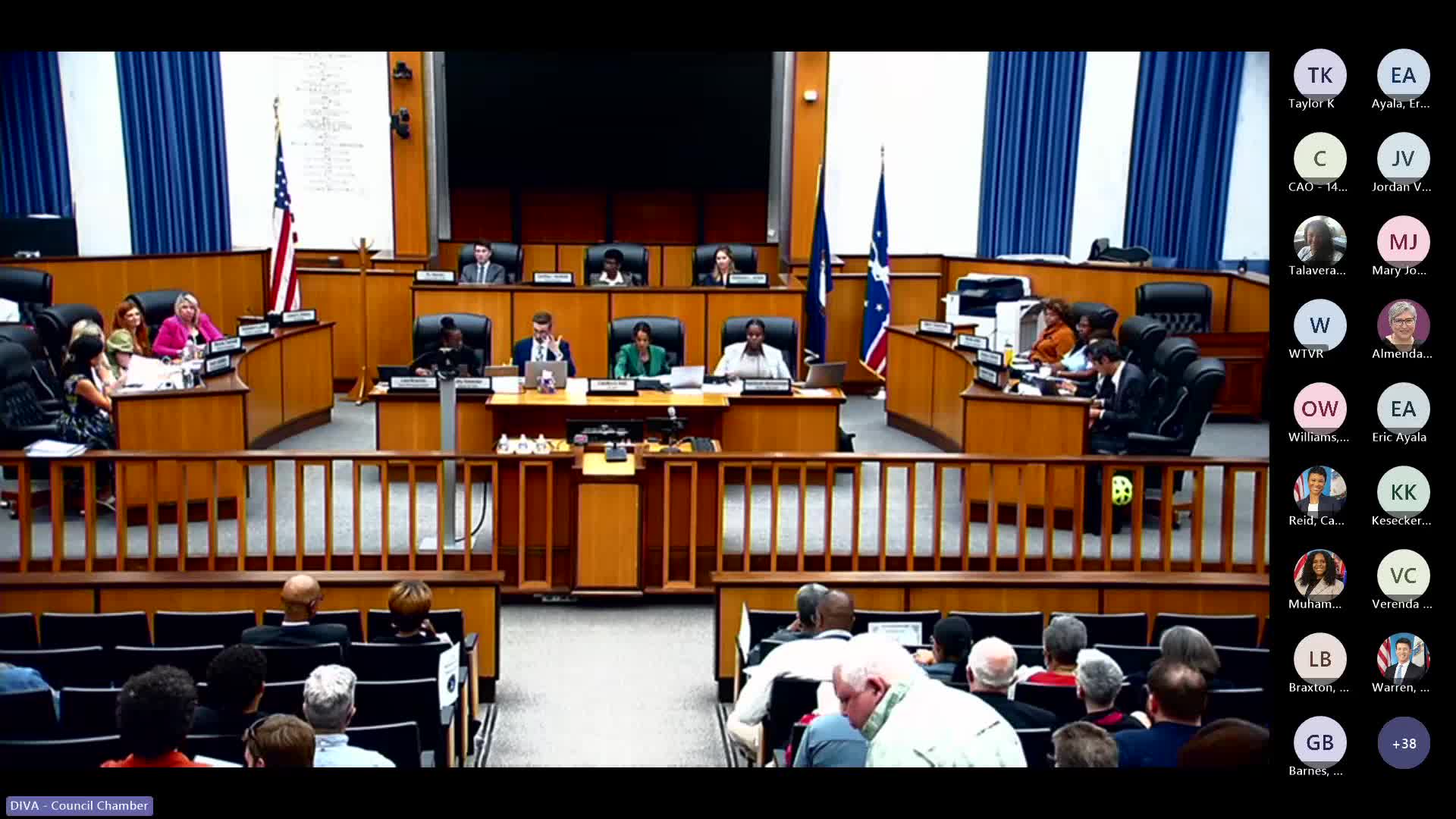
Richmond Council approves $5.8 million restitution to wrongfully convicted man amid debate over housing fund
Summary
The Richmond City Council adopted an ordinance to transfer $5.8 million from the delinquent tax sale special fund to pay restitution under Virginia Code § 8.01-195.13, drawing public opposition from housing advocates who urged the city to use other sources and protect the Affordable Housing Trust Fund.
The Richmond City Council voted to adopt ordinance 20-25-1-88, authorizing a transfer of $5,800,000 from the delinquent tax sale special fund into a new FY26 general fund line item labeled “restitution payments” to finance a court-ordered restitution payment pursuant to Virginia Code § 8.01-195.13.
The vote followed a public hearing in which housing and civil-rights advocates urged the council not to draw the money from a reserve that many say should instead support affordable housing. Tracy Hardney Scott, housing chair for the Virginia State Conference NAACP, said, “We must consider the broader impact of how transferring these funds are allocated,” and urged the council to identify an alternate source so the city does not “undercut the city's commitment to solving” the housing crisis.
Several speakers reiterated that position. Alex Krieger, a Presbyterian pastor and member of RISC (Richmond Involved to Strengthen our Communities), told the council that ordinance language and past practice had intended a portion of these funds for the Affordable Housing Trust Fund and urged the council to preserve that commitment. Casey Miller, a renter from the Seventh District, said she “fully and vehemently support[s] that this man get the restitution he's so graciously deserved,” but repeated her concern about using the delinquent tax sale fund as the funding source.
Administration representatives told council members the funding source is lawful and available. CAO Donald said the administration had “identified a funding source that is lawful and appropriate to be able to resolve this matter” and said administration staff had been working to uncover other resources to invest in affordable housing as part of larger budget work.
Council debate centered on balancing an immediate obligation to remedy a wrongful conviction with long-standing community demands for dedicated affordable-housing revenue. Councilwoman Robertson said she would support the ordinance while pressing the administration for guarantees that expected roll-off tax-abatement revenues and other identified funds would be dedicated to the Affordable Housing Trust Fund going forward: “I’m gonna vote to support this because I’m gonna give the administration…an opportunity to know that we are trusting them to do exactly what they have promised to do,” she said, adding that the administration committed to specific follow-up and verification steps.
Council voted to adopt the ordinance. The council recorded its votes with the majority in favor; one member registered opposition on record. The council directed the administration to return quickly with clarified ordinance language and reporting showing how the administration will preserve and restore the dedicated affordable-housing revenues discussed during the hearing.
The ordinance places the $5.8 million into a new restitution line in FY26 and tasks the finance department with implementing the transfer and payment process. Council members also asked the administration for a written plan, within the short window discussed during the meeting, that documents where previously pledged affordable-housing revenues will be routed and how the administration will ensure ongoing funding for the Affordable Housing Trust Fund.