Get Full Government Meeting Transcripts, Videos, & Alerts Forever!
Get email alerts on the School Budget topic
No spam. Unsubscribe anytime.
School board reviews final budget draft, personnel allocations and capital project funding
Summary
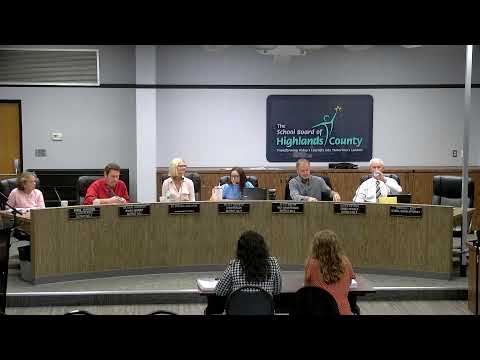
The School Board held a budget workshop where Angelica Tinajero, head over business operations, presented the district’s fourth draft of the personnel‑allocation memo, updates to utilities and capital budgets, and debt‑service schedules as the district prepares its final budget.
The School Board held a budget workshop where Angelica Tinajero, head over business operations, presented the district’s fourth draft of the personnel-allocation memo, updates to the utilities and capital budgets, and debt-service schedules as the district prepares its final budget.
Tinajero opened her presentation by saying, “This should be our final workshop for this year on budgets,” and reviewed changes to staffing allocations across schools. The personnel memo shows a net reduction of six classroom-teacher units compared with last year; specific changes include a loss of one unit at Avon Park High and Cracker Trail, a half‑unit at Lake Placid High that was added back, a unit added at Avon Elementary, a unit added at Lake Country Elementary and a loss of one at Memorial Elementary. Tinajero said those adjustments reflect the district’s 10‑day student counts.
The memo also moved several specialist and paraeducator positions. At Fred Wilde Elementary, a planned conversion of a music position to theater was reversed after the school could not hire a certified theater teacher; the position was converted to a music para. The district reduced two pre‑K units (including one at Lake Placid Elementary) for enrollment reasons, added half a Title I discretionary para at Cracker Trail paid from carryforward funds, and restored several migrant program positions now funded by grant money. Tinajero said three ESOL para positions and three IDEA‑funded units (two at Sebring Middle and one at Sun and Lake Elementary) were added based on need.
On utilities, Tinajero reported multi‑year comparisons showing electricity expenditures declined by nearly $300,000 and total utilities spending fell by more than $200,000 compared with the prior year. She cautioned that some new buildings (Woodlawn and Lake Country) are not yet fully on the district’s utilities accounts because of portable buildings and phased transitions. Tinajero credited district maintenance staff for some of the savings and noted ongoing troubleshooting to reduce excessive run times on recently replaced air‑conditioning units, particularly at Hill Gustat, where an entire HVAC replacement last summer increased usage during commissioning.
Debt obligations were reviewed next. Tinajero summarized outstanding certificates of participation (COPs), including a Series 02/2015 refunding with roughly $24 million remaining (projected payoff in 2032) and a Series 2024 issue that finances two new buildings with an annual debt payment of about $1.3 million. The district also has approximately $2.4 million left on certain revenue bonds; Tinajero said financial advisors recommended those smaller annual payments as candidates for an early payoff if the district wanted to reduce long‑term interest costs.
Capital funding and projects: Tinajero explained the district’s PECO (Public Education Capital Outlay) and safe‑school grants. The district included a recent PECO/school‑hardening allocation of about $196,000 in the draft budget but is still awaiting state appropriation approval before work can begin; she said approvals often arrive in March and projects typically start the following fall. The district receives about $400,000 annually in state capital outlay funds and uses those funds primarily for safety and small‑scale building projects identified during annual inspections. Current encumbrances and reserves include roughly $565,000 in encumbrances and a $238,000 reserve within the capital outlay and debt service account.
Local capital funding (the 1.5‑mill local capital improvement levy) is projected at about $14 million for the coming year; the presentation shows $1.212 million rolled over in encumbrances and a small reserve after transfers. Tinajero said the district uses this local millage mainly for leases, bus purchases, debt service and the annual maintenance transfer. The half‑cent sales tax fund was conservatively budgeted at $7 million; combined with rollover and encumbrances, the project list totals about $20 million this year with roughly $3.3 million unappropriated in contingency.
Tinajero provided the board an updated budget book, including demographics, school grades and a new presentation format for full‑time‑equivalent (FTE) counts that separates brick‑and‑mortar students from Florida Education Scholarship (FES) scholarship counts. She said she removed FES scholarship dollars from the district’s revenue totals in the draft budget because those dollars do not flow into district operating funds, producing a roughly $11 million difference in state funding figures compared with prior presentations. Tinajero said the district’s 20‑day student count totaled about 11,006 and that the budget conservatively used a slightly lower number for planning.
Board members asked staff to provide monthly financial briefings during the fiscal year; the chair thanked Tinajero, Stephanie and the finance team for “months and months” of work preparing the drafts. The board also discussed continuing efforts to reduce insurance costs and to monitor enrollment and position control closely. Facilities work and project‑list questions raised by board members included a pending plumbing issue at Avon Park Elementary and plans for future HVAC work; facilities staff said some projects remain encumbered and that invoicing lags create the appearance of funds remaining on older line items.
The workshop concluded with the chair adjourning the session after board members and staff agreed to continued monitoring and monthly reporting.
Ending: The board did not take a formal vote during the workshop; items discussed will be incorporated into the district’s upcoming public hearings and final budget adoption process.