Get Full Government Meeting Transcripts, Videos, & Alerts Forever!
Get email alerts on the Public Safety topic
No spam. Unsubscribe anytime.
Metro police cite ridership gains, staffing and care‑unit expansion as safety priorities ahead of World Cup
Summary
Metro Police Chief Ben Tin told a Houston City Council committee that ridership is up, frontline staffing has reached a milestone and the agency is expanding a clinician-led care unit and mobile command-capacity to address safety and homelessness across the system.
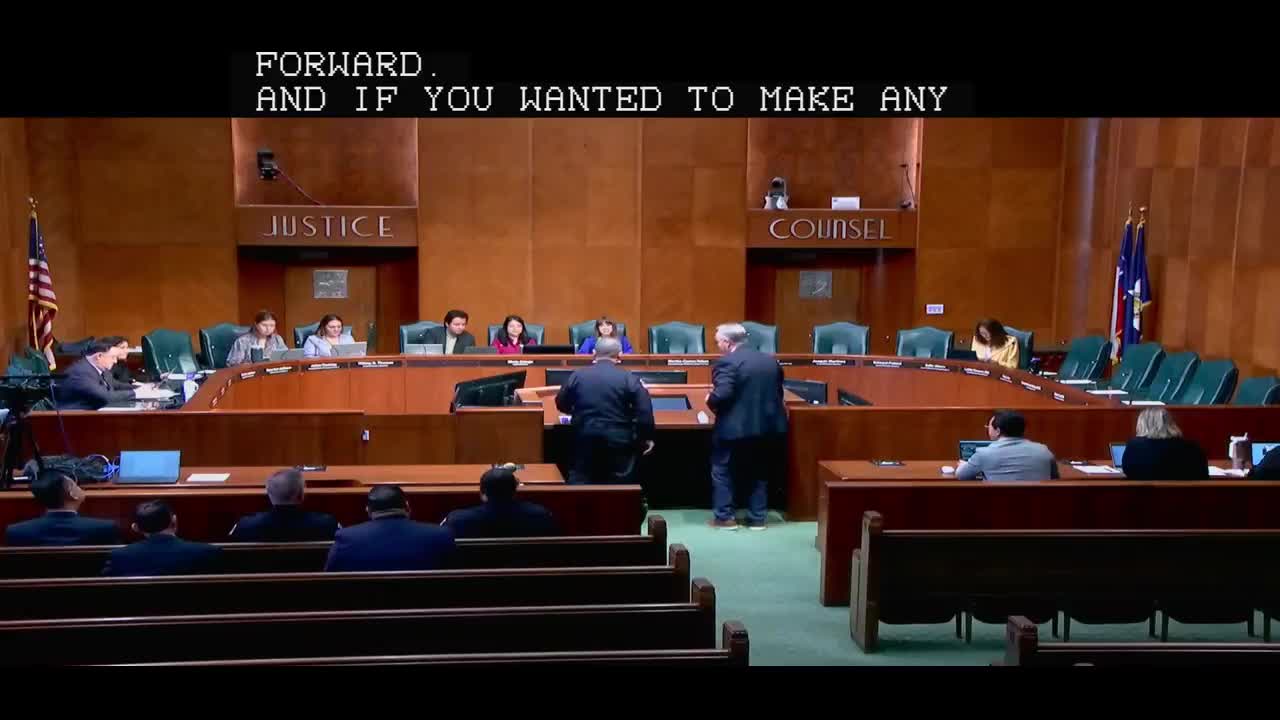
Metro Police Chief Ben Tin briefed a Houston City Council committee Tuesday on safety, staffing and operational changes across the Metro transit system as ridership rebounds and the city prepares for FIFA-related events.
Ben Tin, Metro chief of police, said Metro is seeing rising ridership and has prioritized a “safer, cleaner, more reliable and more accessible” system by increasing visibility, decentralizing operations and expanding social‑service responses. “Safety and security for our riders and to the public is not 1 of the most important things, it is the most important thing, and it is our highest priority,” Tin said.
The briefing came as council members pressed Metro for details on where authority begins and ends with partner agencies, how the agency handles homeless contacts on trains and platforms, and how Metro will staff and stage responses for large events during the 2026 World Cup.
Why it matters: Metro serves a wide region of Greater Houston and runs about 75 million trips a year, Tin said, roughly 200,000 riders per weekday on average. Council members called the combination of higher ridership, major upcoming events and long‑running homelessness and quality‑of‑service concerns a reason for close oversight of Metro safety and service investments.
Major points and numbers
- Ridership and finances: Tin said system ridership has rebounded to roughly 75,000,000 annual trips, about a 5 percent increase year over year, and that Metro is financially stable. He said Metro has not issued debt for about eight years and has used operating revenue and some federal grants for recent capital work.
- Staffing and footprint: Tin said Metro reached a milestone of full frontline staffing for its police force earlier this year. He described roughly 200 frontline officers currently deployed, with a goal to grow into the low‑ to mid‑200s ("around the 220s and 230s"). He estimated total Metro police personnel at “late 270 to 280” employees across ranks.
- Decentralization and mobile facilities: To speed response across Metro’s large service area, Tin said the department plans satellite substations and mobile command capacity. He said a mobile command post is expected to be delivered in the second quarter of 2026 and will be used both for crisis response and for sustained placements at hot spots.
- Care unit and homelessness outreach: Tin said Metro’s clinician‑led care unit currently has six clinicians and averages “roughly about 200 contacts per week.” He said Metro is expanding evening coverage and plans to double the care‑unit capacity. The care unit’s role is to offer social services, medical referrals and housing/shelter connections rather than relying solely on enforcement. “We just cannot arrest our way out of problems,” Tin said.
- Enforcement and partnerships: Tin described routine collaboration with Houston Police Department, Harris County precincts and state and federal partners, explaining that the closest agency typically responds to 911 calls and Metro augments when incidents are within transit property. He said Metro routinely removes firearms taken from criminals on the system and publishes monthly incident statistics on the Metro website.
Council questions and direction
Council members asked for more granular data and operational dashboards tied to council districts and bus stops. Vice Chair Jackson and others requested a list of transit stops or locations where recurring problems occur; Tin asked council offices to compile and send those locations so Metro can prioritize deployments. Council Member Alcorn praised recent stop improvements and asked Metro to continue increasing frequency on lines to maintain ridership gains.
Preparation for large events
Tin said Metro is coordinating with lead law‑enforcement partners and plans to use overtime, partner agencies and existing staff to increase presence during FIFA events. He emphasized training, technology and transparency as continuing priorities and said Metro will seek to avoid merely displacing people experiencing homelessness when intensifying downtown enforcement.
What remains unresolved or contingent
Tin repeatedly noted resource and capacity limits: several proposals (expanded care‑unit hours, additional satellite substations and mobile assets) depend on future budget decisions and staff growth. He also said some policy changes — platform redesigns that would require controlled access — would need extensive planning and funding and are not resolved.
Ending
Council members asked Metro for follow‑up materials including district‑level incident data, more detailed statistics on firearms recovered and a compiled list of problem stops. Tin said he would work with council offices to produce that information. The committee’s next scheduled meeting was announced as Oct. 14 at 10:00 a.m.