Get Full Government Meeting Transcripts, Videos, & Alerts Forever!
Get email alerts on the Radiological Preparedness topic
No spam. Unsubscribe anytime.
State radiological preparedness rep briefs county on drills, potassium iodide distributions
Summary
Patrick O'Connell of the state's radiological emergency preparedness program briefed the New Castle County Public Safety Committee on planning zones, exercises and upcoming potassium iodide (KI) distribution dates for residents and workers inside the 10-mile emergency planning zone around the Salem-Hope Creek nuclear plant.
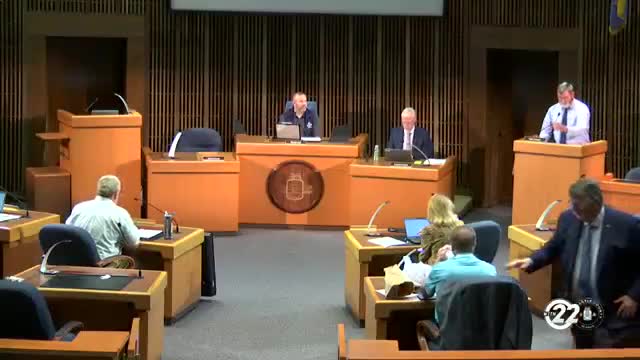
The New Castle County Public Safety Committee received a briefing Sept. 9 from a state radiological emergency preparedness official on drills, planning zones and upcoming potassium iodide (KI) distributions for residents who live or work within the nuclear-plant emergency planning area.
Patrick O'Connell, planning supervisor at the Delaware Emergency Management Agency (DEMA), described the program’s purpose as coordinating guidance, training and resources to state and local governments to protect public health and safety in the event of an incident at a commercial nuclear power plant. “When I’m speaking about the nuclear power plant incident, I was talking about the main nuclear power plant that we have that affects the state is Salem Hope Creek, which is across the river in Lower Alloway’s Creek,” O'Connell said.
O'Connell said the program conducts quarterly drills with state and local partners and biannual, FEMA-evaluated exercises to provide “reasonable assurance” that authorities can protect public health and safety within the 10-mile emergency planning zone. He noted additional plants in the broader 50-mile ingestion pathway that can affect the state, including sites in Pennsylvania and Maryland.
On protective actions, O'Connell described potassium iodide (KI) as medicine used to saturate the thyroid with stable iodine and reduce absorption of radioactive iodine during incidents. He said Delaware follows EPA protective-action guidance for KI administration and that the state provides two KI distribution events each year for people who live or work inside the emergency planning zone.
O'Connell provided specific upcoming distribution plans: a KI distribution scheduled Oct. 2 at the Townsend Fire Company and a second distribution typically held in April at the Middletown Fire Company (specific April date not yet set).
Committee members asked about a pending federal bill that could change FEMA recovery and reimbursement processes. Dr. Carter said he would coordinate with county staff to track the legislation; O'Connell said he would share information he has and coordinate with county emergency-management staff.
Councilman Kaneko praised the state-county coordination and noted plans to rotate upcoming KI distribution events to Delaware City for October. O'Connell confirmed Delaware City is on the schedule.