Get Full Government Meeting Transcripts, Videos, & Alerts Forever!
Get email alerts on the Economic Development topic
No spam. Unsubscribe anytime.
New Castle County economic development office outlines workforce, small‑business and corridor priorities
Summary
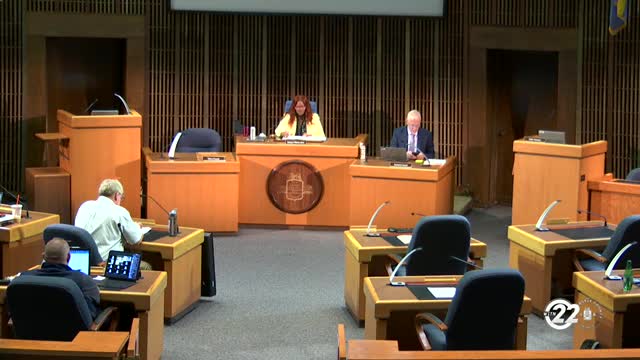
The New Castle County Office of Economic Development presented its quarterly update to the Economic Development Committee on Sept. 9, outlining three cornerstone priorities — workforce development, small-business support and corridor revitalization — and describing near-term work including a workforce study with the New Castle County Chamber of Commerce and an enhanced small-business incubator partnership.
The New Castle County Office of Economic Development presented its quarterly update to the Economic Development Committee on Sept. 9, outlining three cornerstone priorities — workforce development, small-business support and corridor revitalization — and describing near-term work including a workforce study with the New Castle County Chamber of Commerce and an enhanced small-business incubator partnership.
"We think of [workforce development] as understanding what the composition of the current labor force in the county is today, the workforce that we're gonna need tomorrow, and how do we put programming in place to make sure that we can fill in gaps," Jeff Berman, economic development director, said as he described the administration's priorities. He said the office asked the Chamber to perform a workforce study and expects to have that report in members' hands by the next subcommittee update.
Why it matters: the findings will guide targeted programs and corridor plans intended to attract private investment and align jobs with resident skill sets. The office said it will reuse existing local frameworks — notably the Chamber's small-business incubator — to scale services for entrepreneurs and extend outreach to diverse business owners.
Berman described a three-step approach for each priority: data gathering, stakeholder partnership and then resource/allocation recommendations. He said the office currently has a two-person core team (Berman and Helen Foster) and is leveraging partners to expand capacity. "We're a small team, two people," he said. "To kind of extend our reach ... we partnered with the New Castle County Chamber of Commerce." The workforce study and incubator work are deliverables of that partnership.
Helen Foster, small business enterprise coordinator, reported verified small-business enterprise (SBE) participation on the Newark Free Library construction project at roughly 30 percent to date. Foster said the total contracted amount to date is just over $29,000,000 and that about $8,800,000 has flowed to certified SBEs. She added the office has received 119 proposals on the library work, participation on individual quotes has ranged from 1 percent to 100 percent, and there are 10 remaining quotes to be issued.
Foster described SBE outreach and concierge services to prospective vendors and contractors, including regular events, one-on-one meetings and referrals to technical assistance partners. She said the office coordinates with public-works staff to set realistic SBE goals for specialized projects such as sewer contracts and highlighted two sewer awards that nearly reached expected SBE goals. Foster also flagged the upcoming large Christiana River force-main project (Harold Street) as a future opportunity for SBE participation.
Committee members raised specific questions that the office recorded as next steps. Councilman Card asked whether the workforce study could be broken down to subregions (for example, South of the Canal or ZIP-code areas) to better align residents' skills with local employers; Berman said the study request includes sub-county geographic cross-cuts and that the team will pursue ZIP-code or similar analyses.
Card also asked whether the county should require decommissioning plans for very large structures such as warehouses or data centers to avoid future redevelopment obstacles. "Do we need to start now thinking about requiring decommissioning plans for buildings of a certain size so that we don't end up with these buildings that are very difficult to convert later?" Card asked. Berman said his office and land-use staff plan to explore the issue, noting outreach to the University of Delaware and the Delaware brownfields program about federal and state remediation grants and demonstrating interest in a policy conversation about large-structure reuse.
Councilman Street asked whether the county's targeted outreach for Hispanic business leaders would be matched by similar sessions for Black- and women-owned businesses. Berman said the office held a Black-owned business roundtable in February and plans routine, targeted convenings; Foster said she held three sessions in October 2024 that included minority- and women-owned businesses and said those events contributed to the library project's SBE participation.
The office also reported ongoing corridor work: a joint RFP with the mayor's office seeking actionable redevelopment strategies, and preliminary engagement on a Route 9 corridor plan centered on County library property and using county-owned land behind the Route 9 Library for potential redevelopment.
Next steps and events: Berman said the workforce study will be delivered by the next subcommittee update; the office will continue incubator-enhancement work with the Chamber; Foster said the county will host an invitation-only Hispanic business leaders roundtable on Oct. 1 and a larger event in early November. The office said it will keep council informed as corridor plans and grant applications (including brownfields funding) progress.