Get Full Government Meeting Transcripts, Videos, & Alerts Forever!
Get email alerts on the Administration And Coordination topic
No spam. Unsubscribe anytime.
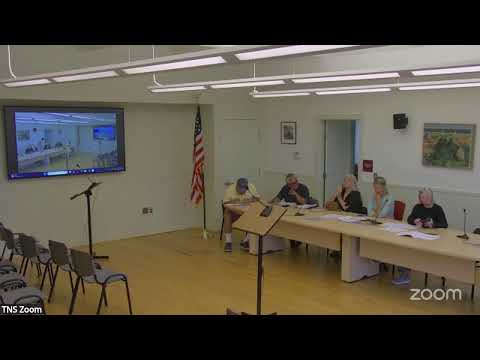
Commission adopts internal review checklist, discusses coastal resilience coordination and hazardous‑waste collection needs
Summary
The Conservation Commission agreed to use an internal review checklist for application reviews, to share priority overlap topics with the Coastal Resilience Committee ahead of an Oct. 7 joint meeting, and to follow up on hazardous‑waste collection capacity for the island.
The New Shoreham Conservation Commission agreed to begin using an internal review checklist during application reviews and discussed coordination with the Coastal Resilience Committee and town services such as hazardous‑waste collection.
Commissioners voted to approve the July meeting minutes by voice vote. The chair then asked whether commissioners wanted paper copies of an advisory checklist; commissioners requested that staff provide paper copies with meeting paperwork so the checklist will be used during reviews. A staff member confirmed she will provide print copies at future meetings.
Commissioners also discussed agenda planning for a joint session with the Coastal Resilience Committee scheduled for Oct. 7 and agreed to share an overlap list of priorities so the groups can focus on common projects and educational outreach. The commission flagged several priority topics for potential joint work, including ordinance review coordination, vegetative buffers, invasive‑species management and improving working relationships with state agencies (DEM and CRMC). A commissioner suggested exploring how the town should engage with the Coastal Resources Management Council (CRMC) and noted past, unopposed testimony calling for structural changes to that agency.
The group raised concerns about the frequency and capacity of hazardous‑waste collection. Commissioners recalled a recent eco‑depot event organized through Rhode Island Resource Recovery that produced long lines, and they discussed whether the town should consider budgeting for more frequent local collection events. “When they came… it hadn't been in a few years, and it was pretty obvious that we needed them more often,” one commissioner said.
Action/direction: The commission did not formalize a regulatory change; it decided to use the internal checklist as an advisory review tool, directed staff to supply paper copies at meetings, asked that the overlap list be shared with Coastal Resilience ahead of the Oct. 7 meeting, and requested follow-up on hazardous‑waste collection logistics and costs.
Why it matters: The checklist is intended to standardize commission review of applications and remind commissioners to consider environmental issues, lighting, native plantings and other site-specific factors. Coordination with Coastal Resilience and clearer arrangements for hazardous‑waste collection could affect island conservation outcomes and resident services.
Next steps: Staff will supply checklist copies for future packets, the commission will share overlap topics with Coastal Resilience and staff will research hazardous-waste collection responsibilities and potential budget implications.