Get Full Government Meeting Transcripts, Videos, & Alerts Forever!
Get email alerts on the Budget topic
No spam. Unsubscribe anytime.
Yankton commission adopts 2026 budget after heated debate over Thrive funding and record access
Summary
After extended debate and failed amendments, the Yankton City Commission adopted the 2026 budget and a companion resolution directing the city manager to administer it. Much of the discussion centered on a $460,000 annual allocation to Yankton Thrive and commissioners' requests for access to Thrive meeting minutes and bidding practices.
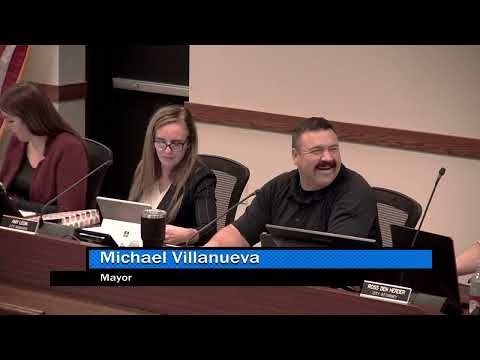
The Yankton City Commission adopted the city's 2026 budget and directed the city manager to administer it after lengthy debate over funding for Yankton Thrive and access to the nonprofit's records.
The 2026 budget ordinance and the separate resolution directing administration of the adopted budget were approved in separate votes at the Sept. 8 meeting. Commissioners voted on the ordinance and, after a final roll call on the companion resolution (Resolution No. 25-3), approved the budget by recorded unanimous vote.
Commissioners spent more than two hours on the budget item, with the most contentious discussion focused on a $460,000 annual appropriation to Yankton Thrive, the city's economic development and tourism partner. Commissioner Conkling proposed an amendment conditioning the Thrive appropriation on the nonprofit posting board minutes on its website and publishing public project bids in the newspaper so any business could bid. "If you're getting taxpayer money, you should be transparent on what you're doing for your business and how it's being spent," Conkling said.
Nancy, a representative of Thrive, defended the organization's practices and described its activities and financials in detail. "Thrive has a long proven history of making things happen in Yankton that provide positive economic development results," she said. She told the commission Thrive owns 104 parcels and that 97 of those parcels pay taxes in full; six are tax-exempt under state law and one parcel has taxes paid by the tenant. Nancy also said Thrive's 2024 executive salary (as reported on public Form 990) was $131,675 and that Thrive's grant and membership revenues make up roughly 76% of its budget. She said the organization complied with state rules governing tax-exempt status and that its bylaws define who counts as a member for inspection-rights purposes.
Commissioners expressed differing views. Some urged more transparency from Thrive given the size of the city's contribution; others cautioned against making rapid changes to longstanding partnerships. Commissioner Brunick proposed an alternative compromise to buy individual Thrive memberships for commissioners so they could access minutes under Thrive's membership rules; that motion failed for lack of a second. Commissioner Conkling later proposed a separate spending reallocation to cut Thrive's appropriation by $60,000 and direct the savings to The Center's Meals on Wheels and Southeast Transit; that amendment failed on a roll call vote with several commissioners citing the need for more analysis before redirecting outside-agency funding.
City staff clarified the legal process for budget amendments. Amy, a city staff member involved in the budget presentation, explained the two-step procedure: the budget ordinance itself and the separate resolution authorizing the city manager to administer the adopted budget, noting that material changes require a second, later reading under state law.
Outcomes and key details
- Budget ordinance (Ordinance No. 1099), second reading and public hearing: approved as presented (Part A vote passed by roll call; subsequent companion resolution adopting the fiscal-year budget and directing the city manager to administer it, Resolution No. 25-3, passed on final roll call). The resolution vote was recorded as unanimous in the meeting roll call.
- Amendment attempts: Three notable amendments failed: (1) Conkling's transparency condition requiring Thrive to post minutes and publish bids (failed); (2) a proposal to reallocate $60,000 from Thrive to The Center Meals on Wheels and Southeast Transit (failed); (3) Brunick's proposal to reduce Thrive's appropriation only by the sum needed to buy memberships for commissioners so they could access minutes under Thrive membership rules (failed for lack of a second).
Why it matters
The commission's decision keeps in place the city's existing funding level for its main economic development partner while underscoring tensions about transparency and the distribution of municipal support among local nonprofits. Commissioners and outside agencies repeatedly told the commission that other nonprofit services, such as Meals on Wheels and public transit, face funding pressure. The debate illustrates how local budget choices can pit economic development priorities against immediate social-service needs.
Context and next steps
Thrive representatives said the organization has used tax-increment financing and grants to complete infrastructure projects and helped create spec buildings and housing subdivisions. Commissioners requested additional information and discussed inviting Thrive to present a broader briefing on TIF/TID mechanics and Thrive project outcomes at a future meeting.
Speakers quoted in this article are identified in the meeting record and reproduced exactly as spoken.