Get Full Government Meeting Transcripts, Videos, & Alerts Forever!
Get email alerts on the Aeronautics Drones topic
No spam. Unsubscribe anytime.
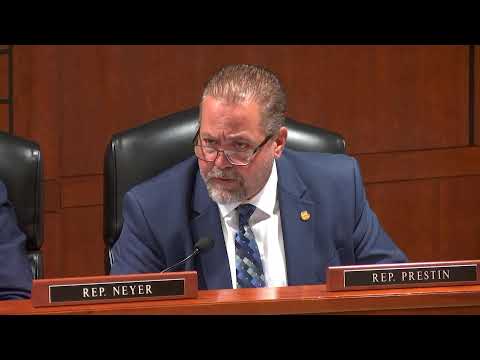
Committee advances discussion on aeronautics code update to define drone ports and vertiports
Summary
Lawmakers and Michigan Department of Transportation officials discussed House Bills 4834 and 4835 to modernize the Michigan Aeronautics Code, adding definitions and licensing authority for drone ports and vertiports, adjusting aircraft registration rules and shifting some licensing details into rulemaking.
Representative Green and Michigan Department of Transportation officials presented House Bills 4834 and 4835 to the House Transportation Infrastructure Committee, explaining changes to Michigan’s aeronautics code to reflect modern aviation technology and advanced air mobility.
Representative Green urged the panel to update state law to reflect drone technology, new aircraft designs and “air mobility” infrastructure such as vertiports. "Michigan's aeronautics code was first enacted in 1945 and in the decades since, aviation has changed dramatically," Green said, and argued the bills would “ensure Michigan's aeronautics laws reflect today's technologies, today's safety standards, and tomorrow's opportunities.”
Brian Buds, director of aeronautics at the Michigan Department of Transportation (MDOT), walked the committee through technical specifics in the bills. Key elements Buds described include:
- Adding “uncrewed aircraft” to the statutory definition of aircraft and defining “drone port” and “vertiport” to support licensing standards for those facilities; Buds said that approximately 20 drone ports or vertiports have been operating under a temporary licensing process in Michigan and that codified definitions would support long-term licensing.
- Clarifying that certain commercial activities (for example, repeated passenger or charter services or other services open to the public) should take place at licensed facilities, with MDOT’s licensing role focused on safety functions such as runway length, lighting and condition.
- Transitioning state aircraft registration from an annual to a three-year cycle to reduce administrative burden; Buds said the effective rate over three years would be unchanged but the renewal frequency would shift.
- Removing a statutory requirement that state registration be conditioned on a prior valid federal aircraft registration, to avoid administrative delays when federal registration is pending.
Committee members asked how the changes would affect private airstrips, agricultural spraying operations, bridge inspections and other low-usage activities. Buds repeatedly emphasized the committee would distinguish between individual, low-frequency operations and repeated, commercial, high-frequency operations that would more likely require licensing and rulemaking to define standards. “If you are offering services to the public … it should be occurring from a facility that meets a certain level of licensing standards,” Buds said, referring to activities such as skydiving or commercial flight training.
Members raised concerns in several areas:
- Agricultural uses: Several lawmakers pressed for clarity on routine agricultural applications (for example, drone or manned aircraft spraying) and whether every field or launch point would be considered a “drone port.” Buds said the department will use rulemaking to craft standards that avoid creating “an overly broad” requirement for every temporary launch site.
- Impact on private airports: Representatives asked whether small private airports would be forced to close or meet costly requirements. Buds and other witnesses said private, noncommercial use would not typically be affected; the licensing focus is on facilities serving the public or repeated commercial operations.
- Beyond visual line-of-sight (BVLOS) operations: Lawmakers questioned whether the changes would expand BVLOS operations. Buds said the bills set the stage for clearer takeoff-and-landing locations; BVLOS authorizations remain tied to FAA approvals, though state licensing of facilities can support safe operations.
No committee vote on HB 4834 or HB 4835 was recorded during the hearing. MDOT officials and the sponsor described the bills as the start of a rulemaking process that would follow statutory changes, and they invited lawmakers to continue refining language to address agricultural and low-frequency use cases.
Ending: The committee thanked MDOT officials and the sponsor and indicated further work would occur in rulemaking and follow-up discussions. The bills remain at the testimony and discussion stage pending committee action.