Get Full Government Meeting Transcripts, Videos, & Alerts Forever!
Get email alerts on the Transportation Tolling topic
No spam. Unsubscribe anytime.
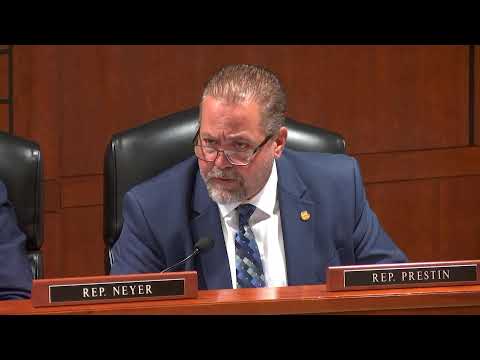
Michigan committee hears testimony on bill to let international bridges use state registration to collect unpaid tolls
Summary
Representative Brian Posamis asked the House Transportation Infrastructure Committee to hear testimony on House Bill 4809, legislation that would let operators of international bridges in Michigan enter administrative agreements with the Michigan Secretary of State to aid in enforcing unpaid tolls.
Representative Brian Posamis asked the House Transportation Infrastructure Committee to hear testimony on House Bill 4809, legislation that would let operators of international bridges in Michigan enter administrative agreements with the Michigan Secretary of State to aid in enforcing unpaid tolls.
The measure, as described by Ken Dobson, vice president of the Ambassador Bridge Company, would let international crossings use electronic tolling tied to vehicle registration information so operators can send invoices rather than rely solely on pay-at-the-booth collections.
Supporters said the change would reduce queues, truck idling and safety risks. “The Ambassador Bridge is the busiest border crossing in North America,” Dobson said, adding the crossing handles “about 4,000 cars a day and 8 to 10,000 trucks a day.” He said HB 4809 would “allow us to introduce electronic tolling at the bridge” and to work with the Secretary of State to “identify, you know, those who cross the border, so that we can send an invoice to.”
Sponsor and supporters framed the bill as primarily an efficiency and safety measure. Representative Brian Posamis described the bill as designed to allow electronic payment options for international crossings to reduce lines at toll booths.
Questions from committee members focused on several implementation details that were not resolved in the hearing:
- Who would pay for state administration: A representative on the record said he read a startup cost of about $300,000 for initial setup and processing; Ken Dobson attributed that number to earlier discussions but deferred to the state for details. “As I read it, it was $300,000, initial setup fee,” Dobson said.
- Out-of-state and Canadian plates: Committee members asked whether the Secretary of State would pursue tolls for vehicles registered outside Michigan or in Canada; witnesses and the Department of State said those details would be resolved in an operating agreement and through reciprocity arrangements. Randy Spader, vice president of operations at the Ambassador Bridge Company, said the operational goal is to reduce stop-and-go traffic for commercial vehicles and make billing more reliable, but enforcement pathways for out-of-state or foreign plates need to be spelled out.
- Cash and card options: Representative Frisbee asked whether cash or credit-card payment would remain available. Dobson and witnesses said cash and card would still be available initially and that automated systems are increasingly common, but whether in-person payment would be permanently required or phased out would be determined as the system develops.
- Role and safeguards of the Secretary of State: Aaron Shore of the Michigan Department of State testified that the department had previously opposed similar measures but has been engaged in negotiations with bridge operators to build customer safeguards, including notice and appeals processes. “We have had very serious and good conversations with the bridge company … to make sure that we get the appropriate customer safeguards in place,” Shore said, and he said the department did not take a position at the hearing because some details remain unsettled.
Opponents or skeptical members raised policy questions about using state resources to help a private operator collect unpaid tolls. Representative Brock asked why the state should help a private company collect fees; other members said they were weighing that point against the bill’s stated benefits for cross-border commerce and traffic flow.
No formal committee vote on HB 4809 was recorded during the hearing. Committee discussion closed after the department representative described continued negotiations; witnesses and lawmakers said many implementation elements would be clarified in an operating agreement and by rulemaking if the bill advances.
Ending: Committee members thanked witnesses and moved to the next agenda items. The bill remains at the testimony stage pending further committee action and any final operating-agreement language between bridge operators and the Secretary of State.