Get Full Government Meeting Transcripts, Videos, & Alerts Forever!
Get email alerts on the Apprenticeship Ratio Relief topic
No spam. Unsubscribe anytime.
DCP boards plan policies after law shifts apprentice ratio relief from Labor to Consumer Protection
Summary
The Department of Consumer Protection’s licensing boards discussed implementing a new law that moves initial review of apprenticeship hiring-ratio relief from the Department of Labor to DCP, with online applications for requests of eight or fewer apprentices going live Oct. 1 and boards required to adopt policies by Feb. 1, 2026.
The Department of Consumer Protection’s licensing boards discussed implementation of a new state law that shifts the administrative process for apprenticeship ‘‘ratio relief’’ from the Department of Labor (DOL) to the Department of Consumer Protection (DCP).
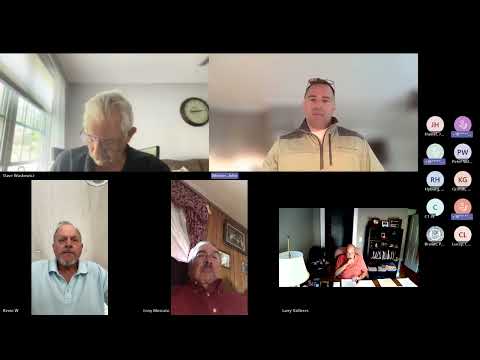
Board Chair Dave opened the discussion by summarizing meetings among board chairs, DCP staff and the commissioner and asked DCP staff to explain how the new law will work in practice. John Messner, Department of Consumer Protection staff, said the substantive hiring-ratio statute ‘‘did not change’’ and that the existing ratio — ‘‘1 to 1 up to 3’’ with higher numbers requiring additional journey-person coverage — remains in force. "The statute itself did not change. So the statute remains the same," Messner said.
Messner described the new process: contractors who request relief to add apprentices will file with DCP. For requests to add eight or fewer apprentices, DCP will review the submitted application and then forward it to the Department of Labor so apprenticeship staff there can vet the sponsoring licensees and program administration. Requests to add more than eight apprentices will be reviewed directly by the relevant licensing board. Messner said the department will have the online application available Oct. 1 and that each board must establish its policy by Feb. 1, 2026.
Board members raised enforcement and supervision concerns. Wayne and other board members asked how DCP and the boards will prevent sponsors from listing licensees who work only in offices or as project managers — who may not provide regular field supervision — in order to qualify for extra apprentices. "You could have apprentices that are not being supervised," Wayne said, warning that some contractors could use the process to add low-cost labor rather than deliver training.
Larry Valleys, who said he had participated in drafting and reviewing the legislation, urged uniformity across the four affected boards (electrical, heating and cooling/mechanical, plumbing and fire protection) and recommended collecting license names and numbers and the license-holder’s role at the sponsoring company. "My feeling is that we do need to ask for the license, the name, the license number, and what part of that company do they play a role in," Valleys said. He also suggested applying an empirical discount (he offered an example of multiplying license counts by 0.85) when calculating available supervising licensees to avoid overcounting office personnel.
Board members discussed next steps. Several said they prefer a short, focused meeting (virtual or in person) to draft consistent board policies and to coordinate across boards; Dave agreed to schedule a follow-up. Messner and other staff noted that the DOL retains final approval authority for apprenticeship administration and that any alleged violations of on-site ratios remain enforceable and subject to investigation.
The boards did not vote on policy text at the meeting. The conversation ended with an agreement to coordinate a special meeting so the boards can draft and, if desired, align policies before the Feb. 1, 2026 deadline.
Ending
Board members emphasized enforcement and training quality throughout the discussion and urged consistent, board-level policies to reduce the risk that apprentices are listed under supervisors who do not provide regular field training. Staff said DCP will publish the application for up-to-eight-apprentice requests Oct. 1 and will forward completed applications to DOL for vetting; requests above eight will be routed to the appropriate board for review.