Get Full Government Meeting Transcripts, Videos, & Alerts Forever!
Get email alerts on the Transit Governance topic
No spam. Unsubscribe anytime.
Council signals support to protect C-TRAN funding amid board-composition dispute
Summary
Councilors discussed the C-TRAN board-composition review and expressed support for steps to preserve state transit funding that could be at risk if the board is not in compliance with a state statute by Oct. 1. The city’s C-TRAN board representative warned the council the agency could lose more than $10 million per year in state funds.
City leaders raised the potential loss of state transit funding and signaled support for legal options after a review of C-TRAN’s board composition.
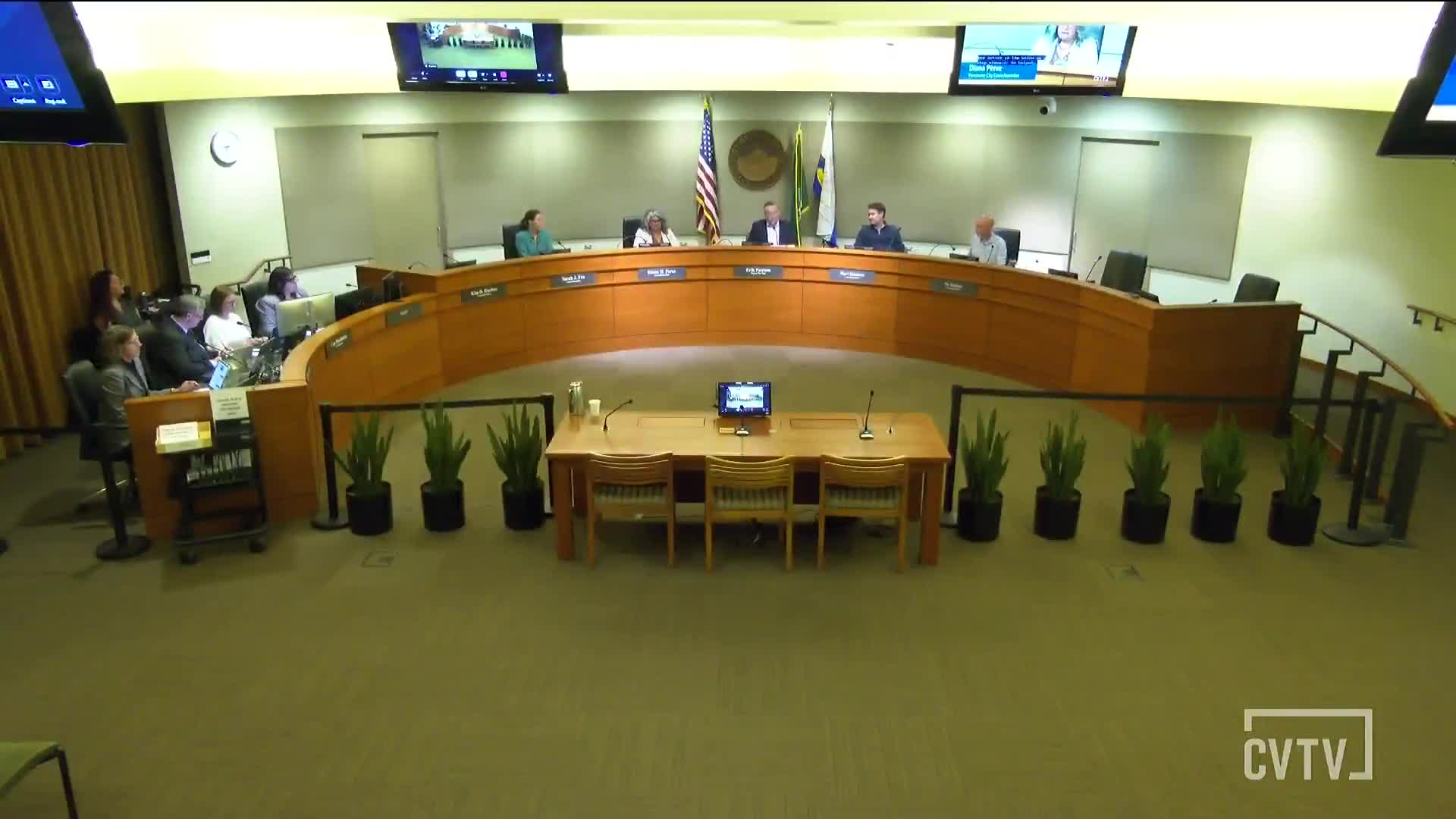
Mayor Pro Tem Eric Paulson, who serves on the C-TRAN board, briefed council Sept. 8 on a composition review that has produced competing recommendations. A composition committee had offered a 3-3-3 compromise — keeping three seats for Vancouver, three for Clark County and three for smaller cities. State guidance, however, is taking a “plain reading” approach to the governing statute and would allocate seats strictly by population, which Paulson said would result in a 4-3-2 split (four seats for Vancouver, three for Clark County and two for smaller cities).
Paulson said the Department of Transportation has warned that if the board does not conform with its reading of the statute by Oct. 1, C-TRAN could lose eligibility for state funding. Paulson told council the agency’s state funding in the past three years has averaged “north of $10,000,000 per year.” He said the board is likely to hear legal briefings in an executive session at a meeting the next day and that he wanted council’s alignment to support any motion directing C-TRAN to pursue legal remedies, including possible injunctive relief, to preserve funding while the composition dispute is resolved.
Councilors from across the chamber voiced support for protecting funding. Councilor Perez asked Paulson to restate the support he sought; Paulson described it as backing for a motion to empower C-TRAN to take interim legal action if necessary. Councilor Harless, Councilor Hansen and Councilor Stober each expressed agreement with preserving funding and maintaining the transit system’s interconnected service. Several councilors also acknowledged the concerns raised by small cities about representation and contribution levels, and Councilor Hansen urged sensitivity to that perspective, noting small cities helped the system through prior transitions.
No formal council motion or binding action was recorded at the meeting; council’s position as expressed on the record was supportive of authorizing C-TRAN leadership to pursue legal options if the board determines that step is necessary to avoid losing state funding. Paulson said the board could be presented legal options in executive session at the board meeting the following evening.
Council members also emphasized the local importance of transit service and connections, including longer-term ambitions for greater route coverage and more frequent service in areas now underserved.
This remained a direction-to-C-TRAN conversation rather than a formal city action at the Sept. 8 meeting; any legal action would be taken by C-TRAN following its board procedures.