Get Full Government Meeting Transcripts, Videos, & Alerts Forever!
Get email alerts on the Youth Mental Health Services topic
No spam. Unsubscribe anytime.
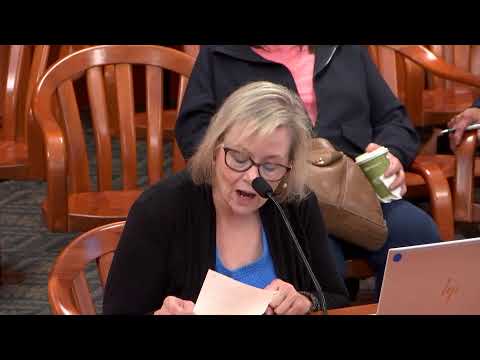
Parents tell House oversight subcommittee Michigan lacks beds, oversight and coordinated care for youth with serious mental illness
Summary
Parents and family advocates told the Michigan House oversight subcommittee on the child welfare system that gaps in state and private care are leaving children with serious emotional disturbance without adequate treatment, forcing families into expensive private placements or the juvenile justice system.
Parents and family advocates told the Michigan House oversight subcommittee on the child welfare system that gaps in state and private care are leaving children with serious emotional disturbance without adequate treatment, forcing families into expensive private placements or the juvenile justice system.
“This journey to help my son has been harrowing,” Rachel Kacherry Murray, a parent who said her family spent about $250,000 on out-of-state treatment, told the subcommittee. Murray and other witnesses said private insurers routinely delay or deny residential care and that community mental health agencies (CMHs) and state oversight by the Michigan Department of Health and Human Services (MDHHS) are inconsistent or inaccessible.
The testimony centered on three recurring themes: a shortage of in-state residential treatment and specialized beds, administrative and payer-level barriers that delay placement, and what several parents described as retaliation or punitive responses by CMHs when families press for care.
Most urgent, parents said, is the lack of residential capacity for children with high acuity. Multiple witnesses described children who were discharged from facilities as “too acute” for the receiving program and then sent back to emergency rooms or home, only to reenter the cycle of crisis care. “They are being sent home to kill themselves,” Rachel Kacherry Murray said, arguing the state lacks a continuum of care. Other parents and advocates told the committee of long waits, placements in juvenile detention because no mental-health beds were available, and out-of-state placements that split families.
Advocates also described a fragmented payment and intake process. Several witnesses said that commercial insurers require exhaustive appeals and denials before Medicaid or waivers will pay for residential care; in one case a youth who needed treatment was not placed until “3 and a half months” and the involvement of many agencies, Ricky Cruiser, executive director of Chosen Family in Michigan, testified. Steven Banchroft, an advocate who described a young person’s 16 prior hospitalizations, told the subcommittee that “acute care facilities are designed for those in crisis, but current policy does not allow for admission based on patterns of psychosis.”
Parents urged specific policy changes: require insurers to use transparent, generally accepted treatment guidelines for coverage decisions; streamline applications so a single point of review can determine medical necessity for residential placements; create expedited Medicaid override authority so families are not forced to exhaust commercial appeals before Medicaid funds become available; and require CMHs to hold standing contracts with residential providers and dedicated staff to coordinate applications.
Several speakers recommended revisiting how the state defines criteria for inpatient admission. Ricky Cruiser urged that law and policy be amended so “pattern psychosis” or repeated dangerous behavior be accepted criteria for acute psychiatric admission even if a child appears lucid at intake.
Multiple witnesses raised concerns about retaliation and lack of independent oversight. Rachel Kacherry Murray and other parents said services were reduced, foster or criminal options were suggested, and, in some cases, CMH or related actors involved Child Protective Services after parents advocated. Representative Jason Regas, who said he chairs a panel on weaponization of state government, offered to meet with parents who described retaliation.
Mary (last name not specified), a parent who identified herself as having used medical-subsidy supports for her son’s years-long out-of-state placement, told the committee that an adoption-and-guardianship office caseworker cut authorizations after requesting a reauthorization packet. “We cannot appeal it because it’s not a denial,” she said, describing the agency’s decision as an administrative “glitch” that removed funding while her child remained in effective treatment.
Advocates also pushed for reinstating or rebuilding higher-acuity state-level services that once existed, such as state psychiatric hospital capacity and specialized residential programs, and for stronger workforce investment to reduce churn among therapists and in-home staff. Marion Huff of the Mental Health Association of Michigan urged lawmakers to review the KB v. Lyon settlement agreement, which she said addresses many service-access problems for youth with SED.
Committee members responded with a mix of sympathy and procedural offers: Representative Regas said he would meet with parents who alleged retaliation, Representative Collin Conlon urged the committee to address funding and workforce shortages, and Representative McDonnell asked parents to share contact information for follow-up.
The subcommittee took no formal votes on policy changes at the hearing. The meeting record shows the subcommittee approved minutes from its Aug. 26 meeting at the start of the session.
The hearing assembled repeatedly reported failures across the system: families denied or delayed by insurers, local CMHs that place youths on wait lists or prioritize populations differently across counties, and acute-care hospitals that admit only when a child meets immediate danger criteria. Parents and advocates urged statutory and administrative fixes to streamline placement, strengthen oversight of CMHs and MDHHS, and expand in-state residential capacity so fewer families must pay privately or send children out of state.