Get Full Government Meeting Transcripts, Videos, & Alerts Forever!
Get email alerts on the Education Savings 529 Able topic
No spam. Unsubscribe anytime.
Committee hears testimony on bill to let Michigan taxpayers claim state deduction for out-of-state 529 and ABLE accounts
Summary
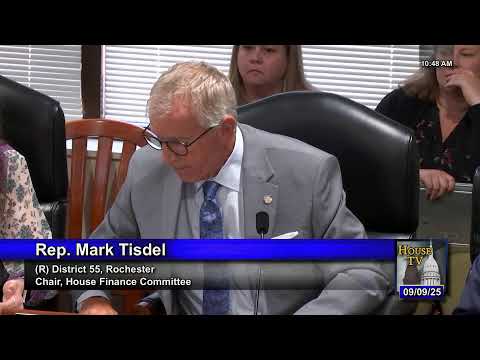
The Michigan House Committee on Finance heard testimony Sept. 9 on House Bill 4747, a proposal to let Michigan taxpayers claim the state income tax deduction for contributions to 529 college-savings plans and ABLE accounts even when those accounts are domiciled in other states.
The Michigan House Committee on Finance heard testimony Sept. 9 on House Bill 4747, a proposal to let Michigan taxpayers claim the state income tax deduction for contributions to 529 college-savings plans and ABLE accounts even when those accounts are domiciled in other states.
Proponents told the committee the change would remove a state-level disincentive for families and people with disabilities who choose out-of-state 529 or ABLE plans and would encourage savings for education, health and disability-related expenses.
A sponsoring representative summarized the bill to the committee, saying states that allow the deduction regardless of account domicile “get more of what they subsidize,” and that Michigan should not penalize families who select an out-of-state plan. The representative said 529 plans are “federally approved, IRS-certified accounts” that grow tax free and that the bill would extend the Michigan state income tax deduction to accounts domiciled outside Michigan. The committee did not record a final vote on HB 4747 in the transcript.
Jenny Brown, chief executive officer of Dutton Farm, testified about the bill’s relevance for people with disabilities who use ABLE accounts (accounts authorized under the federal Achieving a Better Life Experience Act). Brown said Dutton Farm serves about 150–180 adults with disabilities each week and that ABLE accounts and state tax credits are “critically important” to those clients. She told the committee that savings options help people working to avoid asset limits that can affect SSI and Medicaid eligibility and that some families already use out-of-state ABLE programs despite forgoing Michigan tax credits because they find the out-of-state programs more suitable. She said, “These individuals weren’t able to even afford undergarments, and were left with nothing,” describing cases where staff bought basic necessities for participants with no accessible savings.
Kyle Innes of the Securities Industry and Financial Markets Association (SIFMA) spoke remotely in support. He said consumers face many different 529 and ABLE program structures nationwide and that allowing Michigan taxpayers to use the state deduction for out-of-state accounts would let families “choose which [plan] best fits their situation,” which he said could reduce debt and support upward mobility after training or education.
Testimony noted a recent Michigan code change that expanded allowable uses of college savings plans to include apprenticeships and vocational education. Witnesses also said families sometimes prefer specific programs (for example, Ohio’s STABLE program) despite forfeiting Michigan tax treatment because of program features they view as better suited to their needs.
No committee action on HB 4747 was recorded in the meeting transcript. The committee also received questions and other testimony on unrelated items during the same session.
Supporters provided program-level and personal examples but did not supply precise projected fiscal impacts or a committee-recorded fiscal analysis in the transcript.
If the bill moves forward, a committee report or future hearing would be needed before a floor vote; the transcript does not record next steps or a timetable.