Get Full Government Meeting Transcripts, Videos, & Alerts Forever!
Get email alerts on the State Legislation Zoning topic
No spam. Unsubscribe anytime.
Town solicitor briefs council on 2025 state housing and zoning laws that reduce some local controls
Summary
Town solicitor Andrew Tights summarized multiple 2025 General Assembly bills that change Rhode Island land-use law: expanding administrative approvals, altering subdivision rules, updating adaptive reuse and accessory dwelling unit (ADU) provisions, and clarifying how municipalities meet the 10% affordable-housing milestone.
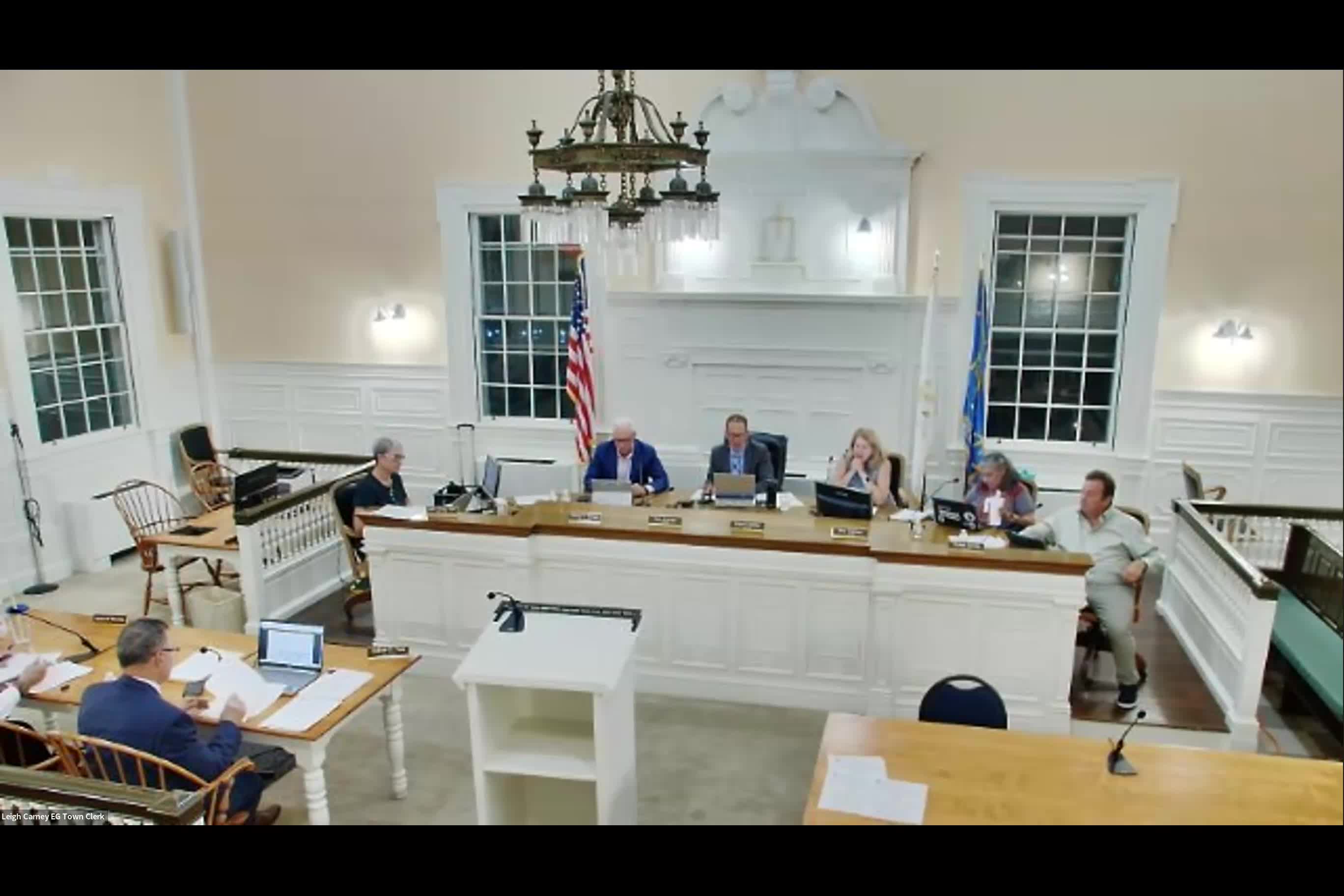
Town Solicitor Andrew Tights told the council Sept. 8 that a package of 2025 General Assembly bills continues a multi-year state effort to streamline housing development approvals and shift certain decisions from local public hearings to administrative review.
Tights said the new laws modify the zoning enabling act, the planning act and the Low and Moderate Income Housing Act. Among the changes he highlighted: minor subdivisions that do not require new streets have no fixed numerical limit (localities must rely on administrative review rather than automatic public hearings in many cases); final approvals can be processed administratively rather than by a planning board; and requirements that local boards find "no negative environmental impact" have been narrowed where state environmental permits apply.
He discussed adaptive reuse changes that provide a density incentive if projects provide affordable units; the statute now requires a minimum affordable set‑aside (the law provides a 10% affordable unit incentive for adaptive reuse density) and limits additions to non-habitable spaces (elevators, stairwells, mechanical equipment) rather than new habitable penthouses. Tights said the law now gives communities more explicit authority to define industrial areas where residential reuse would be hazardous.
On accessory dwelling units (ADUs), Tights summarized new state limits: an ADU may be up to 800 square feet for a one-bedroom unit and 1,200 square feet for a two-bedroom unit and may not exceed 60% of the primary dwelling's size; ADUs cannot be used for short-term rentals. He said condominium and homeowners association restrictions remain in effect for the time being but cautioned that state law preemption around ADUs will require local ordinance updates.
Tights also outlined a new clarification (effective January 2026) about how municipalities qualify under the Low and Moderate Income Housing Act once they meet a 10% affordable housing milestone and the interplay with inclusionary zoning: if a town has qualifying inclusionary zoning and other requirements in place, it may no longer be subject to the comprehensive-permit provisions for qualifying projects. The solicitor and council discussed infrastructure constraints: Tights cited a recent court decision in Westerly that upheld denial of a 2,300-unit proposal because the area lacked the necessary sewer and water infrastructure.
Councilors asked questions about impacts on local procedures and the need to update town ordinances. Tights said the town will need ordinance revisions and that further bills are likely to continue this trend toward administrative approvals.