Austin begins platform collection of hotel-occupancy taxes from short‑term rentals; new licensing rules and density caps proposed
Loading...
Summary
City council passed rules requiring platforms to collect and remit city hotel‑occupancy taxes; staff are proposing additional regulations, licensing enforcement and density limits intended to capture unlicensed short‑term rentals and address neighborhood impacts.
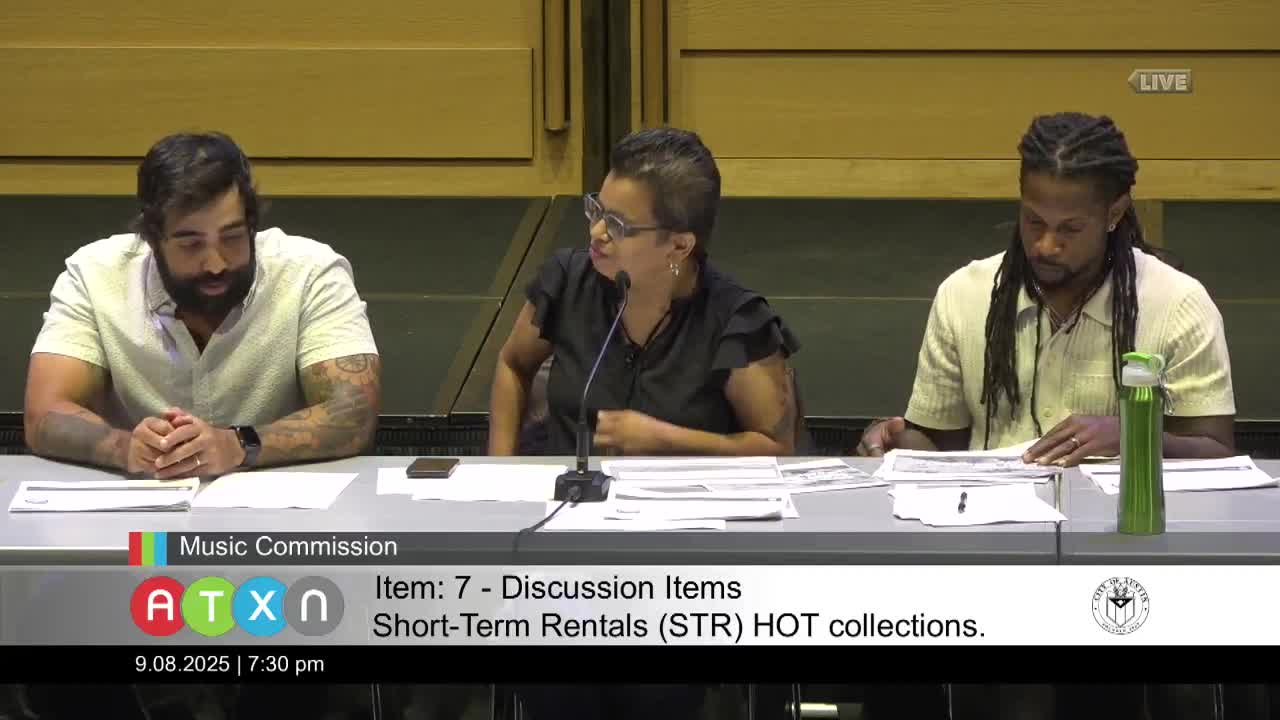
City staff and commissioners discussed short‑term rentals (STRs) and related policy changes at the Austin Music Commission meeting on Sept. 8, including the city’s recent shift to automatic platform collection of hotel‑occupancy taxes (HOT) and a package of proposed regulations to license STRs and address neighborhood nuisance concerns.
Anne Charlotte Patterson, communications director (District 10) and a former Music Commission appointee to the Downtown Commission, briefed commissioners on the policy changes and how they relate to music and cultural funding. Patterson said an April 1 ordinance requires STR platforms to automatically collect and remit city HOT from Austin listings, a development she called “really good news” that should increase revenue to the Live Music Fund and other cultural programs. She and staff said the city budget office is working to quantify the incremental revenue from platform collection and expected updated numbers shortly.
Patterson described proposed licensing and enforcement changes expected to reach council soon and, if approved, to take effect Oct. 1. Key elements under discussion include: a requirement that operators designate a local contact; a more robust complaint process tied to fines and potential delisting from platforms; and density controls intended to limit proliferation. Under draft density rules cited by staff, units owned by the same operator must be at least 1,000 feet apart in single‑family neighborhoods, and in multifamily properties an operator would be limited to 25% of units on the site.
Staff described technical steps to identify unlicensed listings, including contracts with third‑party data scrapers to find likely unlicensed STRs so the city can contact operators about licensing. Patterson said staff had closed earlier RFPs and expected tools to help identify previously uncounted units.
Community concerns presented to commissioners included the effect of STR proliferation on affordable housing and on neighborhood quality of life. Patterson said staff had heard complaints about noise, trash, and in a few instances criminal incidents and noted the resulting debate over the adequacy of an appeals process that currently allows operators to continue honoring bookings while an appeal is pending.
Commissioners discussed policy tradeoffs: STRs now generate HOT revenue that supports music and arts funding, but unlicensed or high‑density STRs can reduce long‑term housing supply and create neighborhood impacts. Patterson said council would vote on the regulations in the coming week and encouraged commissioners and residents to contact council members with feedback.
Ending: Staff said the budget office will publish updated HOT‑collection numbers tied to platform remittance, and commissioners asked to be kept informed as licensing and density regulations move to council.