Get email alerts on the Wetlands Wildlife Management topic
No spam. Unsubscribe anytime.
Conservation commission asks planning board to require developer clarify beaver‑dam mitigation after updated wetland buffer figures
Summary
The Conservation Commission voted to request that the Planning Board and the project’s engineering firm clarify developer plans to mitigate ongoing beaver‑dam impacts after receiving updated wetland‑buffer figures for the University Heights/Heads Pond project.
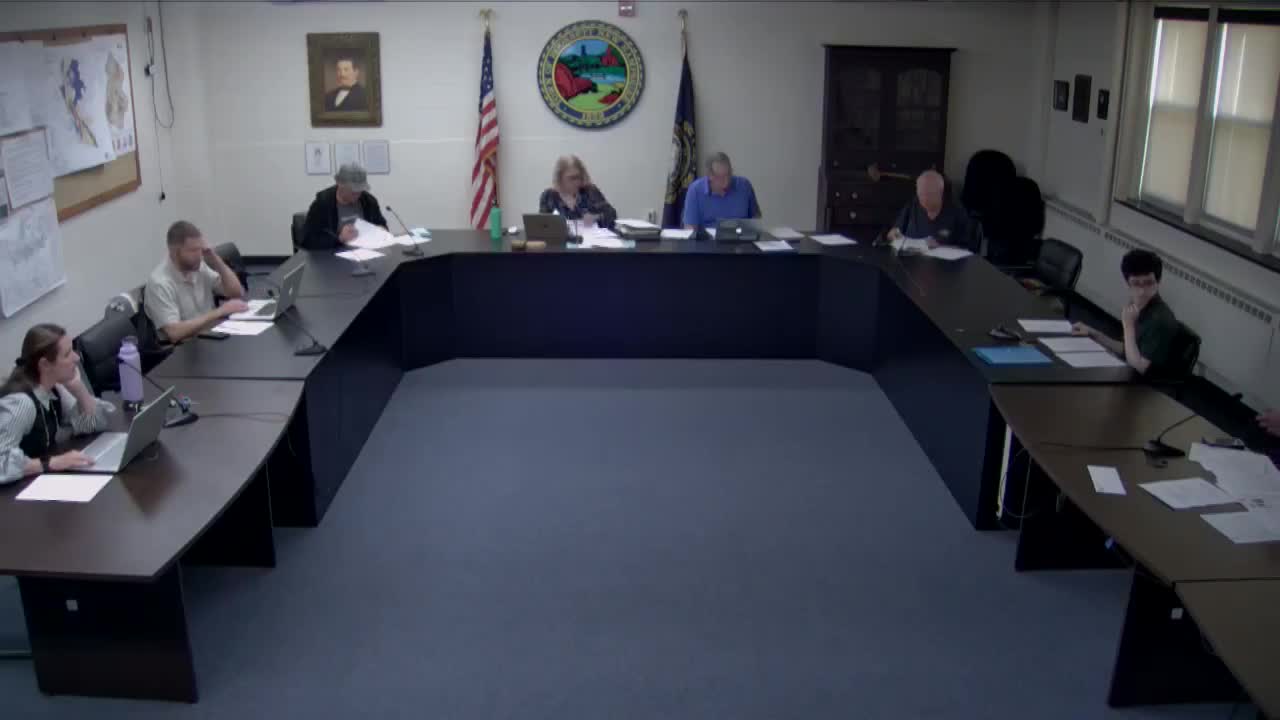
The Hooksett Conservation Commission voted to draft and send a letter to the Planning Board advising that the recently reported wetland‑buffer impacts for the University Heights/Heads Pond project fall within state parameters, and to ask the Planning Board to require the developer to clarify how it will mitigate future beaver‑dam impacts and associated water‑level changes.
Commission members considered supplemental information submitted by RJB Engineering showing “wetland buffer impacts” of roughly 5,000 square feet on two lots (the packet described 5,000 square feet for each of two lots, totaling roughly 10,500 square feet of buffer-zone impact as presented). Commissioners said the updated figures reflected current conditions after beaver activity altered the pond and adjacent wetlands since the original 2003–2005 assessments.
“I personally don’t think that we should be letting them utilize a study that is so old,” Sheena Gilbert, a planning-board representative on the conservation commission, said at the meeting. She pressed for a clearer explanation of what the applicant proposes to do about ongoing beaver activity and whether the developer plans to alter the dam, control beaver activity, or change the project footprint.
Commissioners debated procedural versus substantive responses. Several members said the buffer‑impact totals were small in absolute square footage compared with typical lot sizes and below thresholds that draw state involvement, but that the commission’s role as a land‑use advisory body includes asking about the long‑term consequences of beaver activity on wetlands and project design.
The commission approved a motion to: 1) table any recommendation to the Planning Board until October; 2) send a one‑paragraph letter to the engineering firm requesting the developer’s contingencies and plans to mitigate or manage the beaver dam and future water‑level impacts; and 3) include in its advice that the wetland buffer impacts reported appear to be within State Department of Environmental Services parameters but merit questions on mitigation. The motion passed by voice vote; the meeting record shows the motion carried and no members registered a recorded opposed vote.
Commission members said they expect the town to draft the formal letter and that the commission will review the developer’s response at a subsequent meeting before offering a recommendation to the Planning Board.
AI generated
The text on this page is AI generated. Summaries, highlights, analysis, and video transcripts are all produced from the original source material.
AI can make mistakes, so if you spot one, and we will fix it for everyone.
Note: the source content is unaltered by us. Any content source we link to, be it a video, an audio recording, or a document, is presented exactly as its publisher released it. That publisher is usually a government body, sometimes an individual official or another organisation.