Get Full Government Meeting Transcripts, Videos, & Alerts Forever!
Get email alerts on the Planning Policy topic
No spam. Unsubscribe anytime.
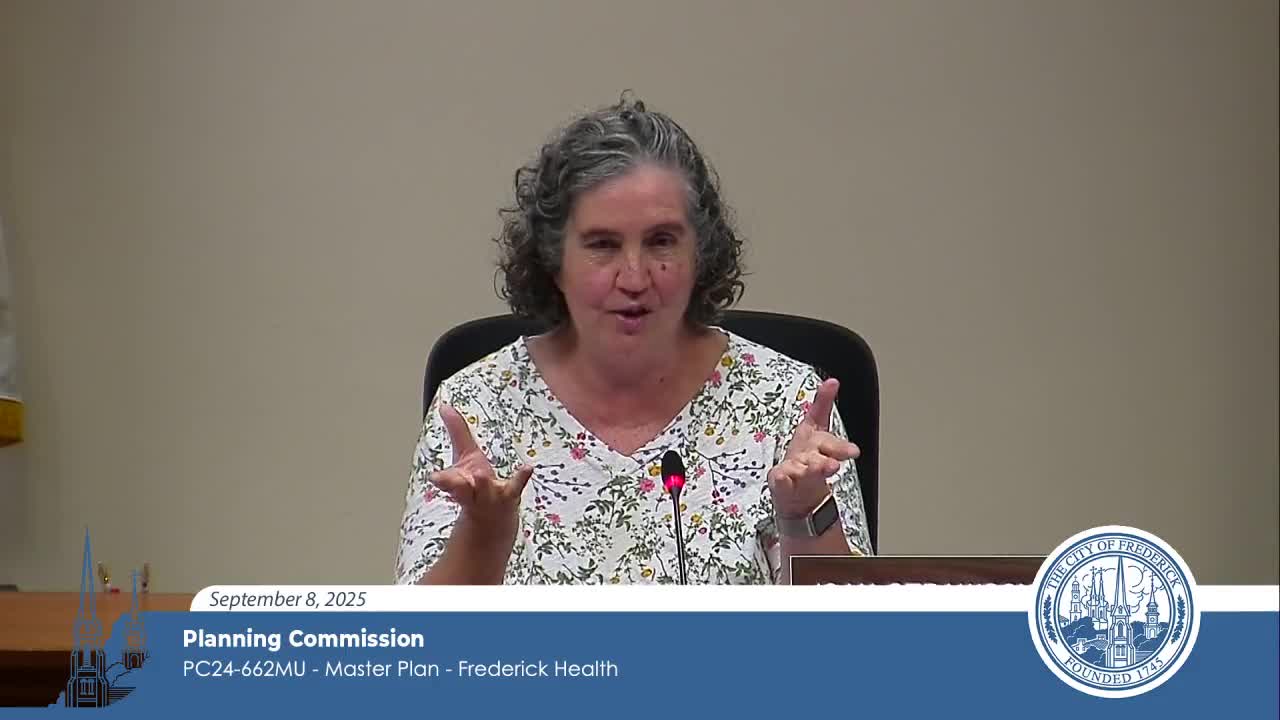
Planning Commission recommends denial of proposed MU phasing text amendment, asks council for broader study
Summary
The Planning Commission voted unanimously to recommend the City Council deny a text amendment that would let applicants ask planning staff to administratively alter mixed‑use phasing requirements; commissioners and public commenters urged a more deliberate study, public hearings and an economic analysis before delegating such authority.
The Frederick City Planning Commission on Sept. 8 recommended that City Council deny the proposed text amendment (PC-25-55 ZTA) that would have allowed mixed‑use developers to propose project‑specific phasing schedules and, in many cases, have those phasing modifications approved administratively by the planning department.
Staff and public testimony
Planning staff recommended that the commission weigh the proposed change against the Land Management Code and the 2020 Comprehensive Plan and suggested that if the commission wanted flexibility it should recommend changes carefully and conceptually, rather than turning broad discretion over to an administrative approval process. Gabrielle (staff) told the commission the ZTA should be assessed for consistency with code and plan goals and cautioned about delegating substantive judgment without safeguards.
Public commenters and nearby residents strongly opposed the draft language as written. Multiple speakers said that phasing decisions have community implications and should remain subject to public hearings before the Planning Commission (and, where appropriate, City Council). Resident Adam Apostoli and neighborhood coordinators urged the commission to preserve public visibility over phasing decisions. Several speakers recommended hiring an independent commercial economist to review requests for administrative phasing modifications and said the city should require any flexible approach to include recorded, enforceable mitigation agreements.
Applicant position
Brian Morris, representing the applicant, said the applicant and staff had exchanged drafts and that the proposed language was intended to add predictable flexibility for mixed‑use projects. Morris said the applicant concurred with staff’s analysis and asked the commission for a positive recommendation. When asked whether the applicant would accept a narrower compromise that preserved the current percentages but allowed case‑by‑case exceptions, the applicant declined to support rewording during the hearing.
Commission action and rationale
Commissioners voted unanimously to recommend denial. In discussion they cited the absence of supporting citywide data showing the phasing rule is blocking projects and expressed concern the draft would shift substantial discretionary authority to staff without defined standards, public notice and an opportunity for near‑term public comment. Commissioners asked staff to prepare a denial letter for the council that explains the commission’s concerns and requests a broader study, including an economic analysis and a recommended public process for any future code changes.
What happens next
The Planning Commission filed a unanimous recommendation for denial and requested that staff prepare a draft letter to the City Council documenting the commission’s reasons and recommending next steps: an economic/commercial market analysis and a public process for any future phasing flexibility. City Council will receive the commission’s recommendation and decide whether to draft, modify or schedule the proposed code change for public hearings.