Get Full Government Meeting Transcripts, Videos, & Alerts Forever!
Get email alerts on the Criminal Justice Grants topic
No spam. Unsubscribe anytime.
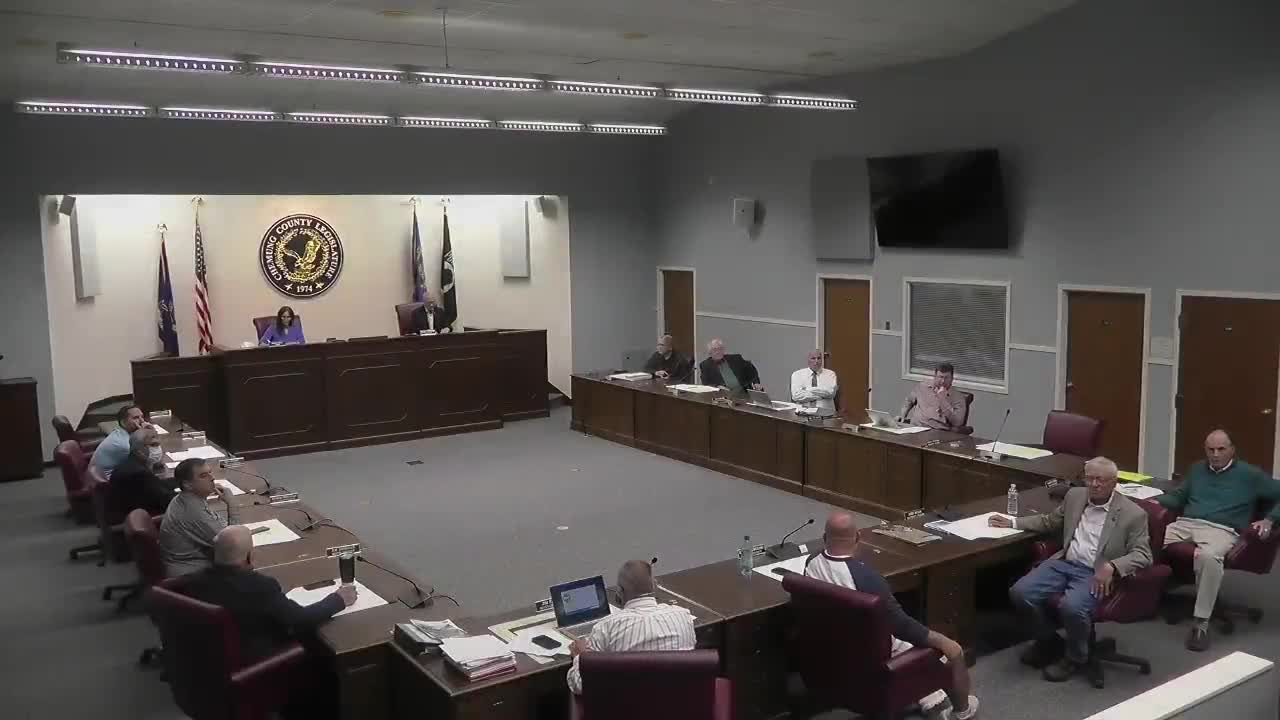
Chemung County Legislature Approves Application for DOJ Community Policing Grant After Heated Public Comment on ICE
Summary
The Chemung County Legislature voted Sept. 8 to authorize application for and acceptance of a U.S. Department of Justice Community Policing Development microgrant after extensive public comment opposing any collaboration with federal immigration agencies.
The Chemung County Legislature voted Sept. 8 to authorize application for and acceptance of a U.S. Department of Justice Community Policing Development (COPS) microgrant offered under an FY2025 solicitation, after an extended public-comment period focused chiefly on concerns about cooperation with federal immigration agencies.
Dozens of residents packed the county legislative chambers to oppose any county role in immigration enforcement. Becca Foresight, a representative of the local chapter of the National Union of the Homeless, told legislators: "I really worry when it comes to resolutions like this. It seems like the work has already been done, the money has already been accepted, the agencies will be involved." Sofia Torres, a recent Elmira resident, said bringing ICE into the community would be a "turning point" and warned it could separate residents from families and jobs.
The widely expressed concern centered on one of the microgrant program's listed subtopics: collaboration with federal immigration and border-security agencies. Speakers urged the legislature either to reject the grant or to explicitly exclude any subprogram that would have local law enforcement share data or conduct joint operations with ICE. Several speakers cited past local and regional incidents and raised constitutional and civil-rights objections.
Legislators debated whether to table the resolution to allow more time for public review. A motion to table the item failed on a roll-call vote. The clerk then called the roll on the resolution; the body approved the application and acceptance. County officials and sponsors said the sheriff's office supports pursuing the grant and that the application is intended to fund equipment, training, and projects to advance community engagement and public-safety strategies rather than to establish routine immigration enforcement by county officers.
Members of the public questioned that characterization and asked for transparency on several points: whether the county would accept the subtopic that mentions immigration and border security; what specific equipment or data-sharing systems would be procured; how much federal funding, if any, would require local matches or ongoing county expenditures; and whether the full application would be made public. Rachel Barber, a Big Flats resident, asked the legislature to "table this resolution, so that you can be transparent with residents, regarding the content of the application, specifically how much time and taxpayer dollars will be spent" on immigration-related activities.
Speakers also linked the grant debate to other county priorities. Tara Escondero, who runs multiple community organizations in Chemung County, urged the legislature to invest federal funds in housing, shelters, mental-health services and other social supports rather than policing. Others, including some landlords, called for county support in housing and eviction response rather than additional policing funds.
During the floor discussion, at least one legislator (who said he had been checking statistics while people spoke) argued that the national scale of removals and immigration enforcement reported in media coverage is often mischaracterized and that the county's demographic profile makes large-scale immigration enforcement unlikely. County leaders clarified that the application deadline had been previously listed as June 30 but represented that the deadline had been extended; they also clarified that applying for the grant and accepting funds are distinct steps and that administrative procedures govern how an awarded grant would be implemented.
Votes at a glance - Resolution to authorize application for and acceptance of U.S. Department of Justice Community Policing Development microgrant on behalf of the Chemung County Sheriff's Office (listed in the agenda as Resolution 25-385): approved by the legislature after a roll-call vote. Sponsor: Mr. Drake (sponsor as listed on the agenda). Outcome: approved. Vote: recorded on the roll as a majority approval following a failed motion to table. - The legislature approved multiple other grouped resolutions on Sept. 8, including contract extensions, purchase agreements, staffing-plan amendments, and grant acceptances (listed in the agenda as resolution groups 25-374 through 25-414). All grouped resolution blocks presented that evening were approved by recorded vote or voice vote as noted in the meeting minutes.
What the approval does — and does not — do The approved action authorizes county officials to apply for and, if awarded, accept the DOJ microgrant funds for programs described in the grant solicitation. Sponsors and staff present said the intent is to pursue equipment, training and community-engagement projects under the COPS program. Several members of the public and some legislators asked the sheriff's office and county administrators to provide the full grant application, a breakdown of any funds tied specifically to immigration-related activities, and assurances that no local policy would deputize county officers to perform immigration enforcement outside federal authority.
What residents asked for next Residents who spoke asked the legislature to: - publicize the full grant application and budget lines tied to immigration and border security; - clarify whether the sheriff or county would enter into any 287(g)-style agreements or other memoranda that delegate federal immigration functions to local officers; - provide a clear statement about whether the county will refuse any sub-award components that directly enable ICE operations or data-sharing with federal immigration databases.
The legislature did not adopt any explicit carve-outs or prohibitions on immigration-related activities on the record that night; instead, it approved pursuing the grant. Several legislators said they expect follow-up briefings from the sheriff's office and county staff on the application and any subsequent award details.
The meeting record shows strong public opposition to the immigration collaboration element of the DOJ program and requests for greater transparency from county officials. County leaders and the sheriff's office will be expected to answer the questions raised before any implementation steps are taken.