Get Full Government Meeting Transcripts, Videos, & Alerts Forever!
Get email alerts on the Sable Palm Park Procurement topic
No spam. Unsubscribe anytime.
Tamarac commissioners hear four design‑build proposals for Sable Palm Park; signal preference to negotiate with Frangio
Summary
Four design‑build teams presented competing concepts and budgets for Sable Palm Park at a Tamarac commission workshop. Commissioners flagged soil remediation, pickleball noise and dog‑park features as priorities and expressed a consensus preference for Frangio Builders for contract negotiation, subject to budget and design refinements.
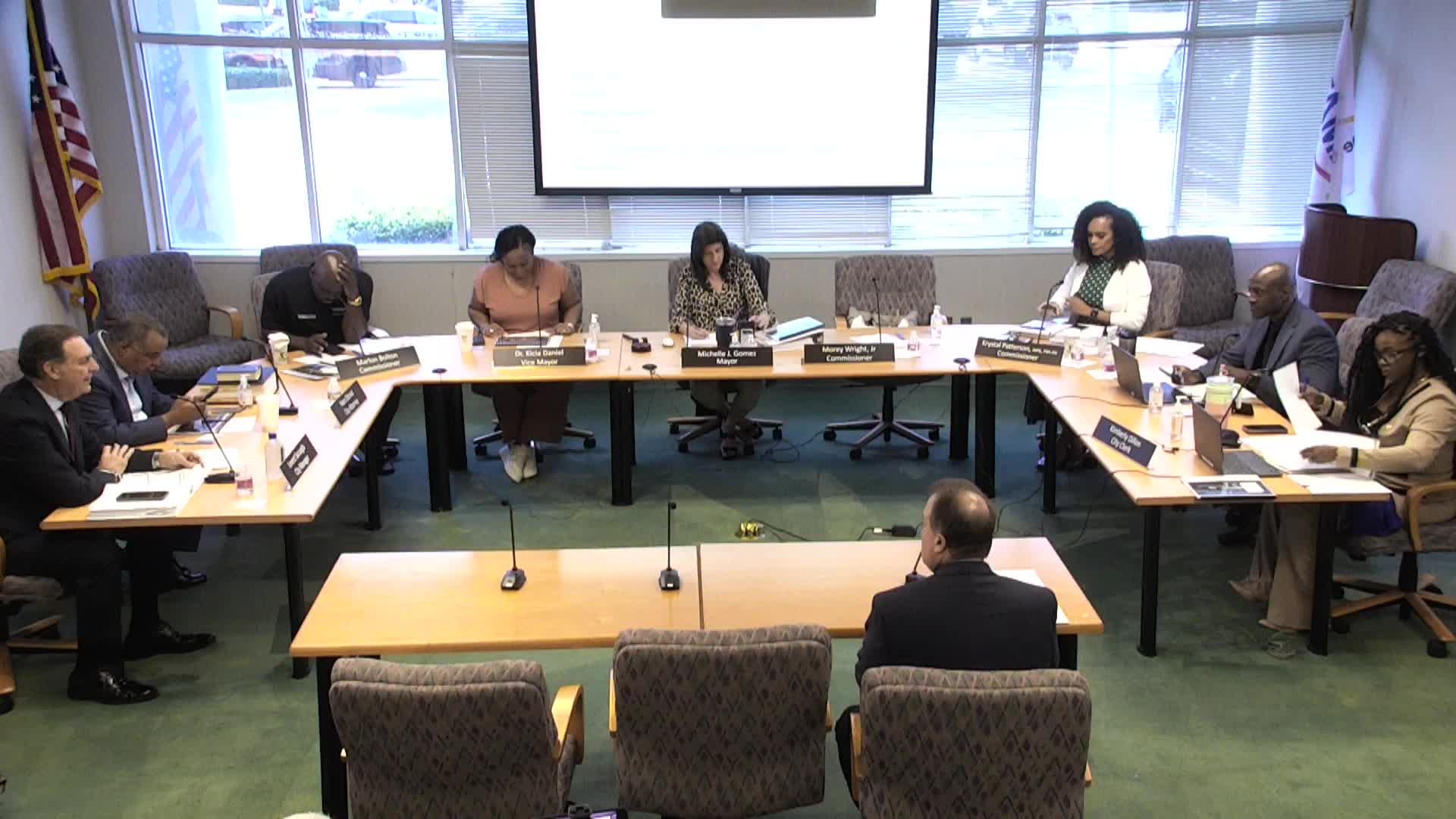
TAMARAC, Fla. — At a city commission workshop on Friday, four design‑build teams presented competing proposals to design and build Sable Palm Park, an eight‑acre park site the city has sought to develop with a splash pad, dog park, playground, artificial turf multipurpose field and other amenities.
Procurement and contracts manager Steve Stuart told the commission the city received four proposals in response to a recent request for proposals (RFP) and that a seven‑member selection committee scored the teams “from 78 to 85,” meaning all were judged capable of delivering the project. The firms’ total proposed prices presented to the commission ranged roughly from $8 million to $14 million.
Why it matters: Commissioners said they want the city to pick a team whose design and budget protect residents and reduce long‑term maintenance risk. Soil remediation for arsenic‑impacted fill emerged as a central technical and schedule issue across all presentations and will affect permitting, cost and the project timeline.
What the commission heard: Four teams spoke in separate 20‑minute presentations, followed by Q&A.
- Pompeo Construction Corp. (John DiPompio) emphasized design‑build experience with local public projects, said the team submitted a proposal that at one point was reduced to about $10.677 million (the firm described a larger, enhanced package nearer $11.677 million that included additional features and allowances) and stressed experience handling arsenic‑impacted soils on previous park jobs.
- Waypoint Contracting (with Miller Legg as civil/landscape consultant and Salz Michaelson Architects) presented a concept plan and a price the team described as a $10.4 million total (about $2.074 million for clearing/environmental work and $8.3 million for design/build), and outlined an approach to accessible splash‑pad and playground design, dog‑park features and construction‑phase controls such as dust monitoring and a wash station to limit off‑site sediment.
- Recreational Design & Construction (RDC) described itself as a design‑builder and commercial pool contractor with extensive regional experience in splash pads and artificial turf fields. RDC’s presentation emphasized environmental controls, a civil drainage plan that favors surface retention to avoid moving contamination, and detailed aquatic system equipment and vaults. RDC’s total proposal was the highest presented to the commission (about $14 million on the material shown to commissioners).
- Frangio Builders (Frangio) positioned its team as a local‑focused design‑build option with a large roster of subconsultants and a community‑engagement plan. Commissioners were told Frangio’s proposal was the lowest of the four at roughly $8 million and that the firm brought an environmental/abatement team and a schedule tied to the RFP’s 640‑day contract allowance.
Arsenic, sampling and remediation: Environmental consultants on several teams described a common technical approach the city will face: additional borings and sampling to refine a remedial action/soil management plan, a combination of source removal and soil blending, and an engineered control (commonly a two‑foot clean soil cap, impervious surfaces or similar features) to limit exposure. As MEC Engineering’s Jeff Thompson summarized, the plan would include “site remediation of arsenic impacted contaminated soils” and aim to close the site with a park‑appropriate alternative cleanup level (presenters referenced a target near 5.5 milligrams per kilogram in discussion).
Schedule and permitting: Teams said the RFP schedule allows about 640 days for the project but flagged permitting as a variable that can add three to nine months. Presenters described phased design submittals (30/60/90/100 percent) and noted that remediation design and coordination with Broward County environmental staff will shape the procurement and construction timeline.
Key community concerns raised by commissioners: Noise from potential pickleball courts was a recurring concern, with commissioners citing guidance that high‑impact pickleball play can generate sustained high sound levels and noting one residence within about 300 feet of the site. Commissioners asked presenters whether courts could be moved to reduce noise exposure or whether alternative surfaces, placement or operational limits would be required.
Dog‑park features drew repeated attention. Presenters proposed fenced small‑ and large‑dog areas, drinking and wash stations and seating; several commissioners asked explicitly whether a dog‑splash or small dog pool was included or could be added during the design phase.
Budget and next steps: After hearing the firms, commissioners discussed design quality, local participation, prior work and price. No formal award or binding vote was taken at the workshop. Commissioners voiced a consensus preference for Frangio Builders and asked the city manager and staff to negotiate a contract with that team, subject to final scope, product specifications and budget alignment with the city’s capital program. City staff said negotiations would focus on meeting the RFP requirements, clarifying materials (for example, turf and splash‑pad equipment brands), and arriving at a final price that fits funding and the commission’s direction.
What remains open: The commission emphasized that remediation approach, permitting, material selections (field turf and splash‑pad equipment were singled out), sound mitigation for any pickleball courts, and dog‑park features be resolved during negotiations and the design‑development phase. Commissioners also indicated they expect staff to return to the commission with final contract terms or a recommendation before any construction contract is executed.
Commission comments: Commissioners representing different districts weighed design qualities against cost. Several noted the value of local participation and community engagement in finalizing the design; others emphasized fiscal restraint and the need to avoid change‑order risk.
Next procedural step: Staff said it will use the commission’s indicated preference to begin negotiations with the top‑ranked proposer and will report back with the proposed contract and final design for the commission’s consideration before execution.