Get Full Government Meeting Transcripts, Videos, & Alerts Forever!
Get email alerts on the Housing Preservation topic
No spam. Unsubscribe anytime.
Teton County, Jackson approve pilot no‑interest microloans to help seniors and disabled make homes accessible
Summary
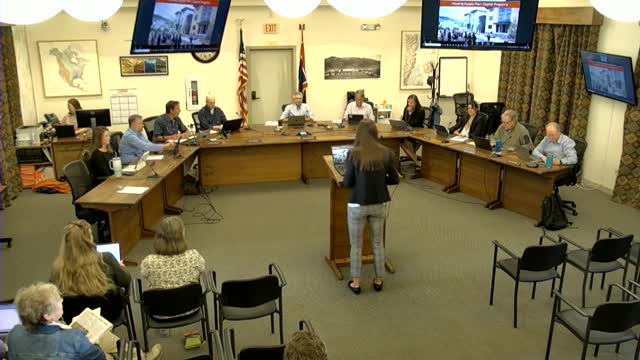
Teton County and the Town of Jackson on Sept. 8 unanimously authorized a pilot program to offer no‑interest microloans to current affordable homeowners for accessibility improvements, a program the county said will start the first Monday in October.
Teton County and the Town of Jackson on Sept. 8 unanimously authorized a pilot program to offer no‑interest microloans to current affordable homeowners for accessibility improvements, a program the county said will start the first Monday in October.
April Norton, Housing Director for Teton County, told the joint meeting that the Accessible Home Improvement No‑Interest Microloan pilot is funded by a $50,000 grant from the Community Foundation’s housing initiative and would offer up to $8,000 per household while the county evaluates repayment approaches and demand. “We received a $50,000 grant from their housing initiative fund for this work,” Norton said. “We have $8,000 available per household until the $50,000 is gone.”
Norton said the program is designed for existing affordable homeowners who need accessibility or aging‑in‑place modifications ranging from permanent changes such as grab bars to less permanent devices. The county presented three repayment options for the pilot — quarterly payments, a balloon payment at five years, or repayment at sale or refinance — and Norton said staff prefers to offer all three options during the pilot to learn which works best for participants.
The vote formalized a motion to “direct and authorize the Housing Authority Board to work with county legal to implement the accessible home improvement no interest microloan pilot program.” Commissioner Mecker moved the motion for the county; the commission chair called for the vote and the motion carried unanimously. On the town side, Councilman Schechter moved a matching motion, seconded by Councilwoman Speary, and the town council also approved it unanimously.
The pilot is one action item under the larger Housing Supply Plan and the county’s housing preservation efforts. Norton reviewed elements of the supply program: incentive tools used in Jackson — including a 2‑for‑1 workforce bonus, a fourth‑floor bonus, density bonuses and accessory residential units (ARUs) — and said the county has seen “almost 300 affordable and workforce homes built” and roughly 1,000 such homes in the development pipeline. She said the community needs about 2,000 homes to maintain a roughly 60% resident workforce rate.
Commissioners and council members questioned the pilot’s scope and likely costs. Commissioner Carman asked whether the staff preferred a particular repayment option; Norton replied, “We would love to have all three. Again, this is a pilot. We really want to try and learn what makes the most sense.” Commissioner Newcomb noted some accessibility equipment (for example, stair lifts) can cost more than $8,000; Norton said program staff based the $8,000 cap on prior work with a consultant (referred to in the meeting as “the Kelsey”) and that the amount may be adjusted if the pilot shows higher needs: “It may be that we come back and say everyone needs a stair chair and we’re going to need to increase this to $25,000 per household.”
Several elected officials asked about outreach and evaluation. Norton said staff intends targeted outreach to known affordable homeowners who are aging in place, and proposed simple success metrics for the pilot period: using the funds within six to nine months and collecting data on whether households remain in their homes for longer periods after receiving assistance. Norton said the county will work with County Legal and the Housing Authority Board to finalize program documents before implementation on Oct. 6.
The broader discussion at the meeting also covered upgrades to the housing preservation program, a proposed deed‑restriction purchase program for new construction, and an ARU pilot/guide. Norton said the county currently holds $850,000 for the housing preservation program and that program goals in the supply plan call for preserving a relatively small number of homes initially — about 15 homes under one preservation track and 10 under a combined preservation/historic track — because the preservation program is new and funding limited. Norton said she will return with a spectrum of alternatives, including more robust funding options, if the board wants proposals that would preserve substantially more homes.
Norton mentioned an upcoming design‑build RFP for rehabilitation of the Benson Cabin at Parkside, a pilot tied to historic preservation and potential employee housing. A member of the public, Becky Kimmel, representing the Presbyterian Church of Jackson Hole, told the meeting the church has raised $8 million of $12 million needed to build 10 deed‑restricted townhomes called “Homestead” and said the project remains committed to restricting the first 10 units for workforce housing, with potential groundbreaking as early as February and occupancy anticipated by 2027.
Norton told the joint meeting that county staff plan to present a deed‑restriction purchase program to the Supply Board in October and to the commissioners early next year. The microloan pilot is intended to inform later, larger programs to preserve housing and help residents remain in existing affordable units.
The county and town recorded unanimous approval for the microloan pilot and directed staff to finalize legal documents and implement the program.