
Saint Marys Area School District board discusses expanding pre-K as enrollment edges down
Get AI-powered insights, summaries, and transcripts
Subscribe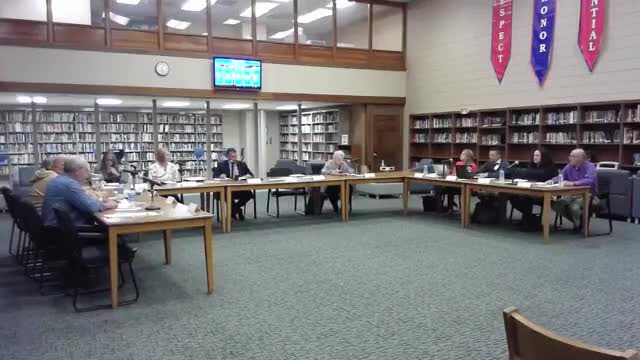
Summary
At its Sept. 8 meeting the Saint Marys Area School District board discussed adding 3- and 4-year-old pre-K classrooms, funding constraints and possible facility options; no formal action was taken.
At the Sept. 8 regular meeting of the Saint Marys Area School District board, district staff reported enrollment of 1,836 students as of the third day of school and opened a board-level discussion on expanding the district's preschool offerings, including new 4‑year‑old classrooms and potential 3‑year‑old classes. No vote or formal commitment was made.
District staff said the 1,836 figure is down slightly from about 1,848 at the same point last year and includes virtual‑academy students and virtual electives. The staff presentation noted the district’s virtual platform is growing and that cyber‑charter enrollment is presently small but concentrated in upper grades.
District staff framed the central question as financial: each additional pre‑K classroom would add about $180,000 in staffing costs to the district’s annual budget. “The much bigger question is, do we want to look at adding a $180,000 to the bottom line for additional classrooms?” the staff member told the board. The staff member said the district could seek local start‑up support but remains uncertain about sustaining ongoing costs without more stable state funding.
Board members and other speakers emphasized the potential educational and economic benefits of early childhood investment. One board member noted the larger economic impact of inadequate child care in Pennsylvania and described the per‑classroom cost as an investment with a strong return. Several board members also said expanding district‑run pre‑K would improve alignment between preschool and elementary instruction.
Funding options discussed included local philanthropic support (the staff member cited a local foundation that helped launch the district’s last pre‑K classroom), state Pre‑K Counts dollars and federal Head Start funds. The staff member cautioned that Pre‑K Counts eligibility depends on household income and can require stratifying classrooms by economic qualifiers, which the district views as limiting because of a preference for heterogeneous classrooms. The staff member also said “ready to learn” block grants at the state level would be one plausible funding route but noted uncertainty because of the current lack of a state budget.
Several possible facilities were mentioned as potential sites if the board chose to expand pre‑K, including space offered by local organizations and the third floor of Sacred Heart (the staff member said that would require renovation and likely a lease). The staff member said the district had identified some free or low‑cost space that might be used with renovations or leases but that facilities planning should follow, not precede, budget decisions.
The staff member said the district would continue to pursue grant opportunities, keep looking for suitable facilities and further refine options, and asked the board whether to continue devoting staff time to exploring pre‑K expansion. Board members indicated they wanted further study but stressed that no commitments were being made during this meeting.
Ending
District staff will continue exploring funding, facilities and grant options and return to the board with refined proposals; the district made no formal commitment or budget allocation at the Sept. 8 meeting.