Solar developers press PSC to enforce interconnection timelines and expand flexible interconnection after HR1
Loading...
Summary
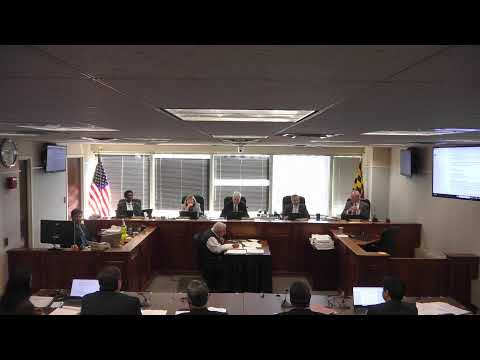
Commissioners at the Maryland Public Service Commission heard repeated pleas Thursday from solar developers and trade groups to crack down on utility delays in the interconnection process and to expand flexible interconnection so more projects can qualify for expiring federal tax credits under HR1.
Commissioners at the Maryland Public Service Commission heard repeated pleas Thursday from solar developers and trade groups to crack down on utility delays in the interconnection process and to expand flexible interconnection so more projects can qualify for expiring federal tax credits under the Inflation Reduction Act/HR 1.
Developers said the utilities frequently miss COMAR timelines for feasibility, system-impact and facility studies, and for issuing invoices and construction authorizations, delaying projects for months at the stage when bank financing and construction timing are most sensitive. Dexter Hendricks, senior manager of interconnection policy at the Coalition for Community Solar Access, told the commission that the “middle” phases — studies and utility-controlled construction scheduling — are where the biggest backlog exists and where commission oversight must focus.
Industry witnesses asked the PSC to require utilities to publish regular, project-level timing metrics and monthly or quarterly compliance reports that show the timing of feasibility studies, system-impact studies, facility studies and construction progress. “Developers cannot plan projects or secure financing when cost letters arrive months late or studies drag on indefinitely,” Hendricks said. Several developers pointed to New Jersey and New York reporting as models that provide transparency without adding excessive administrative burden.
Speakers also proposed practical near-term fixes: broader use of flexible interconnection (limited-export or tariff-based curtailment arrangements) so projects can interconnect at nameplate where hosting capacity exists subject to standardized curtailment triggers and telemetry; standardized invoices and clearer utility project managers; and, where utilities cannot meet construction schedules, allowing developers limited self-build of interconnection work under strict utility standards and oversight.
Utilities acknowledged the scale of the rush of applications since the community-solar permanent program took effect and said they are hiring staff, creating relationship-manager roles, improving portals and piloting internal performance indices to track schedule and cost performance. Pepco and BGE said they have added engineers and project managers in 2025 and are changing internal processes to shorten cycle times. Still, utility witnesses cautioned that allowing self-build and rapid regulatory changes can raise safety, ownership and rate-recovery questions that would need to be solved before statewide adoption.
Commission staff said it supports stronger queue transparency and suggested quarterly public queue milestones as a balance between developer needs and utility resource constraints. Staff also said it is open to working with stakeholders on a narrowly tailored “ombudsman” function to mediate interconnection disputes, modeled after similar roles in other states, but that details — including whether that role sits in staff, in the commission or is independent — would need careful design.
Why it matters: Federal tax-credit deadlines in HR1 and Treasury guidance have compressed development timetables; a single missed study or delayed upgrade can push a project past the dates required to qualify for full investment tax credits. Faster interconnection and clearer reporting would increase the chance that projects under development can be placed in service before credits phase out.
What’s next: Industry and utilities proposed next steps including a work group (PC 44 and other technical groups named in testimony) to build a standard set of interconnection reporting metrics, consideration of expanded flexible-interconnection tariffs, and iterative pilot tests for any self-build policy. Staff and utilities said they would file proposals and indicated participants could submit additional written input within two weeks of the conference.
Quotes: “Developers cannot plan projects or secure financing when cost letters arrive months late or studies drag on indefinitely,” Dexter Hendricks, Coalition for Community Solar Access.
Ending: The commission did not adopt any rule or emergency order at the hearing. Instead it asked staff to work with stakeholders to develop concrete reporting metrics, and invited the utilities and trade associations to provide joint proposals within the conference record so the commission can consider targeted changes quickly.