Get Full Government Meeting Transcripts, Videos, & Alerts Forever!
Get email alerts on the Internebraska Internship Program topic
No spam. Unsubscribe anytime.
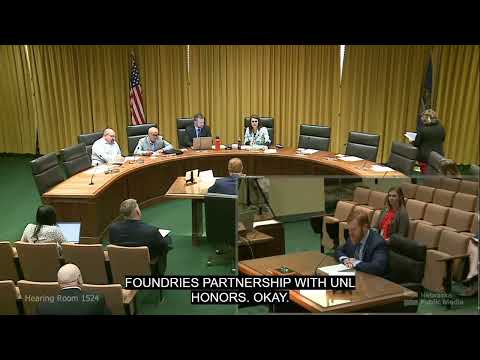
Business and Labor committee holds hearing on InterNebraska internship program as funding, retention questions surface
Summary
The Nebraska Legislature Business and Labor Committee held an interim study hearing on LR211 to review the InterNebraska internship program. Lawmakers and stakeholders described the program’s history, eligibility rules and outcomes, urged continued support to retain graduates, and flagged budget and scope questions; no formal action was taken.
The Nebraska Legislature Business and Labor Committee held an interim study hearing on LR211, an investigation of the InterNebraska internship program, during which lawmakers and stakeholders described the program’s origins, eligibility rules and reported effects on retaining college-educated young professionals.
Senator Jason Prokop, who introduced LR211, told the committee the program was created following the Business Innovation Act and that changes in 2022 expanded reimbursements and program supports. Prokop said Nebraska has "a much higher than average outflow migration of college educated young professionals," and cited data that from 2010 to 2020 the state averaged a net domestic migration loss of nearly 6,000 residents per year, concentrated in ages 20 to 34.
The hearing assembled former and current program partners, university career staff and local employers who described how InterNebraska operates and where they see gaps. Dan Curran, former deputy director at the Nebraska Department of Economic Development (DED) and now with the Nebraska Business Development Center at UNO, urged continuation of an internship program to connect students with employers and said DED had worked to improve internship quality and help employers qualify for grants. "I hope this committee strongly considers an internship program," Curran said.
University representatives described internship outcomes and constraints. Dr. Tyler R. White, faculty director of the University of Nebraska–Lincoln Honors Program, said internships build connections that increase the chance students remain in Nebraska after graduation. "Internships build the connective tissue between education and employment," White said, adding that paid work experiences and employer partnerships make career paths more visible to students. Levi Teal, director of career development at the University of Nebraska at Omaha, testified as a private citizen and said InterNebraska has supported "thousands of internships" and that campus career staff see internships influence students' decisions to stay in the state.
Employers and local economic-development partners described practical program benefits and implementation challenges. Jennifer Monroe, human resources manager at Duncan Aviation, said the company averages about 40 interns a year at its Lincoln location and has used InterNebraska grants to help smaller departments hire and retain interns; she recommended allowing wage reimbursements for employers with more than 150 full-time-equivalent employees. Dawson Brunswick, president of the Columbus Area Chamber of Commerce, described a local pilot that used a community-college residence hall and short-term housing the chamber purchased to remove housing barriers for interns; Brunswick said Columbus typically learns of about 100 interns each summer and engages 40–60 through local events.
Several presenters and Senator Prokop summarized program design and eligibility as explained in DED materials: under the program changes enacted in 2022, small businesses (150 employees or fewer) became eligible for wage reimbursement; employers may request up to $7,500 per internship on a reimbursable, 50% match basis; reimbursements are issued after internships are completed; and interns must reside in Nebraska while completing an in-state internship unless the business obtains written preapproval for telecommuting. Prokop told the committee that in FY 2023–24 DED received 352 applications for InterNebraska funding from across the state, with applications coming from about 35 counties and awards distributed in multiple congressional districts.
Committee members asked about program data and the state budget. Multiple witnesses cited positive retention anecdotes and surveys; Prokop said survey data and reports indicate paid internships are associated with higher retention but acknowledged that hard causal evidence tying a specific internship to a hire was not available to him at the hearing. Lawmakers pressed on whether taxpayers should subsidize internships that benefit employers; Prokop noted the program requires a local match and is structured to reimburse employers rather than directly pay interns' wages in full.
No formal motions or votes occurred; the hearing is an interim study and the committee will use testimony and documents to inform any future proposals. Prokop said LR211 was filed to evaluate whether the state can capture the program’s benefits and to consider funding options amid tight state fiscal conditions.
The hearing record includes multiple requests for more precise program data, including the proportion of interns who later take Nebraska jobs and the total amount communities have received in InterNebraska reimbursements. Committee members and witnesses also discussed program scope (whether to focus incentives on specific industries or maintain a broad approach) and limits intended to prevent internships from replacing permanent positions.
The hearing concluded with no immediate change to program funding or statute; LR211 remains an interim study for the committee to review program outcomes and budget implications.