Get Full Government Meeting Transcripts, Videos, & Alerts Forever!
Get email alerts on the School Budget topic
No spam. Unsubscribe anytime.
Vestavia Hills City Schools approves $106.9 million fiscal 2026 general fund budget
Summary
The Vestavia Hills City Schools board approved its fiscal 2026 budget, projecting $106.9 million in general fund revenues, $103 million in expenditures and an estimated $19 million ending fund balance (about two months).
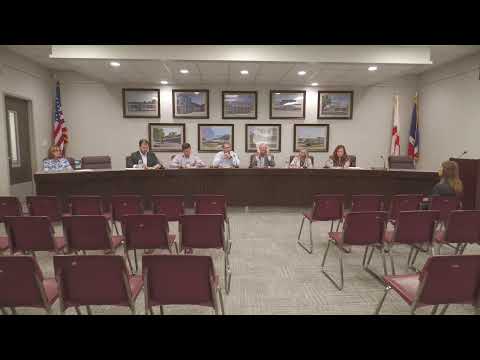
The Vestavia Hills City Schools board on Sept. 8 approved the district's fiscal 2026 general fund budget, projecting $106.9 million in revenues and $103 million in expenditures.
Courtney, a Vestavia Hills City Schools staff member who presented the budget, said the district expects about $47.6 million from the State Department of Education and about $59.0 million from local ad valorem tax sources, resulting in total general fund revenues of $106.9 million. “Our FY 26 budget prioritizes people investing in teachers, staff, and student support while planning ahead for rising costs and and long term facility needs,” Courtney said.
The budget approved by the board anticipates ending FY26 with about $19.0 million in fund balance, which Courtney described as “a little over 2 months” of operating reserves. Courtney noted that the state department requires at least a one-month fund balance and that the district's board policy goal is two months.
Board members asked clarifying questions about reserves, tax assumptions and interest income. One board member noted that two months is a “solid reserve” and said the district is “being responsible” by preserving that level while investing in operations. Courtney and other staff explained the district budgeted conservatively for local revenue after receiving a Jefferson County tax abstract indicating home values and tax receipts will be roughly flat, about a 1% change from the prior year.
Courtney also reviewed the capital projects fund: the district projects $3.6 million in revenues and has budgeted $8.5 million in capital spending for FY26. Courtney said that difference is partly the result of earlier advances in technology funding: “we received our advancement in technology money of $7,000,000 in FY '25,” and a balance of roughly $5,000,000 in that fund balance will be spent in FY26 on infrastructure such as Chromebooks and other capital needs.
The superintendent recommended the board approve the fiscal 2026 budget. A board member moved to approve, another seconded, and the motion passed by voice vote after board members present said “Aye.”
Votes at a glance: agenda approval (motion moved and seconded; voice approval), minutes approval (motion moved and seconded; voice approval), fiscal year 2026 budget (motion moved and seconded; passed by voice vote with board members present saying “Aye”).
The board closed the hearing after approving the budget; there were no public comments at the meeting.
What the board approved is the district's operating plan for FY26 as presented and does not, in itself, enact new tax rates or bond issuances. Staff indicated the capital spending will use previously advanced technology funds and project-specific capital allocations.