Get Full Government Meeting Transcripts, Videos, & Alerts Forever!
Get email alerts on the Employee Uniforms And Equipment topic
No spam. Unsubscribe anytime.
Wausau panel narrows employee footwear reimbursement to flat $125 annually; motion passes 3'to'2
Summary
The human resources committee amended the employee handbook to change safety boot reimbursement from 50% up to $125 to a flat $125 reimbursement, with receipts required and a one-per-year limit; the measure passed 3'to'2 after debate about fairness and administrative burden.
The City of Wausau Human Resources Committee voted 3'to'2 to amend employee handbook section 5.15, changing the safety-boot reimbursement from "50% up to $125" to a flat $125 annual reimbursement, with employees required to present receipts showing the purchase.
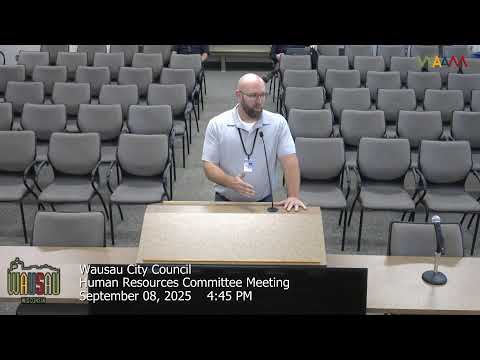
During debate, a committee member argued against a flat check, saying the policy's theme should remain a percentage reimbursement and warning a flat payment could create expectations across other policies. That member said, "We're proposing that we will pay 50% of what they pay, and that doesn't inhibit them from getting the boots that they want. But I don't believe that we should just be writing a check." The DPW director replied that the proposed change would still require a receipt and was designed to simplify administration and allow employees who buy one pair to receive full reimbursement rather than buying multiple pairs to reach a 50% threshold. The DPW director explained, "They still got to bring a receipt. We would reimburse that but if they what it would do is basically allow the employees to buy that pair of boots get the full reimbursement for it and so it will help them with not having to buy multiple pairs of boots...".
Committee members raised administrative concerns and the appearance of inequity if the city simply issued flat payments for other benefits. One member said the current system at their workplace uses a voucher system up to $125 and supported the flat rate on that basis.
The committee clarified operational details before voting: employees must provide a receipt that clearly indicates a safety boot purchase; the city verifies the receipt date to prevent use of old receipts; the policy continues to limit the reimbursement to one $125 payment per year. The committee also confirmed the definition of required footwear: "currently, we just require safety toes," which may be steel or composite; MET guards are not required.
A motion to amend section 5.15 passed by a 3'to'2 vote. The transcript records discussion and offers reasons both for and against the change, and committee members said the revision aligns with other flat-rate reimbursements in the handbook such as tools, cold-weather gear and safety eyewear.