Lansing board weighs tax choices as residents urge staying revenue neutral amid $30M in deferred maintenance
Loading...
Summary
At a public hearing, residents urged the Lansing USD 469 school board to adopt a revenue-neutral tax rate; board members debated exceeding revenue neutral and a related resolution before moving ahead with the 2025–26 budget and associated required resolutions.
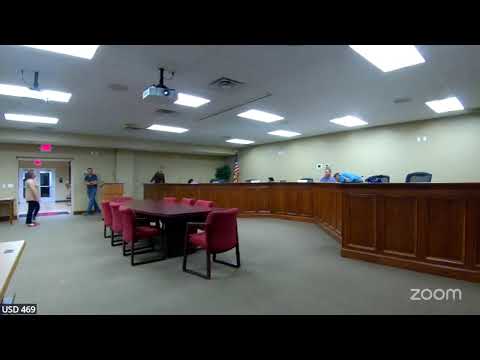
Dozens of Lansing residents urged the Lansing USD 469 Board of Education on Tuesday to keep local taxes at the revenue-neutral rate as the board prepared to consider a resolution that would allow it to exceed that rate when it adopts the 2025–26 budget.
Public commenters said rising costs and assessed-value increases make higher property taxes unaffordable for many on fixed incomes, while other residents said modest increases now would prevent far larger costs later for roofs, HVAC and other repairs.
At issue was a technical step — a resolution required before a board may adopt a budget that exceeds revenue neutral — and the broader choice about whether to seek more revenue now or push for a future bond. Superintendent Marty (last name not provided in the record) presented the district
—udget and answered questions about revenue and expenditures during the hearing.
Why it matters: The board
—aces competing pressures. Parents and some community members pressed for additional revenue to address deferred maintenance the district lists as roughly $30 million in column 1 of its facility spreadsheet; other residents and some board members warned that many taxpayers are at their limit and that increasing the mill levy would hit fixed-income households hardest.
Most vocal in public comment were parents and longtime residents who framed the choice as either modest tax increases now to preserve buildings and programs or continued deferred maintenance that would cost more later. "USD 469 is facing more than $33,000,000 in deferred maintenance," said Jason Lou Van Hessel, a parent, calling the deferred work "not just a number on paper." "The longer we wait, the more expensive it will be to fix," he said.
Several retired residents also urged caution. "My wife, Patty, and I are residents of Lansing School District, and we are both retired and on fixed income," said James Dyson Sr., who asked the board to "seriously consider the revenue neutral rate." Jacob Thomas, a Lansing graduate and parent, pointed out growth and staffing changes since 2009, saying, "It doesn't need to go up again. You guys can make do with what you've got." Other commenters called for equity in user fees — for example, asking that a private school pay more to use the Lansing pool — and for leadership pay to reflect belt-tightening.
Board discussion and budget details: Superintendent Marty summarized the budget items the administration recommended for 2025–26, noting several revenue and cost changes: an estimated $415,000 of additional revenue from a Heartland Virtual Academy program; a local option budget (LOB) projection of roughly $599,259 for capital outlay, bond and interest; and additional expenditures including a roughly $360,000 insurance premium increase, roughly $750,000 for staff wages (about a 3% increase), $105,000 for IT network switches (50% covered by E-rate), and $243,000 for a K–12 math textbook adoption (year 1 of 3). He also said the district faces a projected roughly $600,000 tax increase tied to higher assessed values even if mill rates remain similar.
Board members pressed for specifics. One asked whether the proposed budget included funding to replace roofs or other large deferred items; the superintendent said the proposed budget includes ongoing maintenance and some projects "if the budget allows," and that the capital plan and facility condition assessment items in column A are being worked on, but that none of the large replacements (for example, full roof replacements) were guaranteed in the 2025–26 budget. The superintendent noted that capital-outlay accounting changes in prior years had been used to pay some salaries and that the current budget moves roughly $400,000 from capital outlay into the LOB to free capital spending later.
Board members also asked for clearer dollar amounts taxpayers would pay. The administration presented an example: on a $300,000 home, the difference between revenue neutral and the proposed rate would be about $94.22 per year under the assumptions shown (this does not account for assessed-value changes).
Votes at a glance: The meeting record shows the board took the required procedural votes connected to the revenue-neutral process and adopted the 2025–26 budget package the administration presented (58.177 mills proposed). The board also approved the annual LOB resolution that sets a maximum for local option budget spending. (Roll-call details are in the meeting record.)
What the record does not show: The transcript contains detailed back-and-forth about whether a bond or exceeding revenue neutral would be more likely to pass with voters; board members asked staff to refine budget options and to return with additional specifics. The administration suggested the board could revisit the operational picture in spring if cash carryover and unplanned costs permitted additional one-time spending.
Looking ahead: Several board members asked staff to provide clearer, line-by-line options showing what would be cut or delayed to avoid exceeding revenue neutral and to calculate exact dollar changes to homeowner bills under several assessed-value scenarios.
Ending: The budget hearing portion closed after public comment and board discussion. Board members and the superintendent agreed to continue refining the budget details before final adoption, and the agenda moved on to other items.