Get Full Government Meeting Transcripts, Videos, & Alerts Forever!
Get email alerts on the Budget 2025 26 topic
No spam. Unsubscribe anytime.
Blue Valley Board approves 2025‑26 legal maximum budget, including 33% local option budget; vote 6‑1
Summary
The Board of Education voted 6‑1 to approve the district’s 2025‑26 legal maximum budget and estimated tax rate, incorporating a 33% local option budget resolution; trustees debated mill levy levels, bond strategy and taxpayer impacts before the vote.
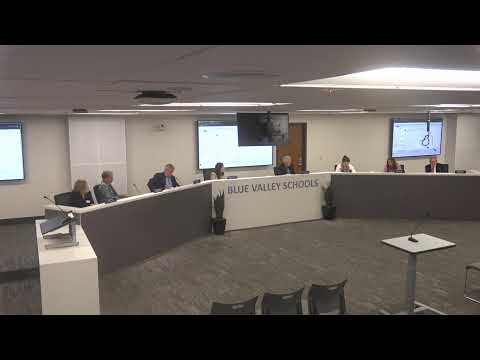
The Blue Valley Board of Education approved its 2025‑26 legal maximum budget and estimated tax rate, including a local option budget (LOB) resolution set at 33%, by a 6‑1 vote.
The motion—recorded in the meeting as “the Board of Education approve the 2025, 26 legal maximum budget and estimated tax rate, including the approval of the local option budget resolution”—was moved and seconded during the board’s regular meeting and carried after discussion. The board president called the vote and announced the motion passed 6‑1.
Trustees and staff spent substantial time debating the bond and interest (debt service) mill levy. District finance staff described a proposed 9‑mill levy on the bond and interest fund intended to smooth tax burden over multiple years and to support a planned bond sale later this fall that includes a refinancing component. Staff said the district will refund certain outstanding 2015 bonds as part of the sale and expects an upcoming $101 million bond sale; smoothing the mill levy, staff argued, allows the district to avoid large year‑to‑year spikes in the tax rate and to keep many maturities nearer term rather than pushing principal far into the future.
Board member Jim opposed the motion on tax‑burden grounds, saying in discussion that he considered the higher levy an unwarranted revenue increase and described it as “a revenue grab,” arguing trustees should reduce the capital levy rather than preserving capacity for future large bond referendums. He urged restraint because property taxes are increasing for local homeowners and renters, he said.
Staff responded with details about debt service timing, reserves and the effect of bond amortization schedules. Finance staff said refunding existing bonds would deliver interest savings immediately, but that the proposed mill rate helps preserve flexibility for a future bond referendum and keeps amortization schedules from requiring large deferred principal payments that would increase long‑term interest costs.
Trustees also confirmed that the budget approval incorporates the 33% local option budget (LOB) resolution; the board clerk confirmed a LOB resolution document was attached to the board packet and included in the motion. After a brief procedural clarification, the president called the roll: the motion passed 6 in favor, 1 opposed.
The board’s discussion included questions about what the district classifies as “growth” versus “maintenance” projects for bond funding; staff described growth projects as additions or new square footage and maintenance as roof, mechanical and envelope work. Trustees asked staff to prepare additional information on proposed bond projects and scenarios for future referendums and to return with options that would clarify the capital program's size and timing.
Formal action taken at the meeting: approval of the 2025‑26 legal maximum budget and estimated tax rate including a 33% local option budget resolution, recorded as passed 6‑1. The board did not take separate votes on mill‑levy settings for the bond and interest fund at this meeting; that discussion informed the board’s direction to staff for upcoming bond‑planning work.