Get Full Government Meeting Transcripts, Videos, & Alerts Forever!
Get email alerts on the School Safety topic
No spam. Unsubscribe anytime.
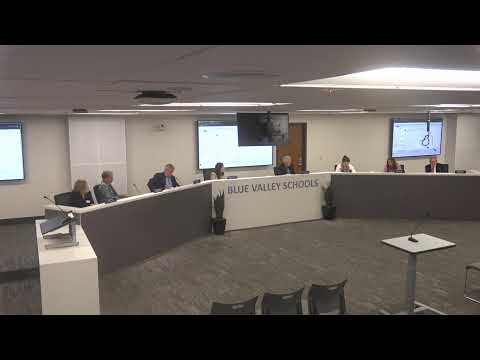
Blue Valley Board reviews e-bike pilot, crisis alert upgrades and staffing needs after middle-school discharge
Summary
Board members and staff discussed new e-bike/scooter rules, a semester-long pilot to track incidents, expanded crisis-alert features and whether to add more full‑time police officers to schools after an accidental discharge at a Blue Valley middle school.
The Blue Valley Board of Education discussed a package of measures to address student safety including a pilot policy for motorized personal transportation devices, upgrades to building security systems and debate over adding more full‑time officers in schools following an accidental firearm discharge at a Blue Valley middle school.
District safety staff presented a plan that permits motorized devices on campus only when they are locked in designated areas and carried or walked once on school property, requires parental signoff and assigns financial liability language for intentional property damage. Staff said permit stickers have been issued to more than 1,000 students this year and recommended a semester‑long pilot to track incidents and violations so the district can evaluate whether the rules reduce risk.
The presentation, led by district safety staff member Dan, framed the district’s approach to security as “layered” and relationship‑based, emphasizing trusted adult culture, partnerships with local police and mental‑health co‑responders, and training. Dan described district investments such as thumb‑turn door locks with visual indicators, threat‑assessment training for staff and a crisis‑alert system that allows any staff member to place a building into lockdown and sends targeted responder information.
The crisis‑alert system also includes flashing beacons and on‑screen messages and will be used to send tornado warnings if local sirens fail, Dan said. He noted staff push the system’s help button several hundred times a year for a variety of emergencies and that the district has trained more than 200 employees in comprehensive threat assessment protocols.
Board members pressed staff on several operational and liability details. Questions included where devices may be parked, whether sidewalks in front of schools are district property or easements, and whether permit language should explicitly cover accidental as well as intentional personal injury and property damage. One board member said the parental signature form should make clear it addresses both criminal and civil liability; staff confirmed the forms note that students “may be held financially liable” for damage to district property.
Staff proposed that principals and school resource officers will report incidents and that the pilot will include a specific incident‑tracking procedure to be evaluated at semester end. Members urged a requirement that staff report every incident so that district assessment is not limited to anecdotal or only serious events.
A separate, recurring topic was whether the district should add full‑time officers in more schools. Staff estimated adding 19 full‑time police officers would be needed to place an officer in every building. District and board members noted practical obstacles: recruiting officers who want to work full days in elementary schools, municipal agency staffing constraints, and cost. Some board members argued that adding officers is a slower, multi‑year process; others said the district should incrementally add officers and consider contracts with local agencies or phased hiring.
Board discussion also touched on prevention strategies beyond policing. Members suggested promoting gun‑safety measures such as free gun locks through municipal partners and increased advocacy at the state legislature for laws the district says would reduce risks on campuses. Several board members asked staff to quantify how much the district currently spends on safety and security measures and to use that figure in advocacy work with state lawmakers.
No formal action was taken on staffing or the legislative ideas at the meeting. Trustees agreed to run the device pilot for the year, adopt the proposed incident‑tracking approach and report findings after the semester.
Board members and staff emphasized that the district cannot eliminate all risk but said the layered approach, threat assessment program and crisis‑alert upgrades are intended to reduce risk and improve response times. Dan concluded the safety update by thanking trustees and staff for their questions and input.