Get Full Government Meeting Transcripts, Videos, & Alerts Forever!
Get email alerts on the Waterfront Redevelopment topic
No spam. Unsubscribe anytime.
Muskegon City reviews development agreement that would move port activity to Fisherman’s Landing and expand public waterfront
Summary
City Manager Cyphers presented a draft development agreement Sept. 8 that would let West Michigan Dock lease — and eventually buy — Fisherman’s Landing campground while the city acquires Third Street Wharf and pursues about 25 acres of Verplank property for park and estuary restoration.
City Manager Cyphers presented a draft development agreement on Sept. 8 that would let West Michigan Dock (Martdoc) lease the Fisherman’s Landing campground beginning Jan. 1, 2028, with a 50-year lease and an optional 40-year extension and an option to buy the campground after the city secures a conversion property.
The agreement centers on three linked moves: the city’s planned purchase of the Third Street Wharf, Martdoc’s long-term lease (with purchase option) or operation of Fisherman’s Landing, and the city’s intended acquisition of about 25 acres of nearby Verplank property as a conversion site for parkland, wetlands restoration and public access. Cyphers said the city secured a $2,800,000 state “enhancement grant” intended for a community wharf project and that other federal port-development grants (PIDP) would be pursued to fund the waterfront work.
Why it matters: the draft would double Muskegon City’s publicly owned waterfront frontage on Muskegon Lake — from roughly 2,400 feet to nearly 5,000 feet — and increase city-owned shoreline acreage from about 22 acres to 36 acres, while also aiming to consolidate port operations on the lake’s east end. A Greater Muskegon economic study referenced by staff estimated the redevelopment could support more than 200 construction jobs, more than 300 ongoing jobs and about $41 million in annual regional economic activity.
Key terms and timeline - Lease and purchase option: the draft calls for a prepaid, long-term lease of Fisherman’s Landing to West Michigan Dock starting 01/01/2028; the operator would have an option to acquire the campground fee simple after the city secures a conversion property. - Conversion site: the preferred conversion property is about 25 acres owned by Verplank, intended for wetland restoration, passive recreation and to satisfy state grant conversion requirements if the campground is removed. - Wind‑down and deed restriction: once port operations begin at Fisherman’s Landing the agreement would require West Michigan Dock to cease port operations at the current Martdoc site within five years; Cyphers said the company would place a voluntary deed restriction on Martdoc to bar future port operations there (the company would still be allowed some recreational docking, vessel attractions and boat storage/service uses). - Rezoning: the draft anticipates rezoning portions of Martdoc and Fisherman’s Landing to a Port Industrial PUD. Staff said rezoning and final approval of the development agreement would likely come forward together, with rezoning expected to begin in October and votes anticipated in November. - Appraisals and purchase mechanics: mutually agreed appraisers would value the campground and the Third Street Wharf; if appraisers disagree a second appraisal is taken and the average of the two sets the price. Cyphers and legal counsel said Martdoc holds an option on the Verplank parcel and would assign or otherwise enable the city to acquire it as part of the package.
What would change on the ground According to the city presentation and the draft language, the waterfront elements that would remain or be relocated include the public boat launch, kayak launch, fish-cleaning station, restrooms and most public-facing facilities; the 109 fenced campsites and approximately 46 parking stalls tied to the campground would be removed under the preferred plan. Cyphers said the pavilion and some elements might be relocated on the city‑owned lands rather than lost.
Financing and risks Cyphers said the $2.8 million state enhancement grant would be applied primarily to purchase and improvements at Third Street Wharf and to preservation/relocation costs for historic vessels (the LST and possibly the USS Silversides). Staff and developers also plan to pursue federal port grants (PIDP). The city would use proceeds from the Fisherman’s Landing lease/purchase and reserves — and could seek DNR land-acquisition grants — to fill a remaining funding gap for the 25‑acre conversion property.
Commissioners and residents pressed staff on several risk points: the possibility that the federal grant cycle could delay construction; a funding shortfall if grants are reduced; whether Martdoc could sit on the leased/purchased campground while delaying port construction; whether the city would incur maintenance costs (for launches, restrooms and trail connections) and who would cover relocation expenses for amenities; and how the deed restriction would be enforced if property ownership changes in the future. Cyphers said the five‑year wind‑down clock for Martdoc’s current port operations would not start until port operations actually commence at Fisherman’s Landing, and the city manager could extend the five‑year window in one‑year increments with justification.
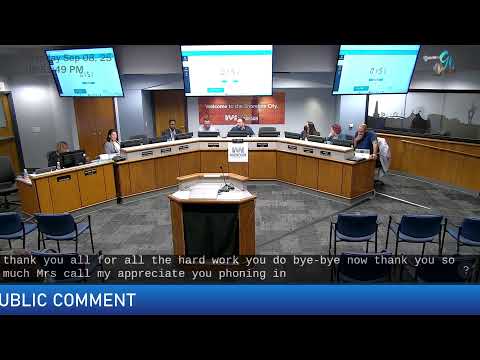
Public comments and community concerns Dozens of public commentators — both in the room and by phone — urged commissioners either to approve the concept or to preserve Fisherman’s Landing campground. Supporters argued the plan is a generational opportunity to unlock downtown redevelopment, expand public waterfront access, restore estuary and wetlands on the Verplank parcel, and preserve historic vessels. Opponents and many campground users said Fisherman’s Landing is a unique, affordable lakeshore campground that draws year‑round and seasonal visitors, supports fishing tournaments and local businesses, and should not be converted or lost without firm, written protections and viable alternatives for campers.
Next steps and decisions pending City staff said no formal vote occurred at the Sept. 8 work session. Staff will finalize exhibits (legal descriptions and appraisals) and pursue the rezoning process; the draft timeline discussed calls for the rezoning process to begin in October and for the rezoning and final development‑agreement vote to be considered in November, likely at the commission’s second November meeting. Commissioners requested additional detail in later drafts on funding gaps, exact exhibits, timelines for construction and operations, responsibilities for relocating amenities, and written assurances or contract language clarifying revenue‑sharing, maintenance funding and enforcement of deed restrictions.
Quotes "This puts into place that within 5 years, it would stop," City Manager Cyphers said of the requirement for Martdoc to end port operations at its current site after operations commence at Fisherman’s Landing.
"We will do that," Chuck Kean Strait, a lead executive for Martdoc/West Michigan Dock, said when asked whether his company would operate the campground and meet the payment obligations in the draft agreement. Kean Strait also told commissioners the option price for the Verplank parcel reflected negotiated terms with that owner.
What the commission must still resolve The commission faces policy choices, including whether to authorize staff to continue the agreement with the current terms, to require additional protections for campers and shoreline habitat, to condition grant commitments or revenue sharing in the final legal exhibits, or to pause the process for more community study. No formal motion or vote took place Sept. 8; staff said they expect items to return for public hearings and votes this fall.