Get Full Government Meeting Transcripts, Videos, & Alerts Forever!
Get email alerts on the Speech And Politics In Schools topic
No spam. Unsubscribe anytime.
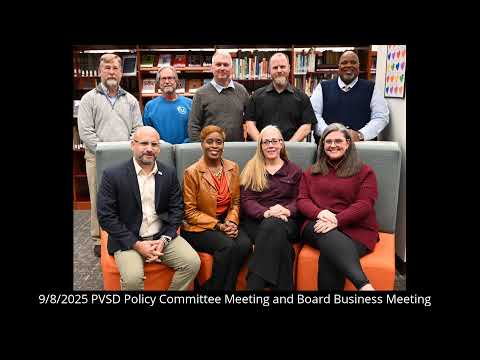
Perkiomen Valley tables changes to free-speech and political-activity policies after wide-ranging debate
Summary
Board and administrators disagreed over new guideline language that could be read as compelled speech; committee decided to pause changes to Policy 320 (freedom of speech) and Policy 321 (political activity) and to involve the district solicitor and full board for review.
Perkiomen Valley School District committee members spent more than an hour debating proposed revisions to Policy 320 (Freedom of Speech in Non‑instructional Settings) and Policy 321 (Political Activities), ultimately agreeing to delay action so the solicitor can advise the full board.
Administration presented suggested language and said the solicitor had advised that considerations of "the level or severity of disruption" should be applied to alleged speech-related incidents. "Any decision ... shall take into consideration all the facts of each individual situation and shall include consultation with the school solicitor," Ryan Moran said while summarizing solicitor input.
Concerns centered on several draft provisions that some board members and the solicitor described as procedural guidance and others described as potentially coercive. One widely discussed line would ask employees to "state clearly that his or her expression represents personal views and not those of this district." Several board members objected to language they said could appear to compel speech. "You're compelling their speech," one board member said during the meeting.
Legal standards were invoked during the discussion. Counsel present described the relevant test as the Pickering balancing analysis: whether the employee is speaking as a private citizen on a matter of public concern and, if so, whether the employee's speech is so disruptive to school operations that discipline is justified. A solicitor's representative told the committee that the analysis is nuanced and fact-specific and recommended further legal review before adopting new language.
The debate also included a real-world example: a board member reported that QR-code stickers linking to outside political content had been posted on classroom doors. The board member said he had alerted the superintendent and urged principals to follow up; administrators said the appropriate path is for parents or staff to raise the issue with the teacher and principal first so building staff can investigate. "If your child or a student is experiencing something like that, it needs to be reported to the teacher ... and if that's unsuccessful, have a conversation with the administrator," Superintendent Doctor Russell said.
Board members were sharply divided about how prescriptive the district should be in advising staff about off-duty speech. Some said the added guidance is a practical tool to help staff avoid sanctions; others said the language went beyond PSBA model guidance and risked infringing constitutional protections or inviting litigation.
Outcome: the committee tabled both Policy 320 and Policy 321 and agreed to reconvene the discussion with the district solicitor present and to solicit broader board input. Multiple board members urged the policy committee to review PSBA model language and similar policies from other districts and return recommended text for a full-board discussion. "Would it be amenable to the committee to have a discussion ... with the solicitor present so we can all gain clarity?" a board member asked; the committee agreed.
Next steps: administration and legal counsel will prepare a legal memo and comparative policy examples (PSBA model and peer districts) and return the item to policy committee; the full board will also be invited to review and provide direction before any first-reading action.