Get Full Government Meeting Transcripts, Videos, & Alerts Forever!
Get email alerts on the Parking Permits topic
No spam. Unsubscribe anytime.
Traffic and Parking Commission backs permit parking for El Caballo Street
Summary
The Lake Forest Traffic and Parking Commission voted 4-0 to recommend that City Council adopt a resolution establishing permanent residential permit parking on El Caballo Street after staff surveys and a resident mail-in ballot showed sustained outside parking pressure.
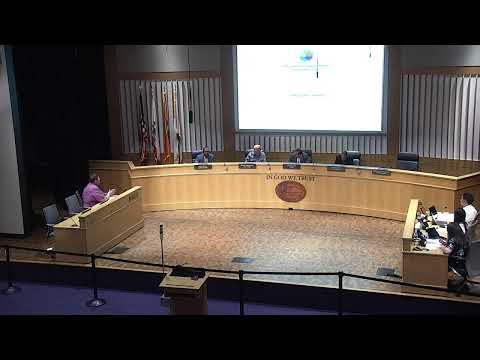
The Lake Forest City Traffic and Parking Commission voted 4-0 on Sept. 8 to recommend that City Council adopt a resolution establishing permanent residential permit parking on El Caballo Street.
Staff said parking surveys conducted in November 2024 showed a recurring overflow that affected roughly two-thirds of the street’s parking supply, and a subsequent mail-in ballot of residents produced 71% support for permit parking. Charlotte Fuertes, a public works intern who presented the item, told commissioners that staff’s recommendation follows the city’s permit-parking policy and the results of the surveys and vote.
Why it matters: Commissioners and residents said the neighborhood has experienced sustained overflow parking from nonresidents that residents say creates safety and access problems. The commission’s recommendation, if adopted by City Council, would create a permit requirement that staff said is intended to prioritize on-street spaces for people who live on El Caballo Street.
Fuertes told the commission that staff performed two parking surveys and used license-plate checks to help distinguish resident vehicles from nonresident vehicles. Traffic Engineer Tran said staff attempt to conduct counts when patterns of outside, nonresident parking are most likely to appear and that they “run the plates. And so if it registers back to a person living on that home, we count them as residents.” Tran added that out-of-area and out-of-state plates are treated as outside parking for the survey totals.
A resident who spoke at the meeting, Brittany Bazentin of El Caballo Street, said the street is “overly impacted” and described daily congestion and near-misses caused by parked vehicles narrowing travel lanes. “We are in favor of the parking permit situation because it is overly impacted,” Bazentin said, adding that on one recent afternoon she counted about 50 cars parked on the street.
Staff outlined how the permit program would work: households would be eligible for two residential permits; households with residential permits generally have an easier process to obtain guest permits; staff typically limits guest permits (staff cited a 10-per-month limit used in other neighborhoods); and enforcement would be handled by the Orange County Sheriff’s Department. Fuertes also said the policy allows for removal of permit parking in the future if at least 67% of affected residents later petition to rescind the restriction.
Commissioners asked about survey methodology and geographic scope. Staff said the city sometimes conducts additional survey days when anomalies are suspected; in this case staff said the November counts were consistent with other observations and with parking patterns on nearby permitted streets (Tulip Street, Lavaca Street and Calle Tres Lomas). Staff also explained that the petition and ballot thresholds in the city policy apply to adoption and to later removal of permit parking.
The commission’s action was procedural: it voted to send the recommendation to City Council. The commission vote passed 4-0 with Commissioner Camarena absent. City Council action will be required to finalize any permanent parking restriction on El Caballo Street.
For context, commissioners and staff noted that establishing permit parking on one street commonly shifts demand to adjacent blocks, and that neighbors in nearby streets may later request their own restrictions; staff said those subsequent requests would be handled under the same policy and survey procedures.