Get Full Government Meeting Transcripts, Videos, & Alerts Forever!
Get email alerts on the Community Paramedicine topic
No spam. Unsubscribe anytime.
Bangor council workshop previews Cole Foundation‑funded community paramedicine pilot
Summary
Fire Chief Jeff Lohman and Public Health Director Jen asked the council to approve an upcoming council order to apply for an 18‑month pilot grant from the Cole Foundation to fund a single community paramedic based in Public Health with strong ties to the fire department.
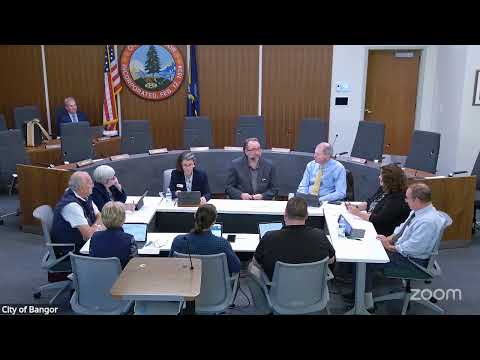
At a Sept. 8 Bangor City Council workshop, Fire Chief Jeff Lohman and Public Health Director Jen described a proposed 18‑month community paramedicine pilot funded by the Cole Foundation and said a council order to apply for the grant will be presented next week.
The pilot would fund one full‑time community paramedic, an SUV, equipment and training, and a part‑time coordinator for an initial 18‑month period intended to validate local demand and establish billing pathways, Jen said. "The Cole Foundation is providing funding to actually implement the community paramedicine program in, I believe, about 5 pilot locations," she said.
Officials said the model places a paramedic in a non‑911 follow‑up role to provide wound care, chronic‑illness follow‑up, medication management and telemedicine links to midlevel providers. "We're looking at bringing a community paramedic into the city of Bangor," Lohman said, adding, "I don't have the capacity to staff community paramedicine out of the fire department." He said the position is intended to fill gaps that hospice, home‑health and primary‑care services do not cover.
Why it matters: presenters said the program is intended to reduce avoidable emergency‑department visits and 30‑day readmissions, support underinsured or uninsured residents, and improve continuity of care as primary‑care capacity changes in the region. Jen said the pilot includes a financial planning component so sites can transition to sustainable billing—including MaineCare—after the grant ends.
How the pilot would work: the funding package would be paid up front for the 18 months rather than per call, officials said, enabling the city to hire a single FTE initially. The community paramedic would be employed through the Department of Public Health and Community Services with operational ties to the fire department. Referrals for the early phase would come from Saint Joseph's Hospital inpatient discharges; as the program grows, referrals could come from EMS, BCAT, Northern Light and other providers. Jen said the intended start date was January of the coming year.
Regulatory and operational constraints: officials said Maine EMS is the state regulatory authority and that the community paramedic must be licensed under a municipal EMS service. "Maine EMS is the ... regulatory authority for provision of all emergency medical services in the state of Maine," Lohman said. Presenters said the grant will pay for additional training if an already‑trained community paramedic is not hired.
Evaluation and next steps: presenters said evaluation metrics are still being defined but will likely include readmission rates and patient satisfaction; they also noted outside academic partners will have access to claims data for analysis. Councilors asked about age groups, capacity limits and whether one FTE is adequate; proponents said capacity, not policy, will determine who can be served and suggested revisiting staffing levels at an 8‑ to 12‑month review. The council voiced no opposition at the workshop; staff will bring a formal council order to approve the application at the next meeting.
Officials stressed the pilot is not intended to replace hospice or home health but to provide follow‑up and bridge services where gaps exist.